Almeria Fish Market
01 Saturday Sep 2012
Posted in Shopping
01 Saturday Sep 2012
Posted in Shopping
28 Tuesday Aug 2012
Posted in Starters, Sweet Things, Techniques
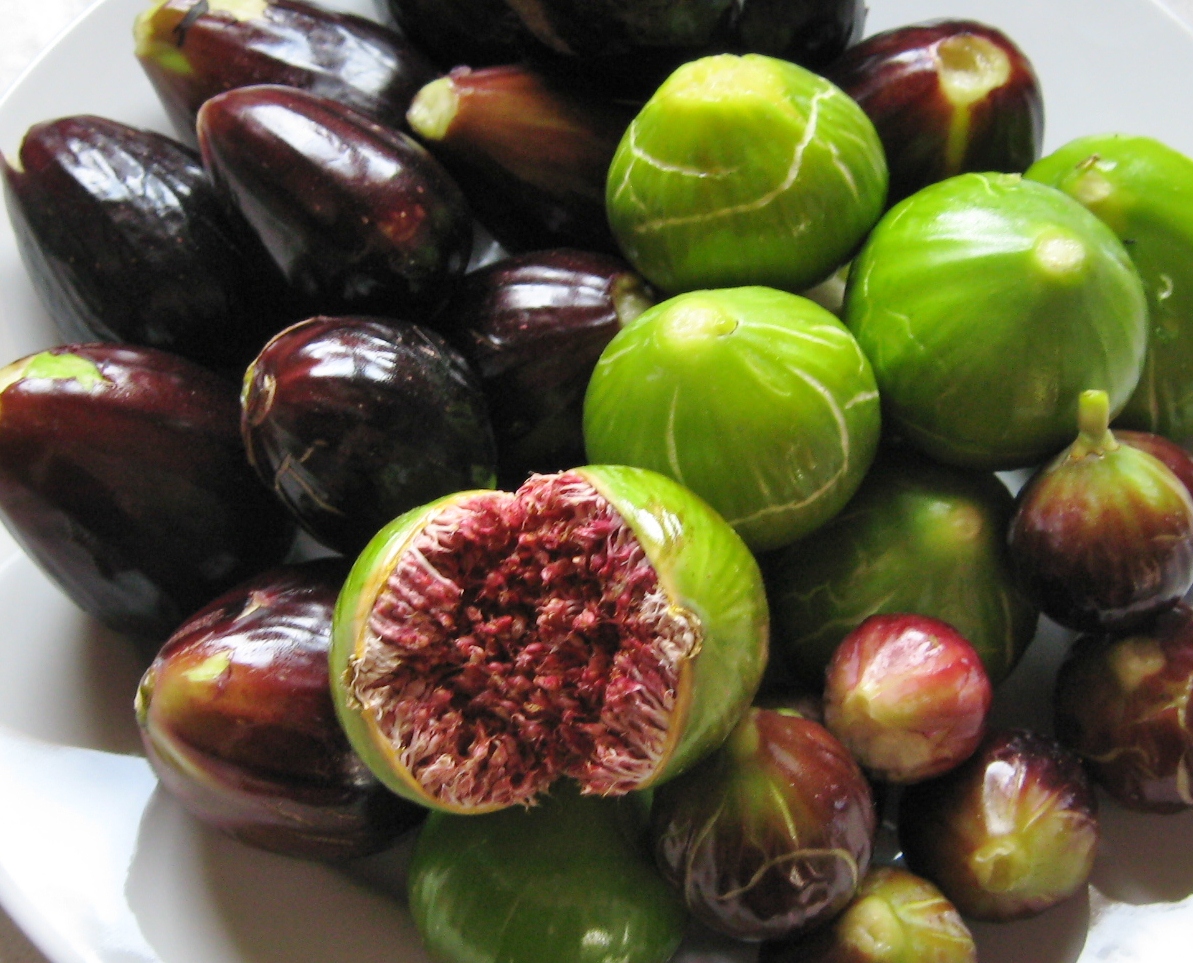
My fig trees are behaving themselves this year. We planted four varieties – actually that is not strictly speaking true – we planted three varieties and another planted itself. It could not have worked out better though. The trees we planted were an early black variety called La Breva, which has a very early small crop in May, followed by its main crop of very sweet large fruit throughout the month of July going into August. As these come to an end the green figs start to ripen. One tree has large fruit for eating and the other smaller fruit for drying. The do-it-yourself tree crops from June to October with small black very sweet fruit that are good to eat or dry. I wish that I knew which variety it was then I could reccomend it.
The above description is how the trees are supposed to behave, but some years, depending on the weather, all the trees crop at the same time which makes quite a lot of work to deal with them.
The surplus Breva are made into Caramelised Fig Jam which is sold throught the farm shop and is very popular. The small figs are dried for the winter. As for the sun dried tomatoes, I use a fold out clothes drier with a sheet of mesh or fabric pegged to it to make a flat surface, and place it in a spot with all day sun and a breeze. Leave the figs whole and just place on the mesh. Bring them in at night so that they are not re-moistened by the dew. Turn them each day. I have problems with bugs getting in the green figs, but not the black ones. I think that this is because the end where the flower was on the green ones, it leaves a little hole that the bugs can use as an entrance. I am experimenting at the moment with stopping up this hole with a paste made from bread and water. I will report back on success or lack of it.
The fresh figs are complemented by anything salty, so are very good with Serrano Ham or salty cheese as in the above salad of Oak Leaved Lettuce, La Breva Figs, Goats Cheese, and Fresh Mint dressed with Basamic Syrup.
For eating as a sweet, try putting them into a tart.
For a shallow 28 cm diameter tart tin
500 gms fresh figs
100 ml thick cream
3 large eggs
Fresh or bought puff pastry to line the tart tin
250 gms crema de almendras / 200 gms ground almonds and 50 gms sugar
This is a very quick and easy tart to prepare particularly if you are using bought puff pastry.
Preheat the oven to 180 C.
Roll out the pastry and lay out in the tart tin. You will see from my photos that I like to line the tart tin with baking parchment, it just makes it that little bit easier to slide the tart out of the tin.
Wash and dry the figs. Cut them into quarters. Arrange them on top of the pastry close together and in a pattern that pleases you.
Mix together the eggs, cream and almond cream or ground almonds and sugar.
When well amalgamated, spoon evenly over the figs.
Bake for 1 hour at 180 C until golden brown. Let cool slightly before serving.
25 Saturday Aug 2012
Posted in Fish, Food for One, Snacks and Tapas, Starters
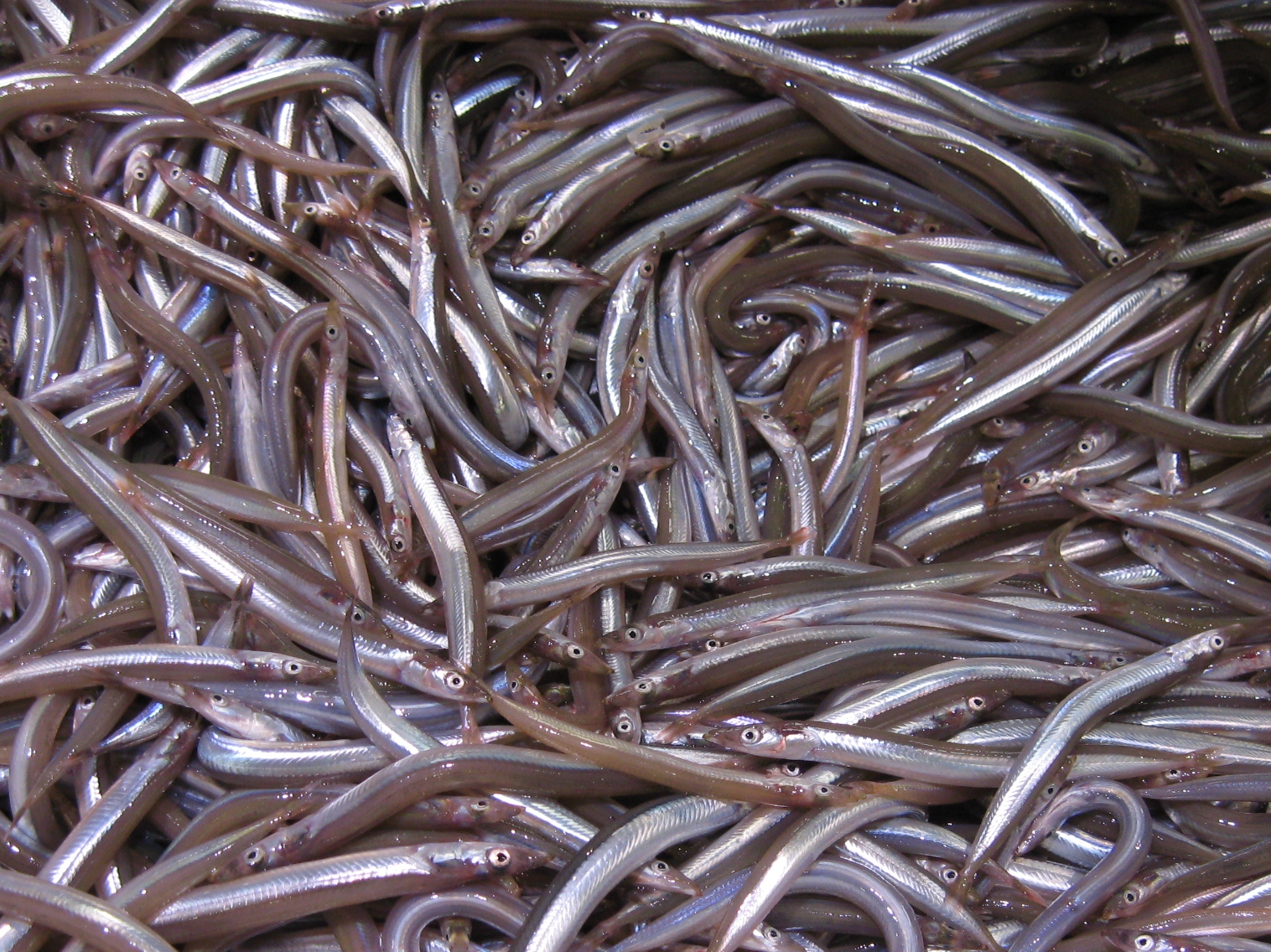
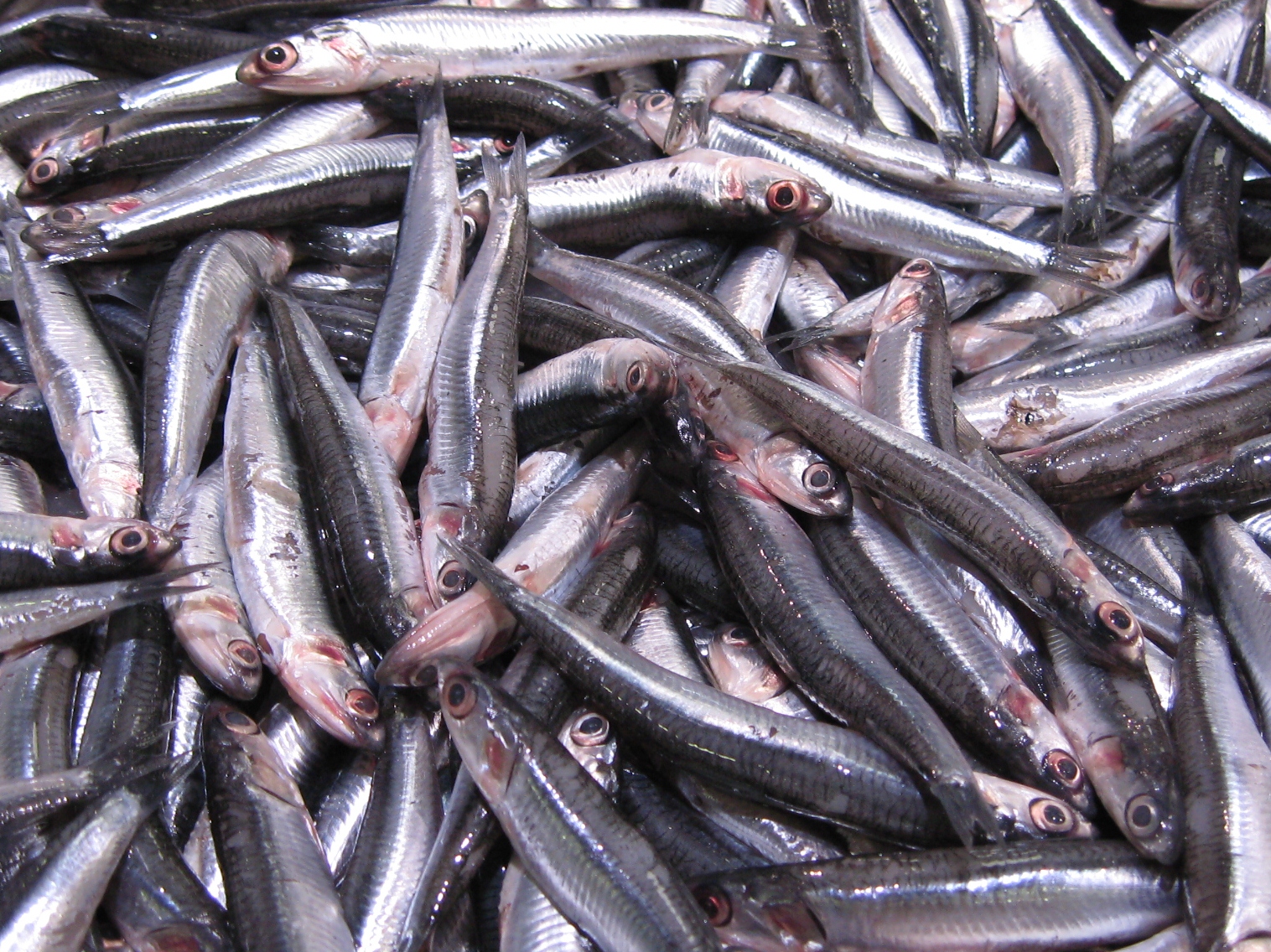
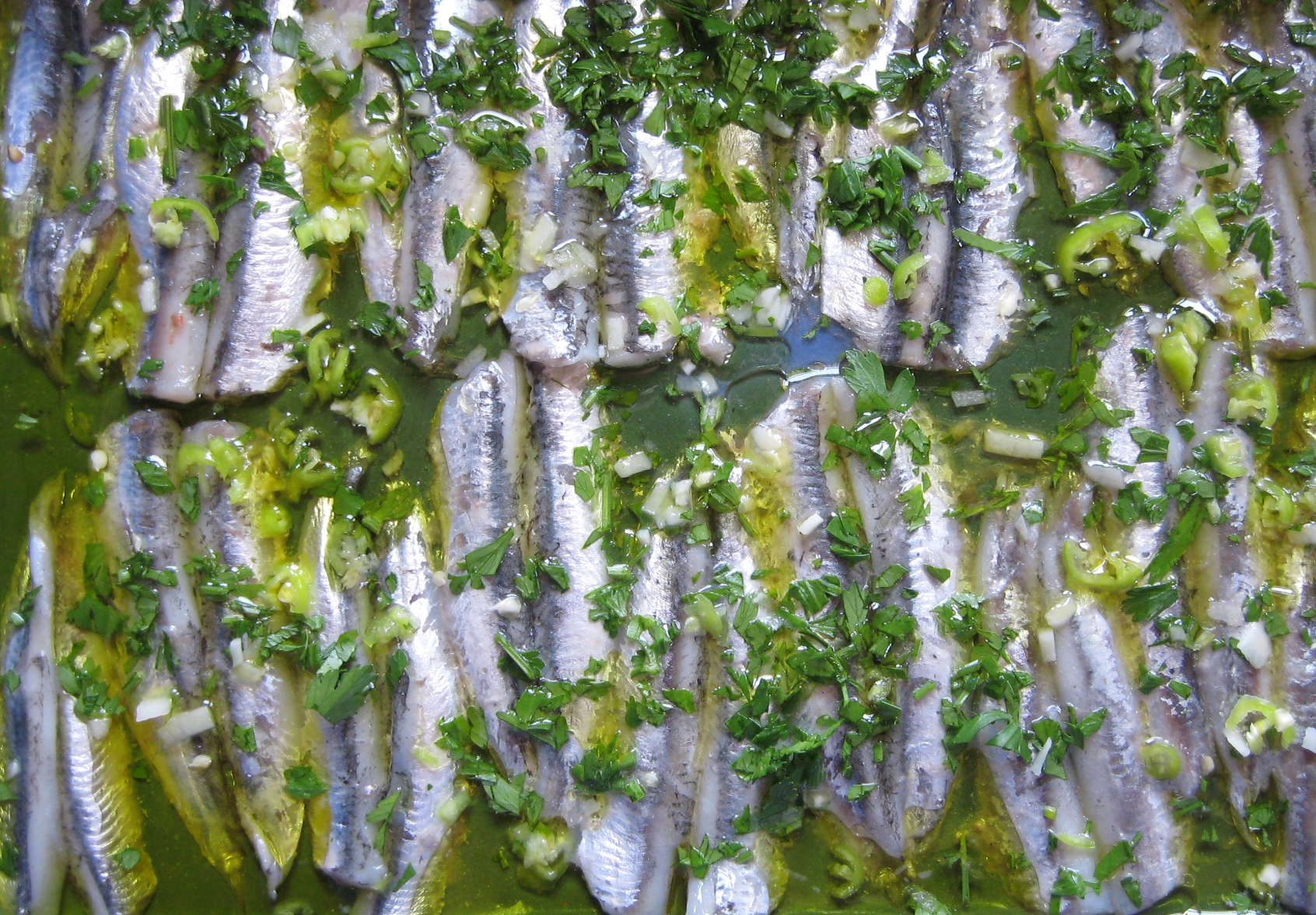
……..or Smelts in Vinegar. The word Smelt does not excite the imaginary palate in quite the same way as the word Boqueron. I assume its origin is from the word boca which translates as mouth and that Boqueron means a mouthful. And a delightful mouthful it is, whether dusted with flour and fried whole or marinated in vinegar as in this recipe which I was describing to my friend Andy while in France last week, and so it brought it to mind to share with you too.
This is regularly served as a tapa in Spanish bars. A couple of the fish will be presented atop a slice of fresh stick bread and sometimes with a good dollop of Allioli between the bread and the fish.
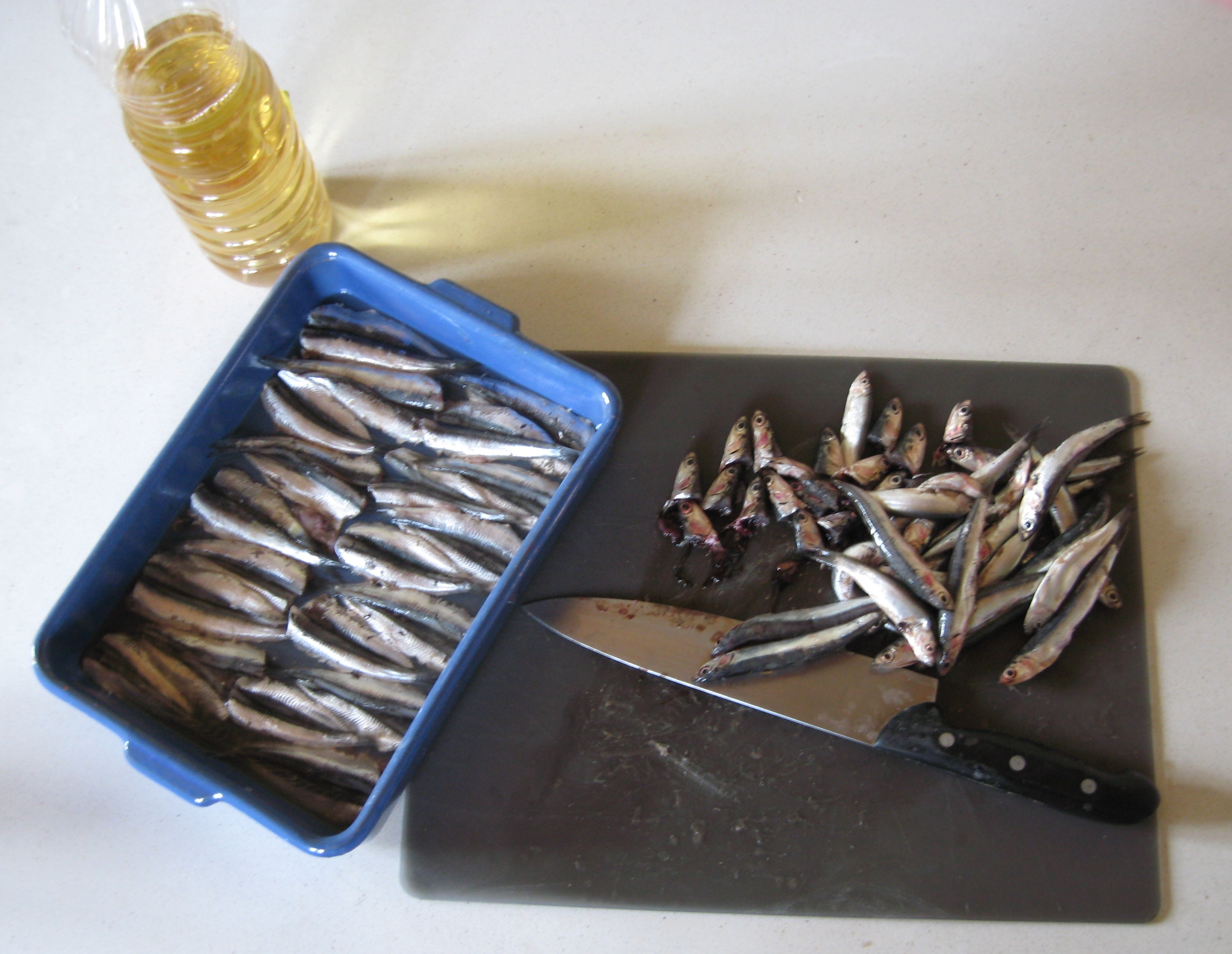
Cut the heads off your fresh smelts and open them out flat by opening along the belly and moving the flesh away from the bones on one side. There is no need at this point to remove the bones or the guts.
In a shallow dish that will take all the fish in one layer, pour enough white wine vinegar to cover the bottom of the dish. Lay the fish with the flesh side down into the vinegar.
Continue with all the fish putting them neatly side by side in the vinegar and then add more vinegar to just cover the layer of fish.
Put in the fridge for an hour so that the vinegar can ‘cook’ the fish.
Remove the fish one by one from the vinegar and remove the bones and guts. Lay in a clean dish.
When you have done them all, pour over a generous amount of extra virgen olive oil and season the dish with finely chopped garlic and parsley. I added some chopped fresh green chillis as well, which are not traditional, but I like a bit of spice with my fish. Having a lime farm, and consequently having a lime or two lurking about, I have used lime juice in place of the vinegar in this recipe which works very well and makes it more of a Ceviche, especially if you substitute fresh coriander for the parsley. Lemon juice should work too, although I haven’t tried it.
Put back in the fridge for half an hour or so for the flavours to develop and then serve with fresh bread.
20 Monday Aug 2012
Posted in Main Courses, Shopping
I am in the Alps this week, in theory escaping from the Spanish heat to the glacial coolness of the mountains, but France is in the midst of a heatwave. Even so, the nights are lovely and cool.
The Mont Blanc Tunnel is only ten minutes away, so I love to go through for an Italian fix while I am here. The Aosta Valley is so beautiful with its grey stone houses topped with huge round slates that over time develop wonderful hues, castles and fortresses that in ancient, and probably not so ancient times, were bases from which to defend the valley and rushing rivers that even at this time of the year are frothing with melt water from high up the mountains. The steep sides of the valley are terraced and planted with neat rows of vines each with a pretty rose bush at the end to act as an early warning system for mildew. Lower down are orchards of fruit trees enclosed by dry stone walls that have been there for centuries. In the high alpine meadows graze herds of cattle which provide the milk for the best butter that I have ever tasted, and a range of distinctive cheeses. Bleu d’Aoste, Fontina and Fromadzo as well as fresh cheeses that have to be eaten within a couple of days of being made.
For me, one of the joys of travelling is to be able to sample fresh food in its place of origin. I love Mozerella di Bufala, which in theory is available outside Italy, but until you have tasted it in Italy, you haven’t really tried it. The lightness is just not equal in the Mozerella for export. A new find for me is Burratina, a variation of Mozerella that is even lighter and creamier in the centre. So I have to buy some to take back to France to share with my friends.
I am having a group of chums round so that I can catch up with them in my brief stay here. This is the dinner that I prepared for them.
To start a salad of Batavia, fresh and sundried tomatoes dressed with pesto, toasted local walnuts, all topped with a generous portion of Burratina.
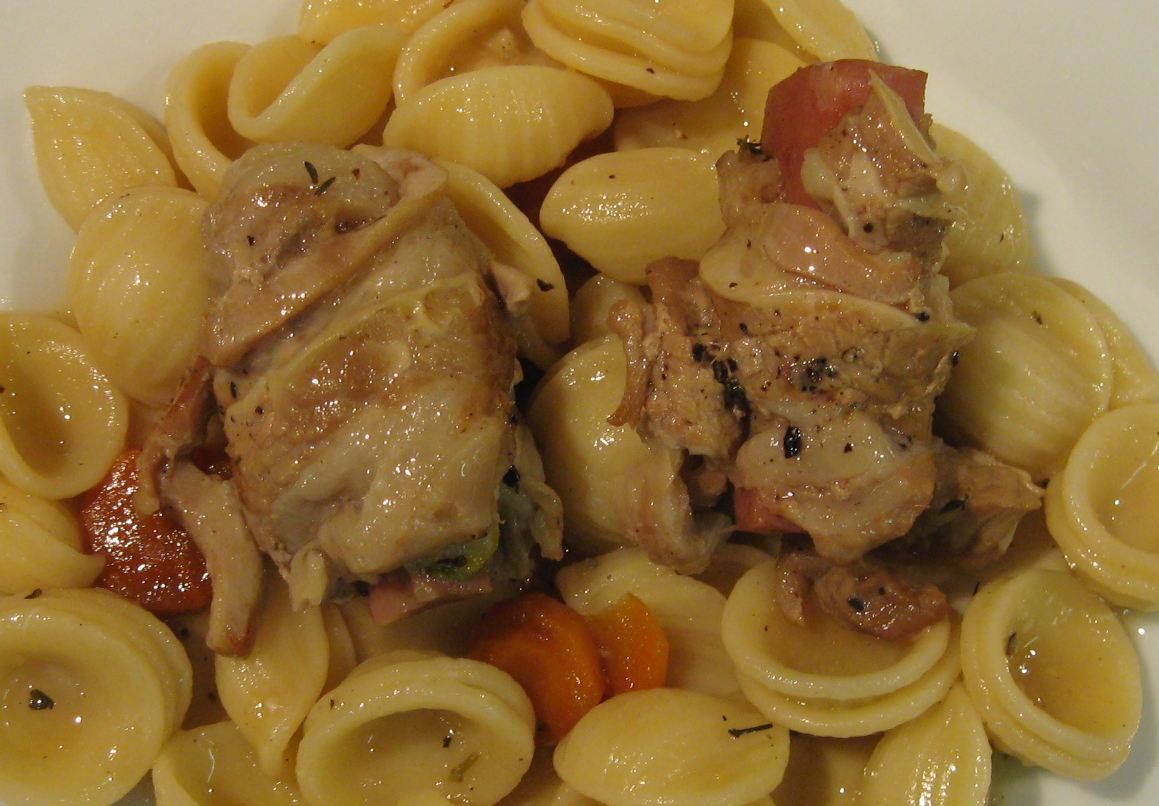
Veal and Mortadella Rolls with Orecchiette Pasta – For 8
Belly of veal in slices, 1 slice per person
Mortadella in a piece
Olive oil for frying
1 onion, finely chopped
5 cloves of garlic, finely chopped
white wine
fresh or dried thyme
salt and freshly ground black pepper
6 carrots
butter for frying
Orecchiette
Cut each slice of veal belly in two. Cut the mortadella into batons that will fit with the width of the veal slices. Wrap the veal round the mortadella and secure with a cocktail stick. Season them with salt and pepper.
Heat the oil in a shallow pan that has a lid and will take all the rolls in one layer. Fry the rolls turning them to lightly brown them on all sides.
Add the chopped onions and garlic, and continue frying for five minutes.
Add the white wine to come to just over half way up the rolls. Add a pinch or two of thyme.
Cover and cook at a simmer for an hour, turning the rolls after half an hour. Turn the heat down to the minimum and continue cooking for another hour and a half. By this time the sauce should have reduced slightly and be a thicker consistency. If the sauce reduces too much and the dish becomes dry, add a little chicken stock or water.
Peel and slice the carrots. fry in butter in a covered pan turning from time to time until golden on both sides. Add to the veal rolls.
Cook the pasta in plenty of salted water to which a splash of olive oil has been added until al dente.
Remove the veal rolls to a warm dish and remove the cocktail sticks.
Add the pasta to the white wine sauce and stir to amalgamate.
Serve a mound of pasta topped with two veal rolls per person.
For dessert freshly made Peach Ice Cream served with fresh peaches and a Ginger Biscuit.
16 Thursday Aug 2012
Posted in Food for One, Main Courses
This is an everyday dish that is full of flavour and has a sophistication that belies its simplicity. And its just as easy to make for one or eight. Although the sauce looks creamy, it doesn’t contain cream and is not brimming over with calories.
A simple dish like this only needs simple accompaniment – plain boiled potatoes or pasta. If you like you can take the flesh off the bones of the chicken and reheat it with the sauce to go with pasta. A fresh crisp green salad on the side would complete the meal.
Per person
1 leg of chicken
2 cloves of garlic
white wine
olive oil or butter
salt and pepper
In a shallow pan that has a lid, heat a small amount of either oil or butter.
Season the chicken with salt and pepper and fry until lightly browned on all sides.
Peel and slice the garlic and add to the pan with the chicken. Continue frying for a few more minutes to lightly brown the garlic.
Add enough white wine to come half way up the chicken. Turn the heat down, cover and simmer for 40 minutes turning the chicken every 10 minutes or so.
After this time the sauce should have reduced, thickened and become creamy looking. If it still looks too liquid, continue cooking with the lid off until it thickens.
Check the seasoning and serve. As simple as that!
You can of course vary the flavourings. Any type of mushroom can be added at the same time as the garlic. Fresh chopped tarragon added half way through the cooking turns it into Tarragon Chicken. For a more robust dish, fry some lardons of smoked bacon with the initial frying of the chicken and then continue with the rest of the recipe.
09 Thursday Aug 2012
Posted in Food for One, Snacks and Tapas, Vegetable Dishes
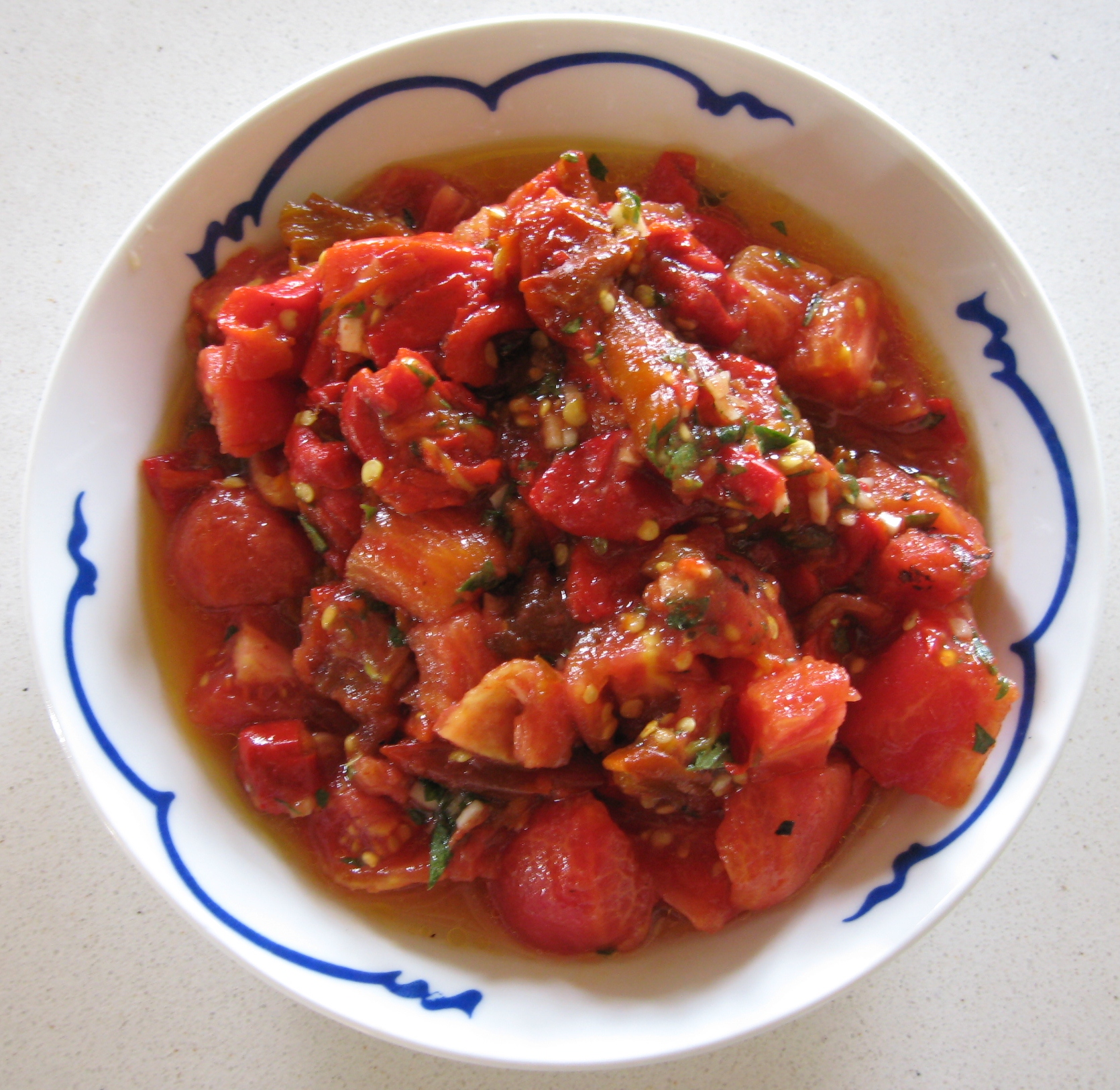
This is one of those wonderfully successful recipes that have been created by a problem. In the hot summers of southern Spain, the skins of vegetable fruits become very tough and unpalatable, so skinning them for salads is essential. So a salad was created that consisted of skinned tomatoes and red peppers, garlic, olive oil, fresh oregano and salt. The the sum of the parts becoming greater than the individual items.
The ideal is to char the skin of your vegetables over an open fire or barbeque so that you get a subtle smokey flavour to the salad. It is just the thing to do on that barbeque fire that is now at its peak, now that you have finished cooking the meal. But to do that requires planning ahead and having the tomatoes and peppers already in the house.
Life is not always ideal so in the event that you don’t have a fire available, then the tomatoes and peppers can be held over a gas flame turning them slowly until the skins blacken all over. The skin on the tomatoes will split when cooked enough to peel. The red peppers need to be really quite black before they will peel easily. It is almost impossible to have them too black. Put the peppers to cool in a covered plastic container to help retain the moisture in the fruit.
Peel the vegetables as soon as they are cool enough to handle retaining any juice that comes out of the peppers.
Cut into bite sized pieces and put in a dish with the pepper juice.
Very finely chop a clove of garlic and add to the salad.
Season with salt, a generous amount of extra virgin olive oil and plenty of chopped fresh oregano.
Leave – not in the fridge – for about an hour for the flavours to meld before serving.
06 Monday Aug 2012
Posted in Snacks and Tapas, Starters
The sultry summer heat dampens the appetites both for eating and for spending a lot of time preparing food. The mediterranean style of serving several little dishes of fresh and stimulating food is the way to go.
Fresh Figs with Serrano Ham
Baby Squid Stuffed with Hazelnuts and Raisins
Sun Dried Tomato Pesto with Italian Crispbread
Here is the recipe for the Prawn Fritters or Tortillitas de Gambas.
The fame of these delicious fritters has spread from Cadiz where they originate, to the whole of Spain – and now beyond. Once you have tasted one you can see why.
I first had them in Granada. It was the end of a warm June afternoon spent exploring the Albaicin, the old arab quarter of the city, the narrow streets dividing the beautiful houses full with the scent of orange blosssom and honeysuckle. We came across a rose draped square high up the hill with views out over the city and so installed ourselves outside a cafe with expectations of crisp cool white wine accompanied by a tasty local morsel.
The waiter brought us a list of the tapas available. When faced with such a list I always choose something that I have not tried before. So the toritillitas were ordered.
The ice cold wine arrived and shortly after the Tortillitas. Tiny shrimp still in their shells which add to the crispness of the fritters of light batter flavoured with garlic, onions and parsley. They arrive sizzling hot to your table.
Made with Camerones, a tiny brown shrimp found in the marshy coastline around Cadiz and Sanlucar de Barrameda, these are poor mans food turned culinary delight. These shrimp do not find their way to the area of spain where I live very often and when they do I have to make the Tortillitas. In the meantime I use small peeled prawns, which are a good enough substitute.
The key ingredient in the batter is chickpea flour. Gram flour to Indians. It is the same flour as used in Onion Bahjis. Chickpea flour has a slightly sour taste to it which goes very well with fish, but its main attribute is that it crisps wonderfully when fried. Use it to coat fish or vegetables before frying. As a bonus it adds extra protein, but that is not why it is there.
As with all recipes, there is no one that is the definitive, and asking my Spanish friends for the best recipe for these fritters, each one gave me a different one. Some use all chickpea flour, some mix half and half chickpea and wheat flour, some swear by using only a coarse ground wheat flour called Recia. So after much experimentation, this is my favoured mix. The chickpea flour for crispness and sourness, the wheat flour for smoothness. The addition of chilli is not traditional, but I love a bit of spice with my fish.
For enough for 6 people
Chickpea flour – 60 gms
Wheat flour – 40 gms
Shrimp or peel prawns – 100 gms
Garlic very finely chopped – 2 cloves
Parsley finely chopped – 1 tablespoon
Chilli finely chopped – to taste
Salt and freshly ground black pepper
water
150 – 180 ml
Oil for frying – either sunflower or olive
Mix all the dry ingredients together in a bowl. Add water to make a thin batter.
If you are not sure about the amount of water try frying a sample fritter.
Heat oil in a shallow frying pan to a depth of about 1 cm. When it is hot put in a tablespoonful of the batter. It should spread out into a thin fritter. If the batter is too thick to spread, then add more water to the mix.
Fry a few at a time on a brisk heat until crisp and light brown.
Serve immediately.
31 Tuesday Jul 2012
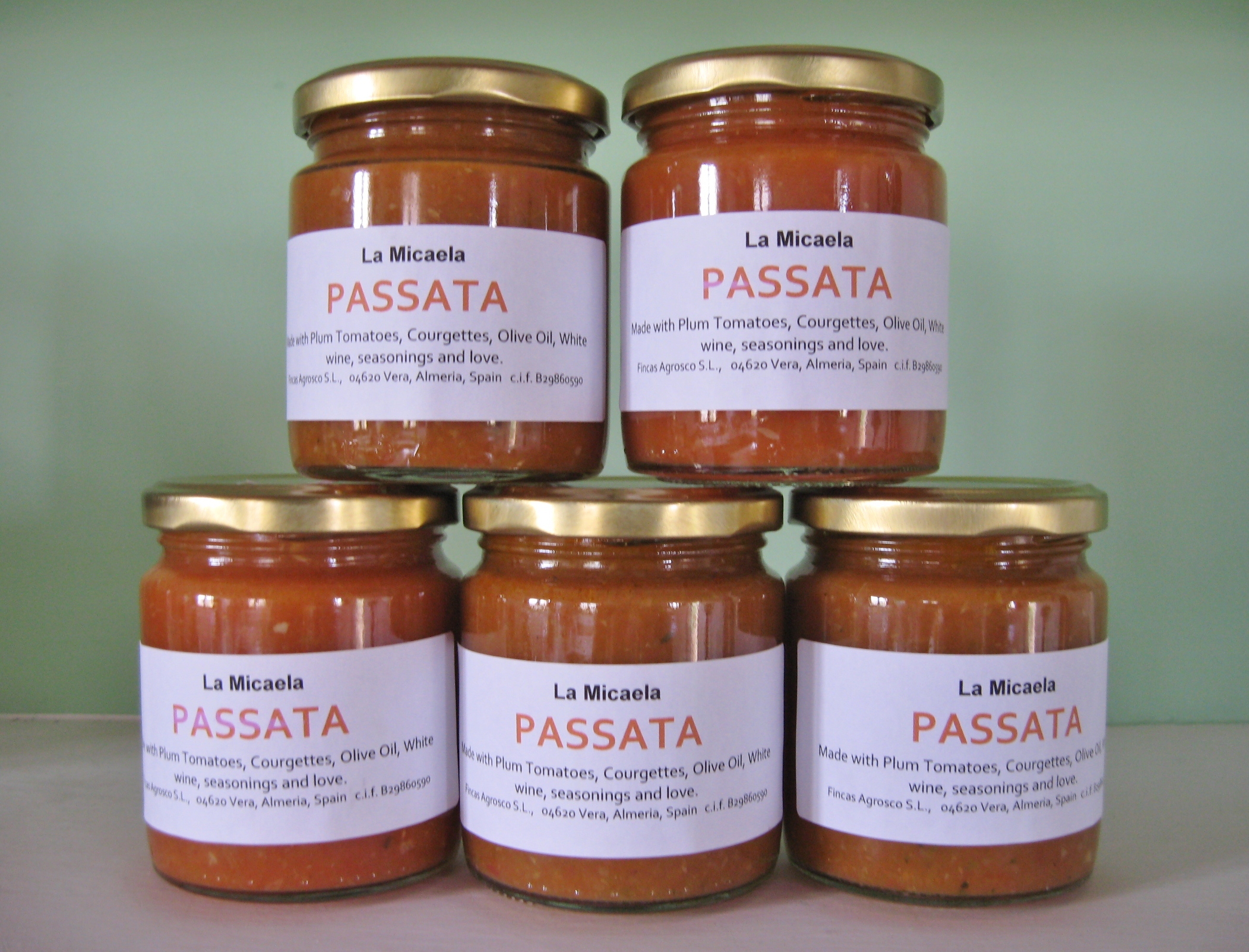
There are two slightly different ways of making this. One method, you leave the tomatoes whole, skin them and then make them into the passata and jar the passata straight away. The other method you chop the tomatoes without skinning them, make them into the passata, put the pulp through a mouli, re-heat the passata and then put it into jars.
Each method has its advantages. For the first you obviously don’t need a mouli, and you get a much chunkier texture. I tend to use this method when I have a garden full of perfectly formed but small tomatoes.
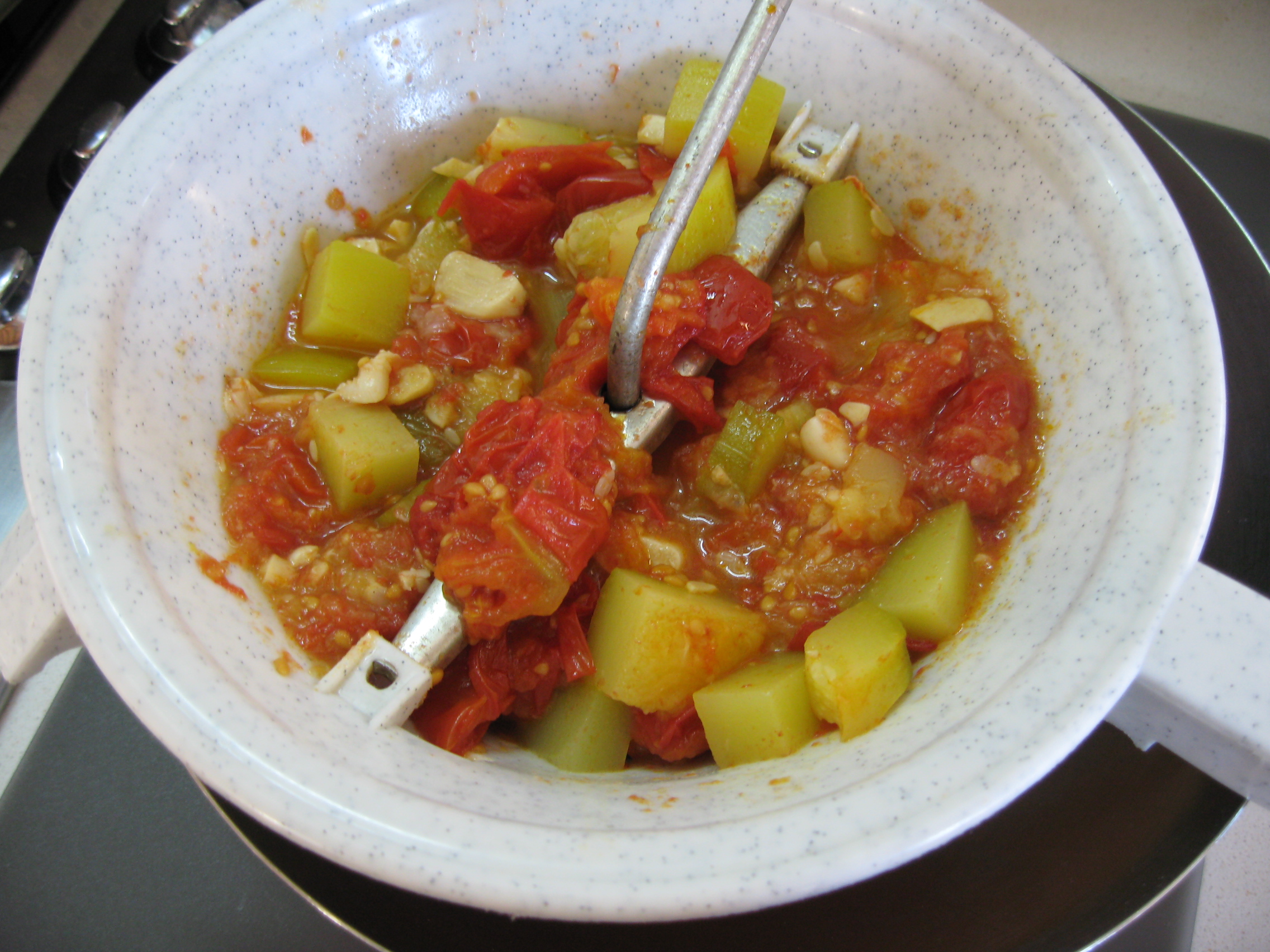
The second method is good for when your home grown tomatoes are a little less than perfect. Maybe they have a tad of blossom end rot or woody centres but most of the tomato is OK. Because you cut up the tomatoes you can use the good bits and send the rest to the compost heap, thus not wasting any of your crop. Also this method despite having to re-heat the pulp is actually quicker than the first method with all the tomato peeling. Another plus to this method is that you can mix in other vegetables. Although the recipe below is for tomatoes alone, when I made the batch in the photos, I had some courgettes that had raced off and were aspiring to be marrows, so they were peeled and chopped and added to the mix. Red peppers work very well, but not green as they are too bitter. Onions, all types of squashes, auberines. All add thier own flavours. I would never go more than one third of the other vegetables to two thirds tomatoes.
Before I get into the recipe a note about jars. I keep all jars that have the type of lids that create a vacuum and have a plastic seal around the inside of the lid. These can be re-used as long as they will still fasten tight. The lids must not be pierced, rusty or bent round the edges or they will not seal and create a vacuum. When you come to use them for preserving the passata they need to be hot and sterile. I find that a hot wash in the dishwasher with a steam dry works really well. You need to be ready to use the jars straight from the dishwasher when they are pretty well too hot to handle.
Alternatively, if the jars are already clean, put them with thier lids a few at a time in a large pan with boiling water and heat to a simmer to sterilize them. Fish them out, drain them and use while still hot.
For 1 kilo of tomatoes
2 or 3 cloves of garlic – finely chopped
1 tablespoon olive oil
1 bayleaf
pinch of sugar
salt and pepper
Firstly prepare the tomatoes. If you are doing the first version peel the tomatoes by bringing a pan of water to the boil. When it is boiling add a few of the tomatoes. You don’t want to lower the temperature of the water by adding too many. As soon as you see the skins of the tomatoes start to split, which will only take a couple of minutes, scoop them out and let them cool. Carry on with the rest of the tomatoes. When the tomatoes are cool, slip the skins off.
If you are going for the second method, just cut up the tomatoes. Remember to weigh them after cutting if there is a lot of waste.
In a pan large enough to take all the tomatoes, heat the oil gently. Add the garlic and cook a minute or two. Add the tomatoes, bayleaf and seasonings. Stir to mix. Cover and leave to stew on a low heat for about half an hour.
If you are with method one, taste the passata to check the seasonings and adjust accordingly. Then put in hot jars filling to half a centimetre from the top. Make sure that there are no bits of sauce around the top where the glass will meet the seal in the lid. You can just wipe the top with kitchen roll. To begin with put the lids on loosely, the passata will then warm the lid a bit more. After a couple of minutes you can tighten them up.
If you are on method two, put the pulp through the mouli using the coarsest disc, this will sieve out the pips as well as the skin. Return the pulp to the pan and bring back to the boil. Lower the heat and simmer for three minutes to kill any bacteria that may have infiltrated the pulp. Then continue as above adjusting the seasoning and jarring up the passata.
The herbs in the passata can be changed as you like. Instead of the bayleaf, try fresh basil or oregano.
Uses? Pasta sauces, ready made tomato topping for pizza, soups, stews. Anywhere where a recipe calls for tomatoes.
30 Monday Jul 2012
Posted in Techniques
Those of us who have tomatoes growing in their huertas – vegetable gardens – are finding that we have more than we can eat fresh, so I am going to give you two methods of preserving them. If you live in a climate with not much sun, you may wonder what use the instructions for sun drying would be to you, but should you find yourself holidaying somewhere hot, you may be grateful to have the knowledge that in the space of three to four days you can have your own sun dried tomatoes to take home as a culinary memento of your stay.
First principle is only use perfect fruit. Small tomatoes are quicker and easier to dry than large ones. So certainly while you getting used to drying tomatoes, and particularly if the weather looks uncertain, go for smaller ones if you have the choice.
Wind is as much of a factor in successful drying as heat. Look for a drying spot that has all day sun and a breeze. You may have to have a morning drying spot and a different afternoon one.
Any flat tray/plate can be used to dry the tomatoes on. Because I dry a lot, I have an old fold out clothes drying rack to which I peg teatowels to make a flat surface. But I have used oven trays, unused cupboard shelves and plates.
Always bring the tomatoes in at night. No matter how hot it feels there is always too much condensation at night, which will encourage your tomatoes to rot. Not to mention all the vermin, cats and bugs that roam around at night.
Start at the beginning of the morning to give the tomatoes a good full day of drying for their first day.
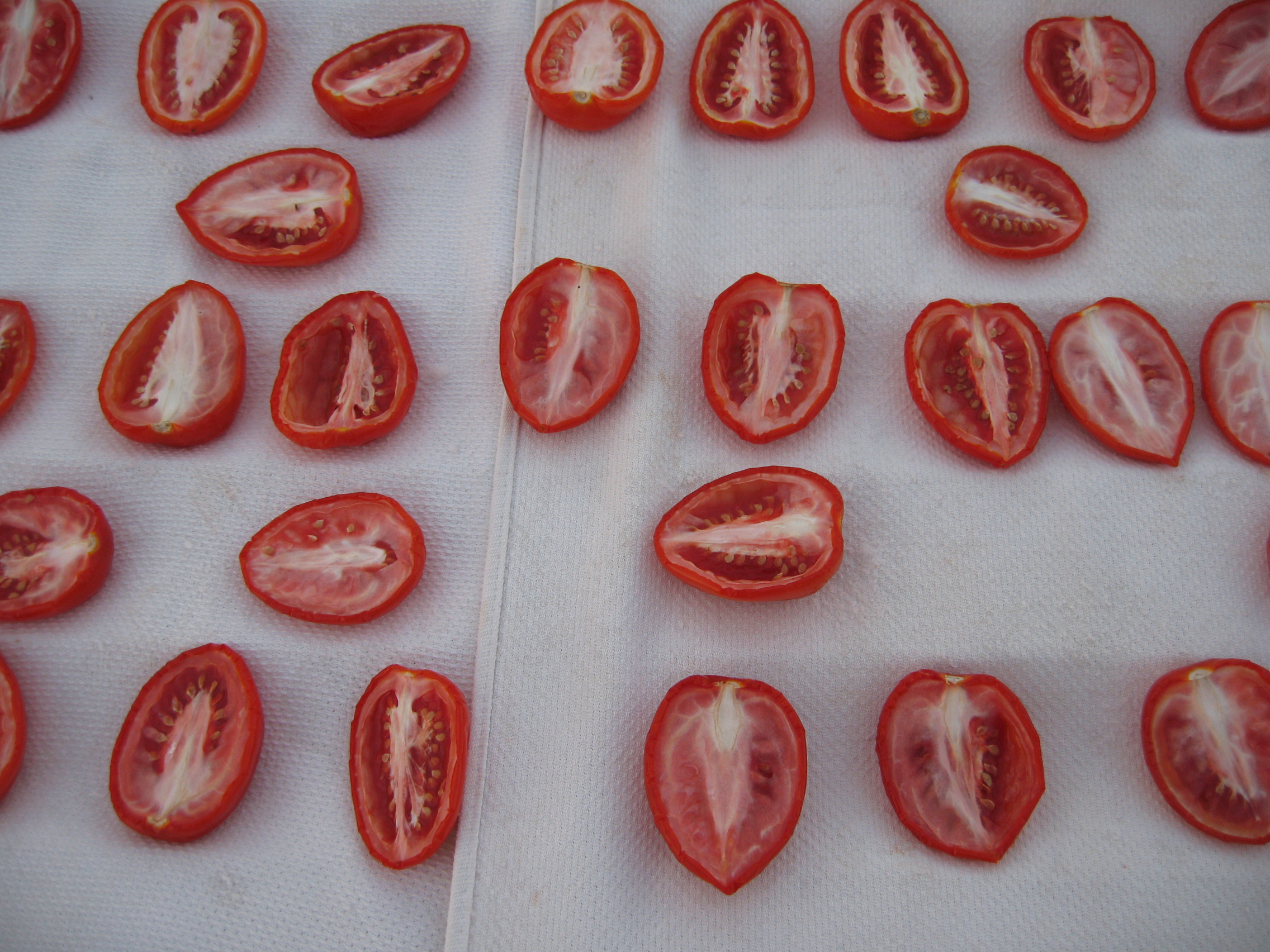
Wash the tomatoes. For plum tomatoes cut them in half as above. For round varieties cut them in half across their equators.
Lay out the tomatoes on a tray cut side up and sprinkle generously sea salt onto the flesh.
Put them outside in a sunny and breezy spot.
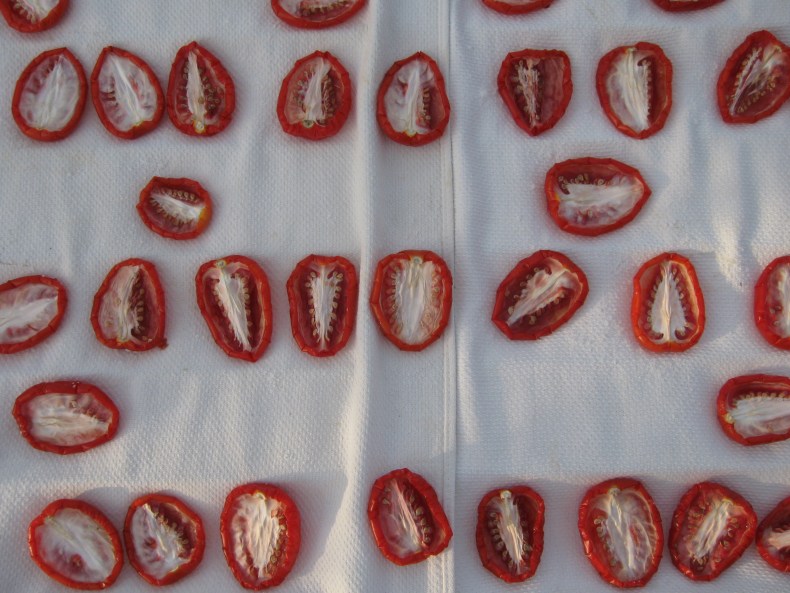
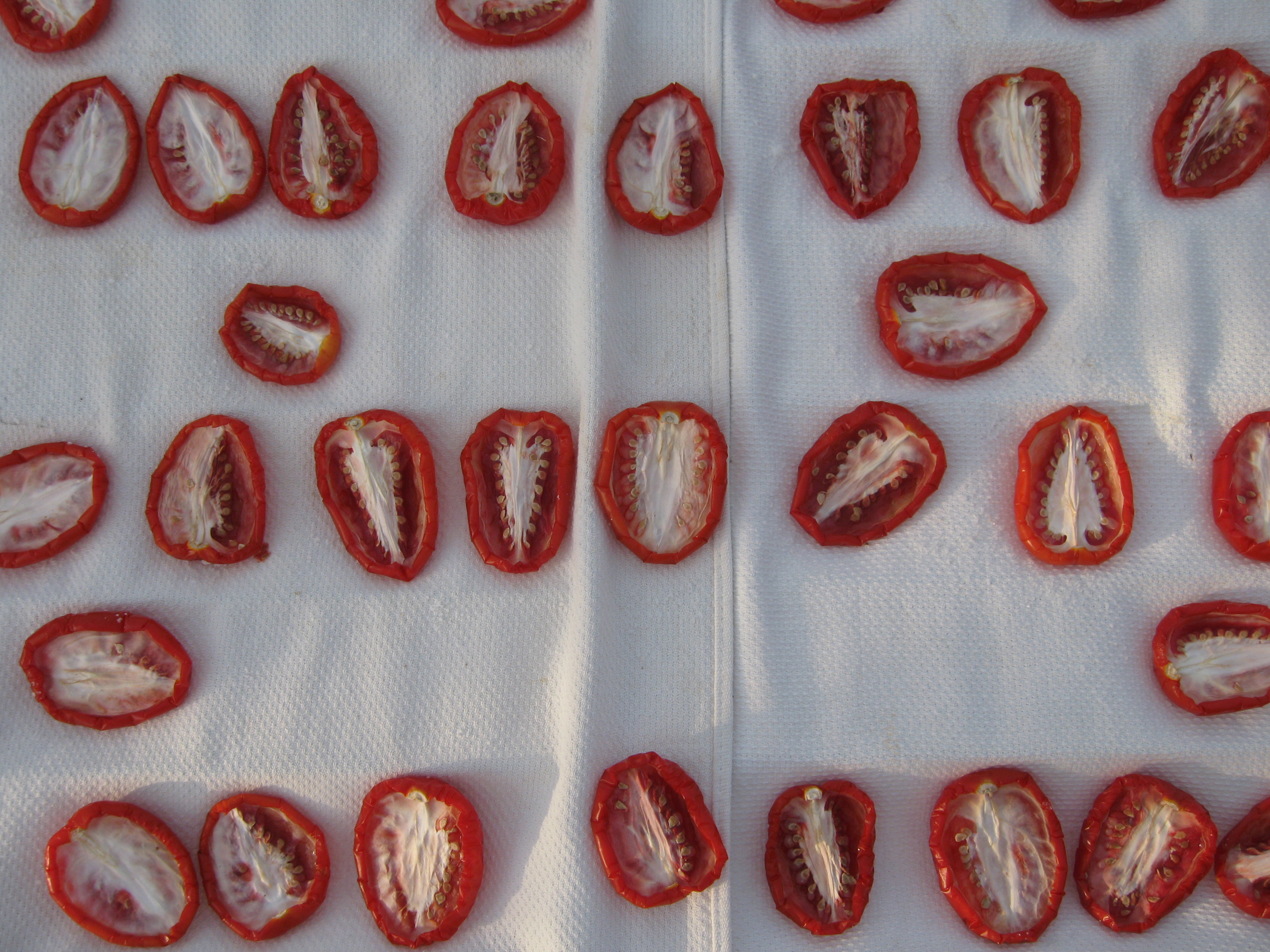
After one and a half to two days of drying the tomatoes will have curled inwards, so to enable them to keep drying you need to uncurl them and flatten them out. Sometimes little bugs may have crept into the curled up edges, just evict them.
End of day 4 – the dried tomatoes
The length of time that tomatoes need to dry varies depending on the size of tomato and the weather conditions. Normally here in the second half of July the conditions are perfect for drying, which they were for the Komato variety at the beginning of the post, which dried in two and a half days. Just because I wanted to do a step by step with photos for you, the plum tomatoes last week took four days to dry as we had unseasonal cloud and humidity. Occasionally and usually towards the end of the season the weather turns too humid and you have to abandon the drying half way through and use the tomatoes for something else.
Don’t be tempted to leave the tomatoes out in the sun too long either. I have done this thinking that extra drying will help them keep longer. It doesn’t and you end up with tomatoes like dried up bits of leather. So stop when the tomatoes feel dry but still have some flesh to them.
To store I pack the tomatoes into jars with olive oil. The first year that I dried tomatoes I had read somewhere that they could be stored in paper bags. By November they were covered in little spots of a type of mould. Maybe harmless – but not appetising. This would probably happen even more quickly in a less dry climate than here. Putting them in oil holds the colour much better too.
Put a little oil in the jar first, and then layers of tomatoes and oil making sure that you have no air bubbles. Make sure that there is about 1cm of oil above the last tomato. Seal and store in a cool dark place.
Next post will be the recipe for Passata.
I leave you with Pablo Neruda
The street
filled with tomatoes
midday,
summer,
light is
halved
like
a
tomato,
its juice
runs
through the streets.
In December,
unabated,
the tomato invades the kitchen,
it enters at lunchtime,
takes its ease on countertops,
among glasses,
butter dishes,
blue saltcellars.
It sheds its own light,
benign majesty.
Unfortunately,
we must murder it:
the knife sinks into living flesh,
red viscera,
a cool sun,
profound,
inexhausible,
populates the salads of Chile,
happily,
it is wed to the clear onion,
and to celebrate the union we pour oil,
essential child of the olive,
onto its halved hemispheres,
pepper adds its fragrance,
salt,
its magnetism;
it is the wedding of the day,
parsley hoists its flag,
potatoes bubble vigorously,
the aroma of the roast knocks
at the door,
it’s time! come on!
and,
on the table,
at the midpoint of summer,
the tomato,
star of earth,
recurrent and fertile star,
displays its convolutions,
its canals,
its remarkable amplitude and abundance,
no pit,
no husk,
no leaves or thorns,
the tomato
offers its gift of fiery color
and cool completeness.
29 Sunday Jul 2012
Posted in Main Courses
Inspired by the pork butchery course, on returning home to Spain I felt the need to treat my friends to a good piece of roast pork, but Spanish style of course……..
I first had a slice of this as a tapa in Bar Lucero in Cuevas De Almanzora. On a dreary winter day when we had had a dreary morning chasing officialdome – a frequent occurrence here – to brighten ourselves a bit we stopped for a small glass of and a tapa before going home for lunch. It was a cold slice and the mix of the salty olives, garlic and lots of coarsely ground black pepper as a seasoning to the slightly fatty pork immediately caught the attention of my taste buds. It was further seasoned with a squeeze of fresh lemon and drizzled with olive oil. Suitably brightened we stayed for another glass so we could check out what other tapas were good. The pork however remained the star of the show.
For a piece of belly pork weighing about 1.5 kilos – with or without skin, and if there are any bones remove them or have the butcher remove them for you.
200 gms green olives – the bright green ones that have been crushed to open the skin and then cured in brine are best, but if you can only get the ones that are cured to a yellowy green colour and are softer in texture then use those.
6 fat cloves of sweet garlic
3 large eggs – hard boiled
1 table spoon coarsely ground black pepper
Peel and finely chop the garlic.
Coarsely chop the olives removing the stones if they have them.
Mix the olives and garlic together.
If your pork belly has skin and you want crackling, then score the skin either in stripes or a diamond pattern. Salt the skin and leave for half an hour for the salt to draw out any moisture. Wipe dry with kitchen roll.
Lay the pork on a board skin/fat side down and season all over with the black pepper. Spread the olive mix evenly over the surface. There is no need for salt as the olives are salty.
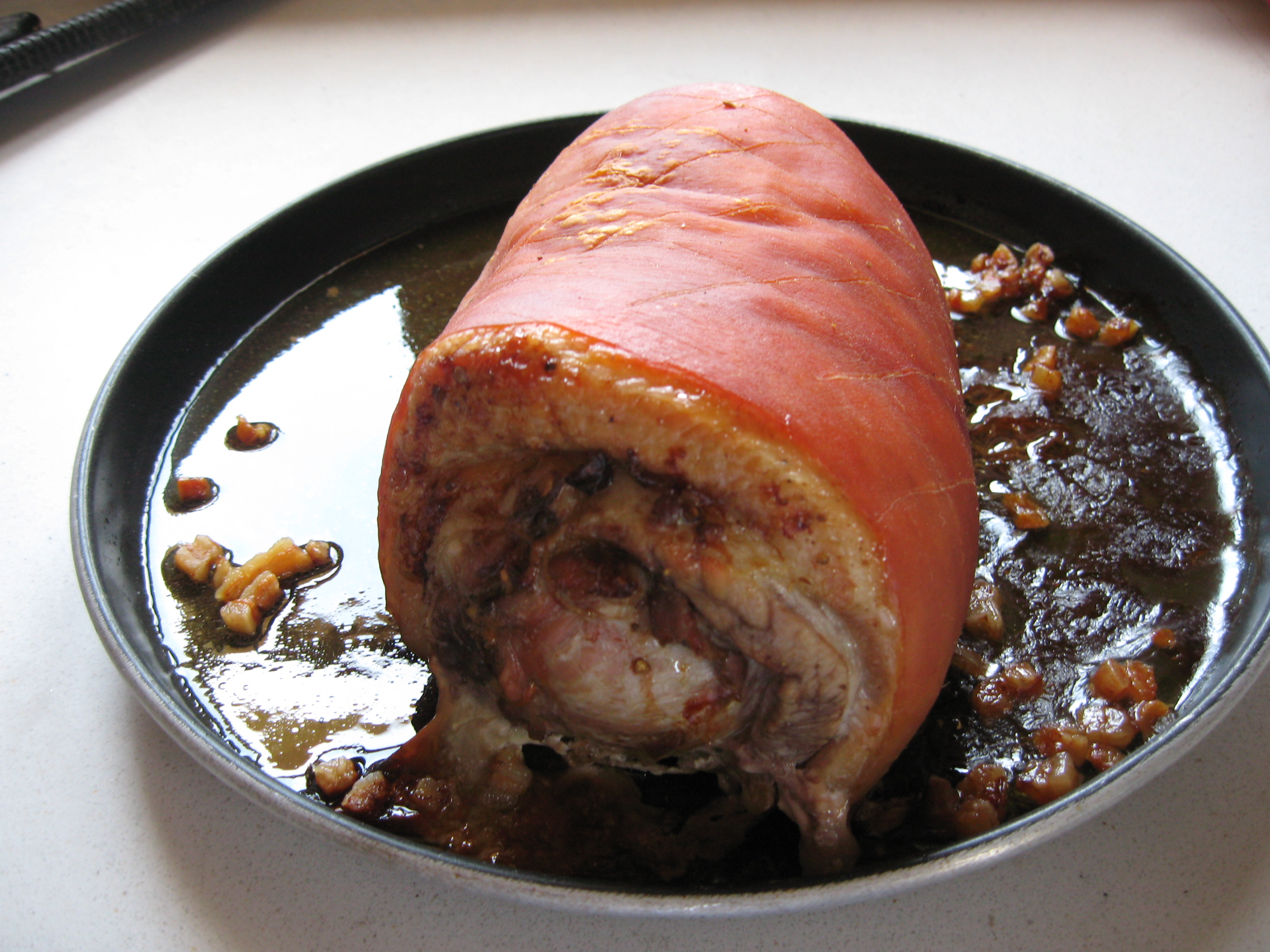
Peel the eggs and slice them. Lay the slices over the olive layer. Roll the pork and tie it.
Roast at 160 Centigrade for 3 hours. If you have crackling, then roast for 2.5 hours at 160 Centigrade then turn the oven up to 240 Centigrade and roast for another half hour.
Remove the meat from the oven and let rest in a warm place for 20 minutes before carving.
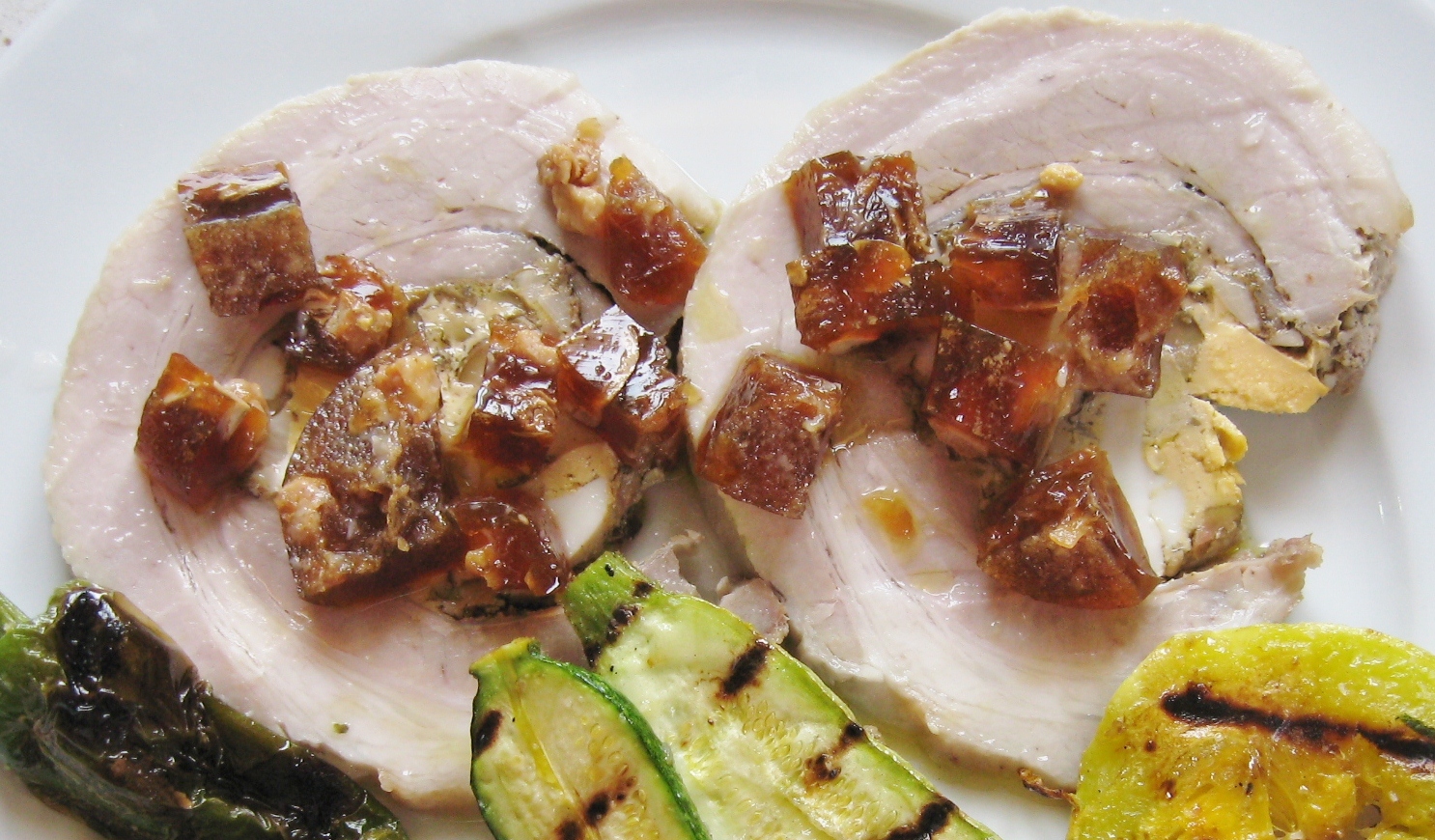
To serve cold I like to not only season the meat with lemon juice and olive oil as described above, but I save the juices and fat that have come out of the meat while it was cooking and I let that go cold in the fridge. Then you can remove the fat from the top, and save for frying potatoes, and below will be some lovely brown tasty jelly. Cut this into cubes and serve these as an extra seasoning on the cold slices of pork.