• About
  • La Micaela Farm Shop

fincafood

~ culinary and horticultural life on a Spanish farm

Category Archives: Sweet Things

A Mid-Week Dinner

09 Monday Mar 2015

Posted by Nevenka in Main Courses, Starters, Sweet Things

≈ 5 Comments

Tags

Beef, Custard, Figs, Gremolata, Oxtail Stew, Pine Nuts, prawns, Rabo de Toro, Spinach

PRAWNS WITH LEMON & GARLIC, SPINACH WITH PINE NUTS & RAISINS

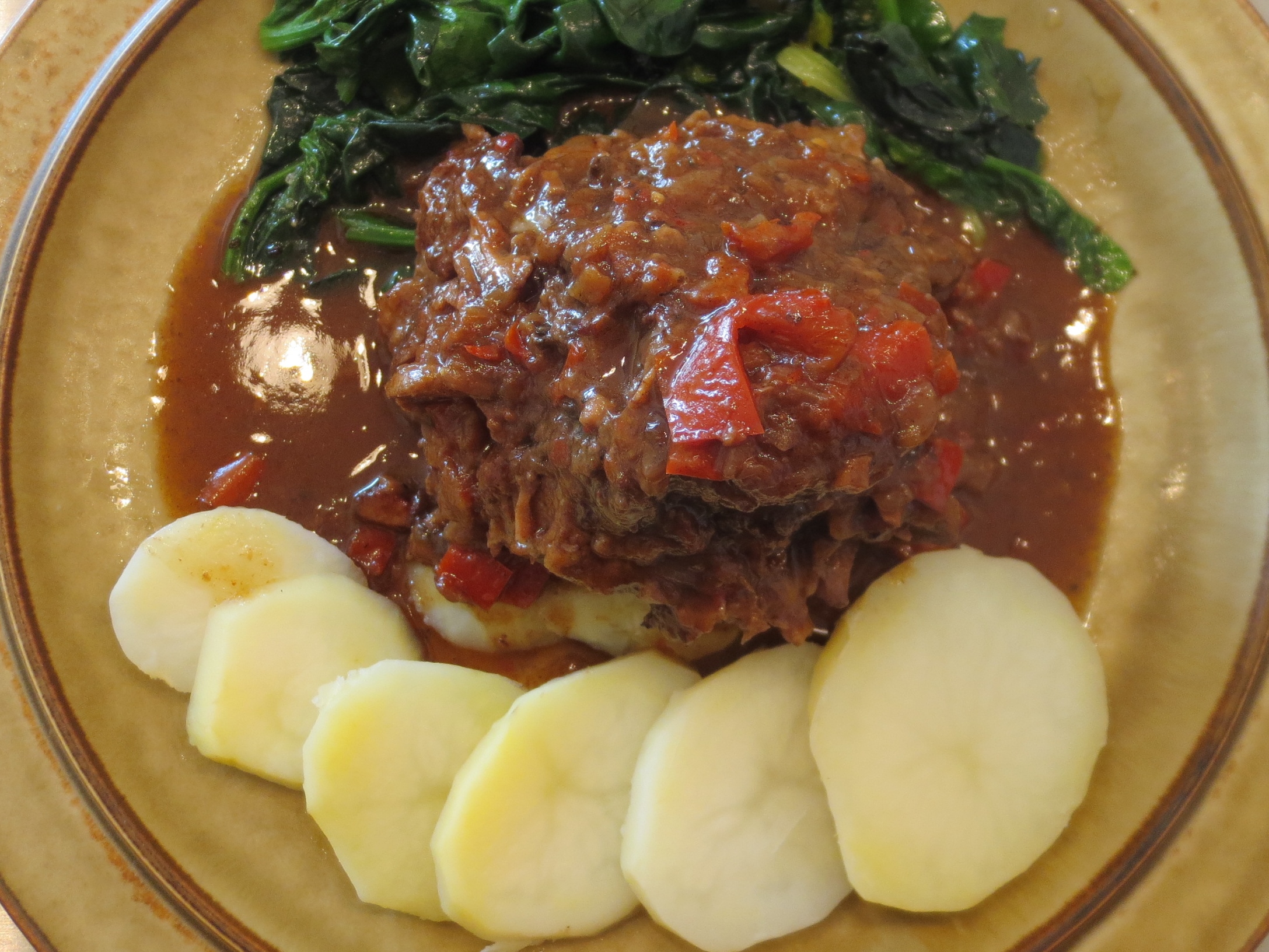
RABO DE TORO SERVED WITH PLAIN BOILED POTATOES

CARAMELISED FIG CUSTARDS SERVED WITH CARDAMON SHORTBREAD BISCUITS

This didn’t seem like a complicated meal for mid-week when I cooked it the other week, but now that I am writing about it, there is quite a lot of work. I must have been in one of those Zen cooking moods.

Much of it is done in advance, which makes it feel less work. The oxtail stew is cooked the evening before and left to very slowly cool in the oven overnight, which lets it cook long and slow and so develop a rich flavour. I cooked enough stew so that there was enough not only for this meal, but also for making Fresh Pasta with Beef Ragout for my sisters the following weekend.

IMG_1518

I have jars of Caramelised Fig Jam, made from fruit from the farm last summer. So for the dessert, I only needed to mix an egg custard, put that in pots on top of the Fig Jam and then put the pots in the oven to cook and set.

But then I got into biscuit making mood. The custards are perfectly fine without the biscuits. But I had that yearning in my minds stomach for buttery, crunchy, sweetness with the gorgeous fragrance of cardamoms…..
IMG_1522

I am giving you the stew recipe today. You will get the starters and dessert tomorrow.

RABO DE TORO – OXTAIL STEW

Serves 6

6 pieces oxtail

2-3 tablespoons flour

salt and freshly ground black pepper

olive oil

4 cloves garlic – finely chopped

1 large onion – finely chopped

2 red peppers – cut into strips

2 large tomatoes – skinned and roughly chopped

half a bottle of full bodied red Spanish wine

1 clove

5allspice berries

Small piece of cinnamon bark

salt

freshly ground black pepper

Gremolata – finely chopped fresh garlic, flat leaved parsley and the finely grated zest of one lemon

Put the flour in a shallow dish and season very generously with salt and black pepper.

Heat 2-3 tablespoons of olive oil in a thick based casserole.

Coat the oxtail pieces in the seasoned flour and fry on a medium heat, turning each side until browned all over.

This may have to be done in two batches. The meat pieces will brown more easily if they are not crowded in the pan.

Add more oil as you go along if needed.

Remove the meat from the pan and put to one side.

Add the onions and garlic to the pan and cook for a couple of minutes.

Add the peppers and continue cooking for about ten minutes until the onions are slightly browned.

Add the tomatoes and cook for a further five minutes scraping any flour stuck to the base of the pan into the sauce as it is moistened.

Put the meat back in the pan.

Add the wine. It should just come up to the top of the meat.

Heat to a simmer.

Put the clove and allspice berries into a thick based dry pan and heat slowly for five minutes or so to toast and bring out the flavour.

Grind to a powder with a pestle and mortar.

Add this to the stew with the piece of cinnamon.

Cover the casserole and put in a low oven, you want the sauce to be showing an occasional bubble but no more. For my oven this is 120C.

Leave to cook for 6 hours. Turn the oven off and leave to slowly cool.

Reheat at 180C the next day to serve.

Serve with plain boiled potatoes and gremolata sprinkled on top.


Share this:

  • Click to share on X (Opens in new window) X
  • Click to share on Facebook (Opens in new window) Facebook
  • Click to share on WhatsApp (Opens in new window) WhatsApp
  • Click to email a link to a friend (Opens in new window) Email
Like Loading...

Christmassy Things – Part Two – Lime & Quince Mincemeat

18 Thursday Dec 2014

Posted by Nevenka in Preserves, Sweet Things

≈ Leave a comment

Tags

Christmas, Limes, Mincemeat, Preserves, Quince

IMG_1442

Sweet Mincemeat is so easy to make and so much tastier than the ready made that I don’t understand why anyone would not make their own. Also when you make your own you can control the amount of sugar in it. I find most commercial food products that are sweet have increased the proportion of sugar over the last few years.

I am a great believer in using either what you have or can get hold of locally. Frequently this can point you in the direction of improving on an original recipe, as is the case here. The limes giving the mincemeat a fresher and slightly more acid citrus zing than the lemons that are normally used.

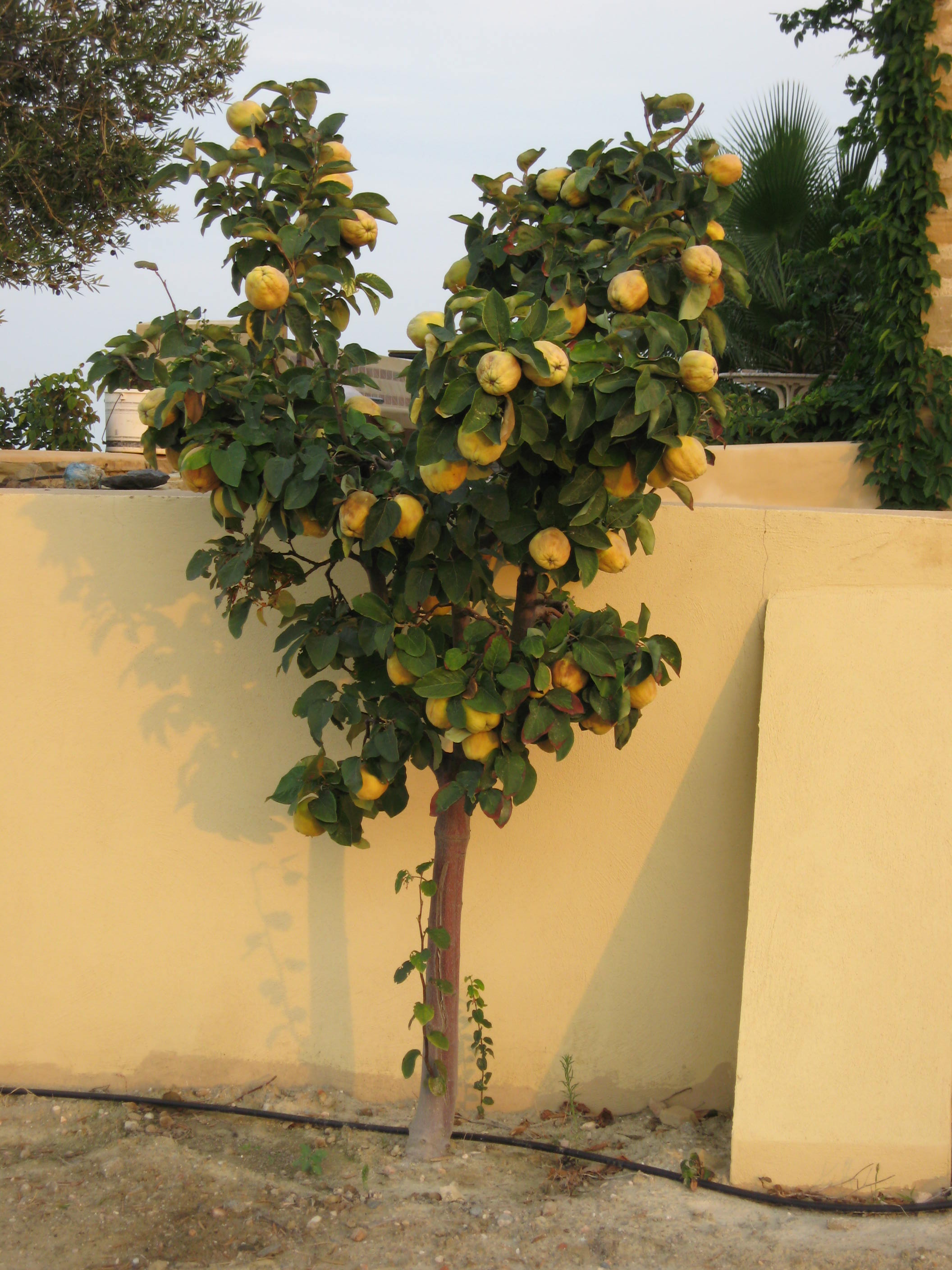
I only have one small quince tree, but it works incredibly hard and produces 40 to 50 fruit per year, some weighing as much as 800 grams. They made fabulous quince jelly, and using an old recipe where the fruit is sweetened with raisins and flavoured with orange peel, Mermelada. This being the Portugese name for quince and the recipe being the forerunner of the marmalade we know today.

IMG_1683

Still there were plenty of Quince left for other things. Being of the same family as apples, surely I thought, they could be substituted for them in any preserve recipes? And of course I am always looking for new ways of using my limes…..

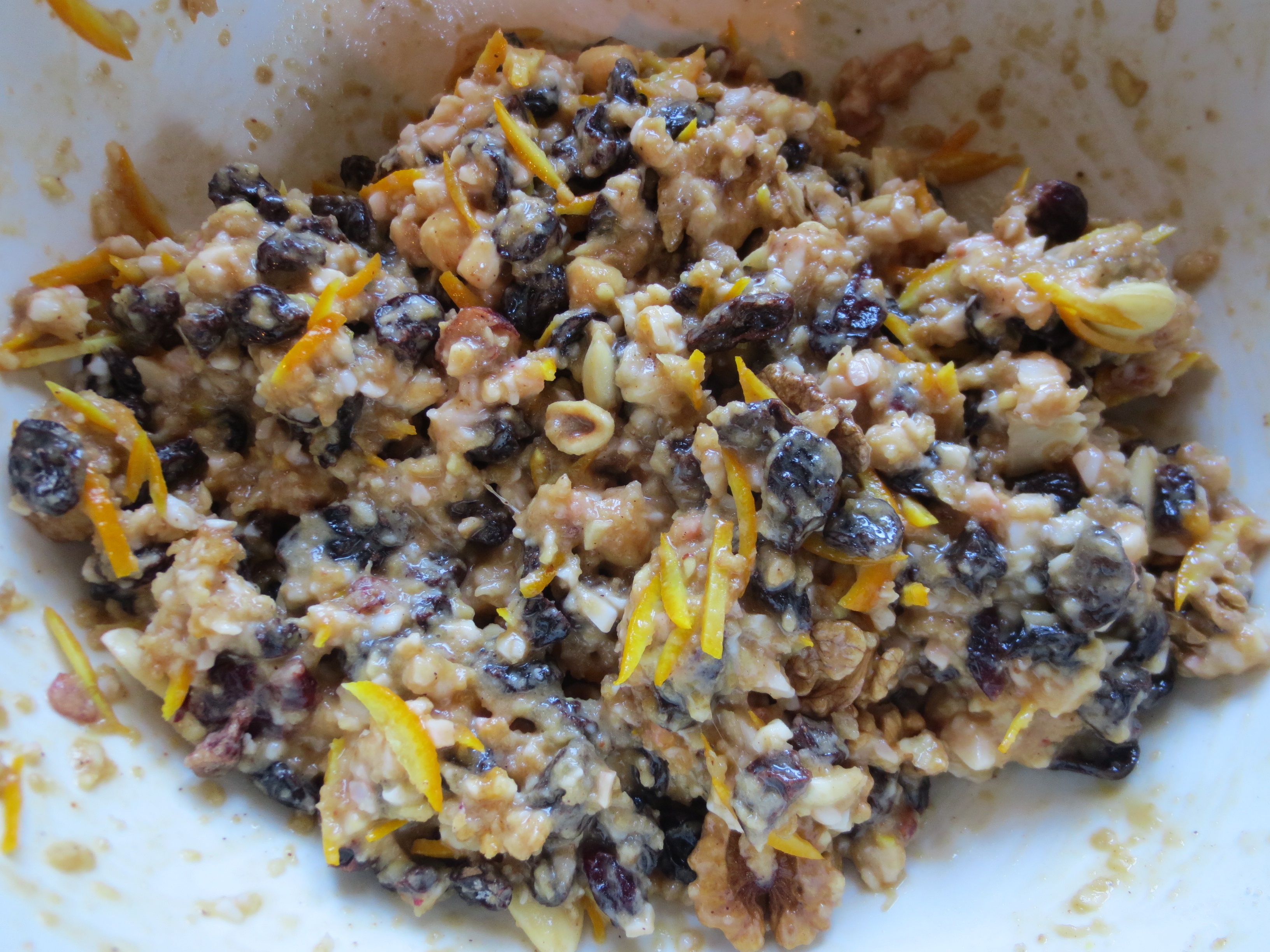
LIME AND QUINCE MINCEMEAT

1 kilo Limes
1 kilo Quince
1 kilo Sugar either white or unrefined
300 grams Beef suet
300 grams Raisins
300 grams Currants
100 grams Candied orange and clementine peel
250 ml brandy

IMG_1450
Firstly find yourself a container big enough to comfortably take all of the above.

For the limes, having a lime farm, I am able to wait until my limes are fully ripe quite yellow and sweeter than the hard green ones generally available. If when buying your limes some of them are more yellow than others, go for those as they are sweeter. If you can find unwaxed ones so much the better.

Wash them then put them in a pan with just enough water to cover and bring slowly to the boil. Simmer for an hour until tender.

Drain the limes and let them cool. Halve them and remove any pips. Put them in the food processor and process them into a coarse pulp. Put the pulp in your container.

Next the quince. Peel and core the quince and grate them. I use the grater on the food processor for this as well. Quince are so hard that grating by hand would be a bit onerous.

Immediately add to the limes and mix well. Add the brandy and the sugar and mix again. This will stop the grated quince from going brown.

For the suet I prefer to use fresh beef suet. Although the trimming and chopping of the suet adds more work to the recipe I find the end result lighter than using prepared packet suet.

If you are using fresh suet, trim off any sinewy or bloody bits, then chop the suet finely.

Mix the suet and then the currants and raisins into the lime and quince mix.

For the candied orange and clementine, I like to make my own. Not because I have orange and clementine growing on the farm, but because home made candied peel has much more zing than most that you buy. It is not difficult to do.

Take the peel off some washed oranges with a potato peeler, until you have 50 grams. Chop it into strips or squares and put it into a small saucepan.
Wash and peel some clementine until you have 50 grams of peel. Again chop into strips or squares. Add to the orange in the pan.
Add enough juice from the oranges to just cover the peel. Add 150 grams sugar. Bring to the boil and simmer for 30 minutes until the peel is brightly coloured and the liquid reduced.

Add the above peel and its juice to the mincemeat mix and stir well to amalgamate.

Pack the mincemeat into clean and sterilised jars. Seal.

The mincemeat will look quite pale to begin with, but will darken as it matures. I like to make the mincemeat one year and then use it the next, although in recent years I haven’t managed that as it is so good that it all gets snapped up by friends and family.

The above amount made 12 jars of 350ml capacity.

Share this:

  • Click to share on X (Opens in new window) X
  • Click to share on Facebook (Opens in new window) Facebook
  • Click to share on WhatsApp (Opens in new window) WhatsApp
  • Click to email a link to a friend (Opens in new window) Email
Like Loading...

Christmassy Things – Part One – The Pudding

16 Tuesday Dec 2014

Posted by Nevenka in Sweet Things

≈ Leave a comment

Tags

Christmas, Christmas Pudding, Eliza Acton

To develop my recipe for Christmas Pudding I tried out some very old recipes including the Plum Pudding that was popular before the currant and raisins version that we like today and I tried out other modern chefs recipes. The basic recipes I kept coming back to were Eliza Acton’s, first published in 1845 and that of Peggy Libby (my sister’s mother-in -law) which was taught to her by her father. The two recipes were almost identical, differing only slightly in proportions of ingredients.

Both recipes make a pudding light in colour and texture, and not overly sweet. Neither recipe uses too much in the way of spice, only nutmeg, which I think gives it a cleaner less complicated taste.

I have added to and tweaked the recipes to my own taste. My two pudding gurus did not put nuts in their puddings, but I like the texture and taste of nuts so they are in. You, of course, can decide for yourself which way you want to go.

IMG_1445

CHRISTMAS PUDDING
Makes enough to feed 12, either as one large or two smaller puddings
100 grams fresh fine breadcrumbs
100 grams plain flour
200 grams fresh suet chopped finely
400 grams dried fruit – a mix of raisins, currants and cranberries
125 grams minced/grated apple
150 grams light brown sugar
1 unwaxed orange
half an unwaxed lemon
40 grams walnuts
40 grams hazelnuts
40 grams almonds
Half a teaspoon ground nutmeg
3 large eggs
Small glass of brandy

I am not a big fan of the commercially produced mixed peel and prefer the flavour and zing of freshly boiled peel. So start by cutting the orange in half and with a very sharp knife pare off the zest leaving the pith behind. Cut into either fine strips or small pieces. Do the same with the half lemon. Put in a small saucepan together with the juice from the fruits.

Bring to the boil and simmer for 7 minutes. Turn off the heat and leave to cool.

IMG_1440

If you can get fresh beef suet, which most butchers will provide at a good low price, it makes I think a lighter pudding. I am a little suspicious of how long some of the boxes of ready chopped and floured suet may have been hanging around. Vegetarian suet? If you must. You won’t get the same texture of pudding.
For the fresh suet, all you need to do is chop it finely. Do not be tempted to do this in the food processor as it turns to mush. (As I have learned by grim experience)

Put all the ingredients in a large bowl and stir well to combine to a firm mix. If the mix seems a bit too dry, add a little extra brandy.

Generously butter your pudding dish and add the mixture.

Cut a piece of baking parchment to fit the top of the pudding. Then cut a piece of aluminium foil that will cover the top and come two to three centimetres down the basin. It is useful to tie string round the basin to hold the foil, and then loop it round the base and tie at the top to make a handle to aid removal of the pudding from the steaming pan.

The puddings need 3 and a half hours steaming altogether. I give mine a steam for two and a half hours when I first make them, and then another hour or so when I come to serve them.

The pudding will keep for a long time, you can even make them one year for the following one. If you do this keep them in the fridge and every six months or so check that they are all right and feed them with a little brandy.

Generally speaking I like to make my puddings in September for that years Christmas, although this year I have only just made them and we are already well into December. I will let you know if they suffer from a lack of maturing time.

Share this:

  • Click to share on X (Opens in new window) X
  • Click to share on Facebook (Opens in new window) Facebook
  • Click to share on WhatsApp (Opens in new window) WhatsApp
  • Click to email a link to a friend (Opens in new window) Email
Like Loading...

An Autumn Lunch

12 Wednesday Nov 2014

Posted by Nevenka in Main Courses, Starters, Sweet Things, Vegetable Dishes

≈ Leave a comment

Tags

Beef, ceps, Cheese, Chilli, Grilled Vegetables, Honey, Meatballs, Orechiette, Pasta, Peppers, Sweet & Spicy Pepper Sauce, Tarragon, Walnuts

At this time of the year my southern Spanish vegetable garden is lush with green vegetables that in the north are considered spring vegetables. There are several varieties of lettuce and endive, Cima Di Rapa, crispy dark green chard, french beans, Mange-Toute and the sweetest baby courgettes……… So I want to feature this abundance in my meal. I dither between choosing to prepare a composed salad, or grilling some of the vegetables. In my other veg patch I find some small purple and white striped aubergines and a few asparagus spears. That helps me to make up my mind, grilled vegetables with a sweet and spicy pepper sauce. IMG_1390 My regular readers will know that I preserve whatever surplus I have of garden produce as I go along, so the sauce is based on a couple of these, the recipes for which you will find on previous blogs. SWEET AND SPICY PEPPER SAUCE Half a small jar of Red Pepper Salad 2 tablespoons Chilli Jam Juice of half a lemon Simply whizz together in the food processor The main course was Orechiette Pasta with Beef and Tarragon Meatballs in Mushroom Sauce. IMG_1389 BEEF & TARRAGON MEATBALLS WITH MUSHROOM SAUCE FOR 6 400 grams lean minced beef 2 garlic cloves – peeled 1 medium egg 25 grams dried breadcrumbs – preferably from good bread that you have dried and crumbed yourself Half a dozen sprigs of fresh tarragon Salt and freshly ground black pepper Plain flour Olive oil 100 grams fresh mushrooms, preferably ceps, but chestnut or oyster will do 20 grams dried ceps 300ml chicken stock Put the dried ceps in a small bowl and pour over enough boiling water to just cover. Leave to reconstitute. Crush the garlic cloves with a small amount of salt. Take the leaves off the tarragon stalks and chop finely. Put the minced beef in a bowl with the garlic, tarragon, breadcrumbs and egg. Mix thoroughly. Season with black pepper. Leave for about half an hour for the breadcrumbs to absorb moisture and bind the mix. Take small amounts of the minced beef mix and roll into balls and then roll in the flour. It is tedious to make the balls small, about 1.5 cm across is ideal, but they mix so much better with the pasta and are a perfect little mouthful this size that it is worth the effort. Heat some olive oil in a large frying pan and fry half the meatballs in one batch over a medium heat, turning from time to time to lightly brown them on all sides. Remove to a dish and fry the other half of the meatballs. Remove these too. While the meatballs are browning cut up the mushrooms into quite small pieces. Once the meatballs are out of the pan, add the mushrooms to it together with a little more oil if needed and gently fry them for about five minutes. Add the stock, soaked dried mushrooms and their liquid and bring to a simmer. Simmer for five minutes then add the meatballs and any juices that have seeped out of them. Simmer for five to ten minutes. Serve with pasta and parmesan cheese. For dessert, the Spanish classic, Cheese with Honey and Walnuts, the recipe appeared in a previous post. IMG_0389

Share this:

  • Click to share on X (Opens in new window) X
  • Click to share on Facebook (Opens in new window) Facebook
  • Click to share on WhatsApp (Opens in new window) WhatsApp
  • Click to email a link to a friend (Opens in new window) Email
Like Loading...

Bodega Aranda – Almeria City

11 Monday Nov 2013

Posted by Nevenka in Fish, Food for One, Snacks and Tapas, Starters, Sweet Things, Vegetable Dishes

≈ 1 Comment

Tags

Ajo Blanco, Blue Cheese, Blue Cheese Ice Cream, Corn Salad, Escabeche

IMG_0760

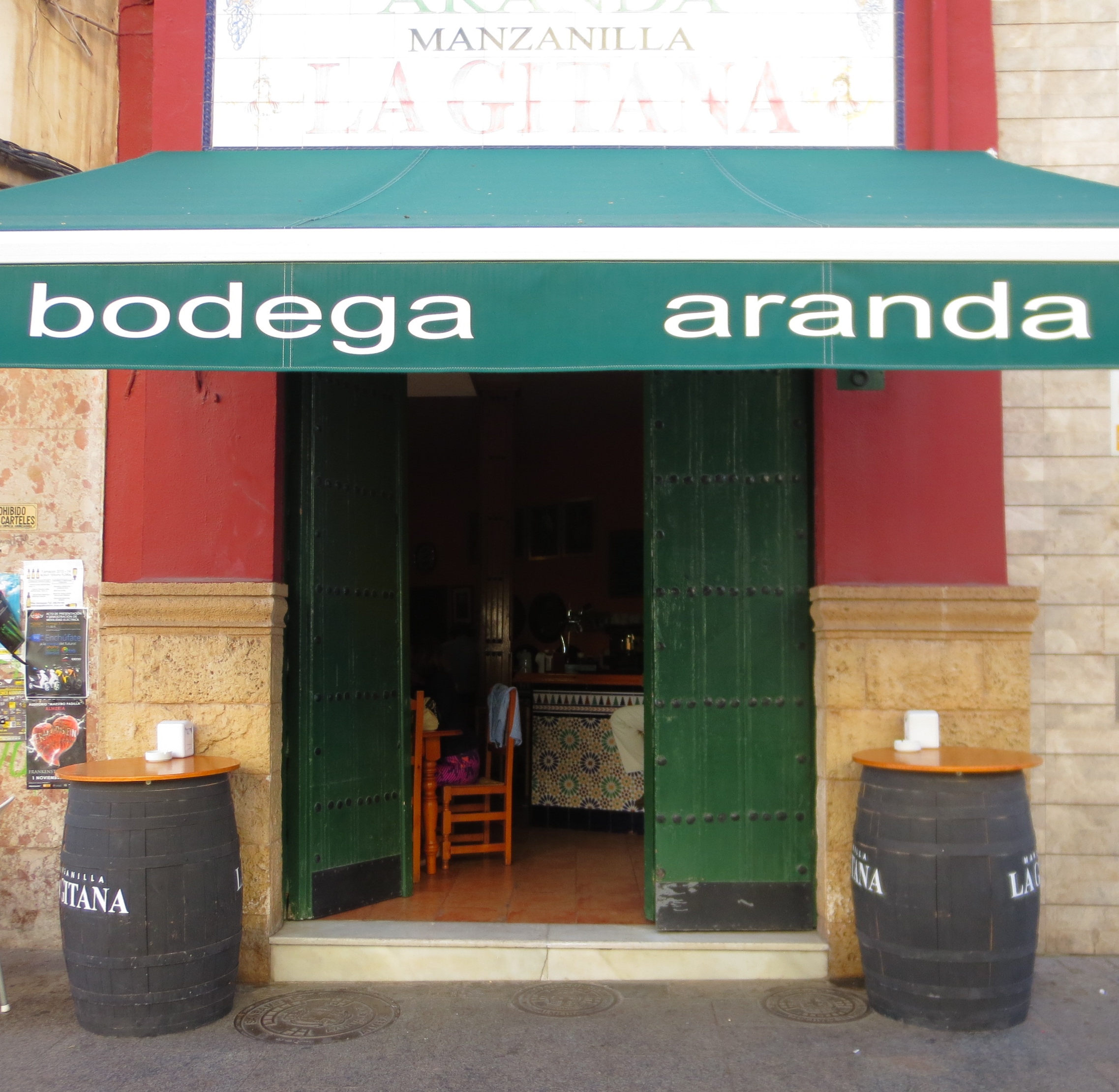
After visiting the central market in Almeria we had worked up an appetite for lunch, and remembered that this ancient tapas bar was not far away.

Having installed ourselves at a table we asked the waitress to bring us a selection of what was good at the moment. She suggested the house salad, a couple of plates of fish and fried potatoes topped with broken eggs and the local made chorizo and morcilla. Perfect we said, not realising what culinary delights lay behind these simple descriptions.

The house salad arrived. Rich green corn salad, walnuts, pine nuts, raisins, and a halo of tomatoes surrounding a mound of blue cheese ice cream. The waitress had a small bowl of dressing – olive oil and sherry vinegar with seasonings – which she poured over the salad, then she cut the ice cream into pieces and gently mixed it with the salad.

IMG_0753

It was heavenly. I am working on a recipe for the ice cream – maybe have it perfected for the next post.

The fish course was next –

IMG_0755

Fillets of baby Cod and Smelts in light batter and fried served with the best Ajo Blanco I have ever tasted. You could taste the slight bitterness of the almonds, a hint of garlic that was not overpowering, the sauce was made smooth with bread and olive oil and balanced with white wine vinegar.

IMG_0754

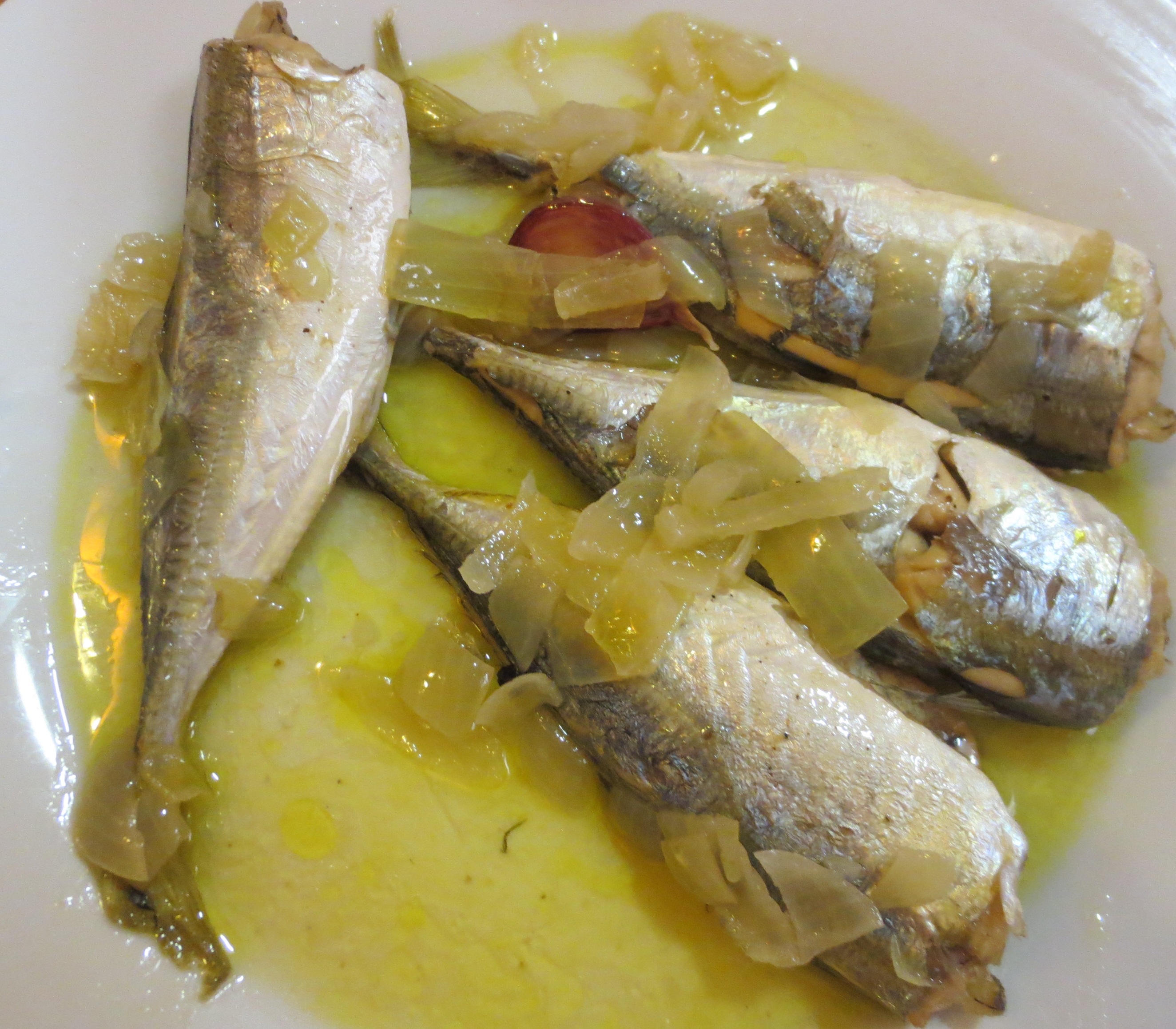
Jureles en Escabeche. Escabeche is a way of mildly pickling fish. It is gently poached in a broth of olive oil, white wine vinegar and water which is flavoured with onions, peppercorns, saffron and bayleaves. Frequently smoky Pimenton is added as well, but in this dish of small fish it wasn’t needed.

IMG_0756

Next was the Potatoes with Chorizo, Morcilla and broken eggs.

IMG_0758

To finish the meal a succulent large date each, dark chocolate covered raisins and mint tea.

Share this:

  • Click to share on X (Opens in new window) X
  • Click to share on Facebook (Opens in new window) Facebook
  • Click to share on WhatsApp (Opens in new window) WhatsApp
  • Click to email a link to a friend (Opens in new window) Email
Like Loading...

A Late Summer Summer Sunday Lunch – The Dessert

28 Saturday Sep 2013

Posted by Nevenka in Sweet Things

≈ Leave a comment

Tags

Honey, Honey & Walnut Semi-Freddo, mascarpone, Semi-Freddo, walnut

When I was planning the menu for this lunch, I was originally wanting the dessert to be based on some sweet pancakes that I have that could do with being used. They were spread with an apricot puree and rolled up to be baked or fried later. The semi-freddo was to be vanilla to accompany the pancakes, but once I started to make it and sweetened it with a richly flavoured rosemary honey, the recipe went off in a totally different direction.

The pancakes were delicious fried in butter a couple days later.

IMG_0558

HONEY & WALNUT SEMI-FREDDO

Enough for 10-12 portions

250 grams mascarpone

300 ml full cream

400 grams honey

2 tablespoons vanilla liqueur or a few drops vanilla essence

120 grams broken walnuts

25 grams butter

2 tablespoons brown sugar

Always buy honey from as local to you as possible and honey that has not been processed or pasteurised. It is more expensive, but has so superior a flavour to the supermarket honey that it is worth it. My current favourite which I buy in the weekly market in my village of Vera, is made from the pollen of rosemary flowers. It is dark and not overly sweet with a deep flavour to match the colour.

Beat together the mascarpone, cream, honey and vanilla.

Heat the butter on a low heat in a shallow pan. Add the walnut and stir round to warm.

Sprinkle over the sugar and stir to mix.

Continue cooking and stirring until the sugar is starting to caramelise. Remove from the heat and let cool a little.

Add to the cream mix and stir in. The cream mixture will have been quite thick before and the addition of the nuts will make the texture thinner. Don’t panic this is OK .

Put in the fridge until quite cold. Stir to lift the walnuts from the bottom of the mixture and distribute them evenly thoughout the mixture.

Pour into your pre chilled containers and put into the freezer until nicely solid but not rock hard.

Share this:

  • Click to share on X (Opens in new window) X
  • Click to share on Facebook (Opens in new window) Facebook
  • Click to share on WhatsApp (Opens in new window) WhatsApp
  • Click to email a link to a friend (Opens in new window) Email
Like Loading...

Buttered & Caramelised Figs

07 Saturday Sep 2013

Posted by Nevenka in Sweet Things

≈ Leave a comment

Tags

Figs

BUTTERED & CARAMELISED FIGS

In August the fig trees are so replete with fruit that the birds and I between us cannot eat them all. Caramelised Fig Jam has been made, kilos of fruit have been dried, some figs have been transformed into chutney, and as many as one can eat have been eaten – with Ham, with salty cheese, in salads and just on their own. I have successfully used them to make a Fig Tart – you will find the recipe for that in a previous post – but need a new dessert recipe.

This experiment was a success and as the August figs are so sweet, doesn’t need any added sugar. The key to getting it right is not to be afraid to keep cooking. If you stop cooking too early the figs will not have a caramel flavour, so if you let them cool a bit and taste them and they don’t seem done enough, don’t worry, just put them back on the heat and cook some more until they have a faint caramel aroma and a stickiness where they are in contact with the heat at the bottom of the pan.

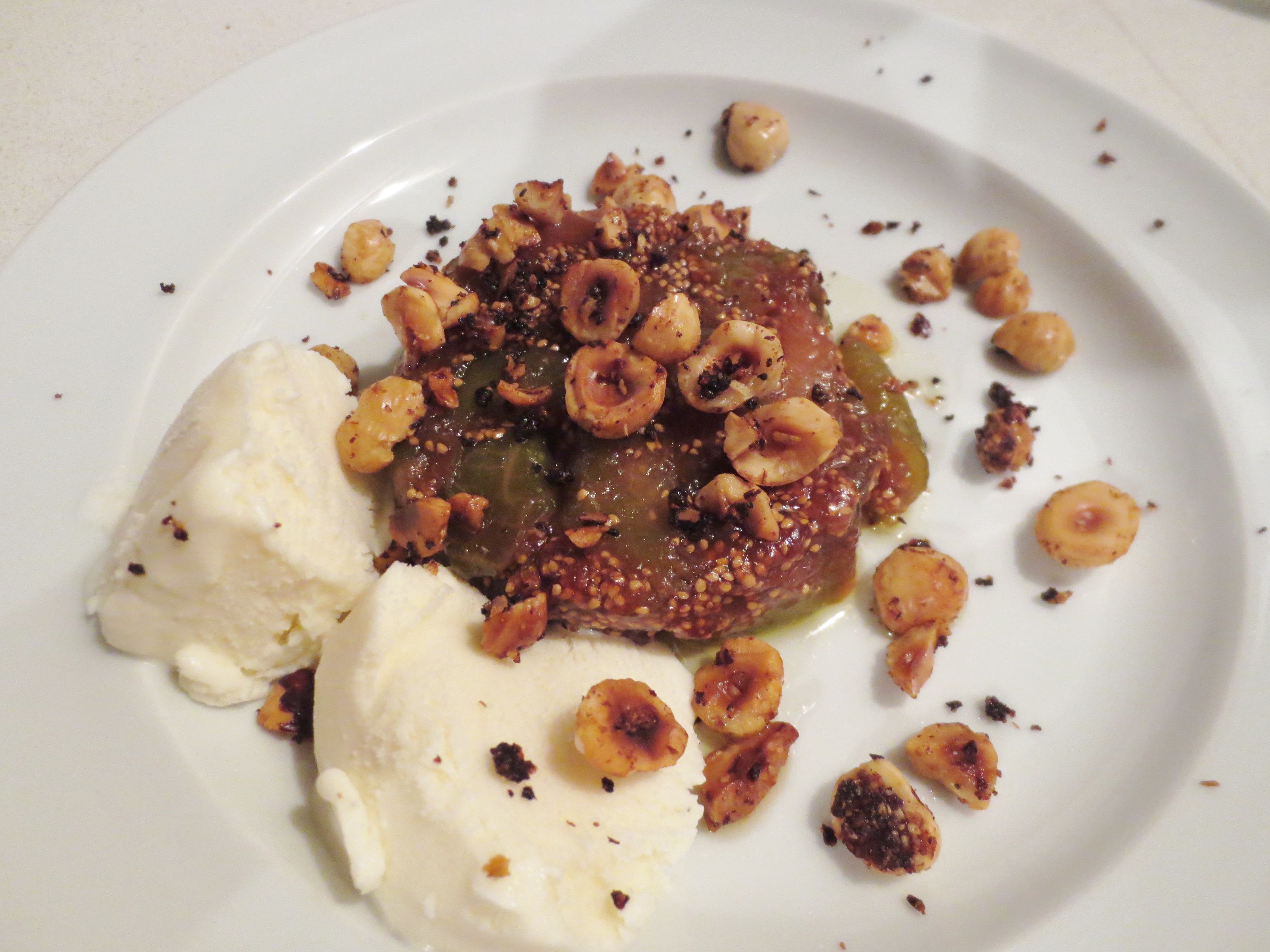
I have now made this dessert twice, and the second time served the figs still warm with fresh cream and the warm toasted hazel nuts, which was very good too.

IMG_0456

Per person

5 ripe figs

10 grams of butter

Wash the figs and dry them in a tea towel.

Cut off the stems and cut the figs into quarters.

Warm the butter in a non-stick frying pan and add the figs.

Cook stirring on a medium heat. The fruit will start to give out some of its juices, continue cooking until these have evaporated.

Keep stirring and cooking until the fruit mixture is dryer and is frying in the butter.

The sugar in the fruit will now start to get hotter and be heading towards caramelising. Keep cooking until you can detect the caramel aroma. The fig mixture will get dryer and tend to stick to the bottom of the pan a bit, but keep going until they are nice and toffee flavoured.

Do not be tempted to taste the figs at this point, they are very hot.

Leave to cool until warm.

Put into ramekin dishes and smooth the tops. Leave to cool to room temperature.

In the frying pan toast to golden some broken and crushed hazel nuts. Leave to cool to room temperature.

When ready to serve loosen the fig mixture from the sides of the dishes with a knife, put a plate on top and upturn the whole to end up with the fig compote on the plate. The butter should stop the fig mix from sticking to the ramekin.

Serve with ice cream and the hazel nuts scattered over.

Share this:

  • Click to share on X (Opens in new window) X
  • Click to share on Facebook (Opens in new window) Facebook
  • Click to share on WhatsApp (Opens in new window) WhatsApp
  • Click to email a link to a friend (Opens in new window) Email
Like Loading...

The Birds & The Bees

12 Monday Aug 2013

Posted by Nevenka in Sweet Things

≈ 1 Comment

Tags

Bees, Cheese, Dessert, Honey, Swallows

I always smile when I see beautiful pictures of pristine white sofas on outdoor terraces in design magazines. Those of you who live in the cool north imagine that we in the south live the majority of the time outdoors with no real line between the outside and inside living space.  While to a large extent this is true, the line between the in and the out has to be more marked than you imagine, particularly if you live in the countryside.  The problem is that the creatures amongst whom I have decided to live quite like the protection of walls and roofs. It’s not that I mind sharing, but there have to be limits. My house is built around a patio which has a central open area surrounded by a roofed shaded part supported by columns. These shaded and protected areas are ideal habitat for nesting swallows. But when you get to four pairs of swallows producing up to forty eight offspring in a summer season, that is an awful lot of bird poo landing on your cushions, walls and floor each morning when they wake up and then each evening when they come back to roost. The Jackson Pollack look is, I feel, a little modern for an old Arab style house.

Then the young play dare swooping in and out of the doorways until the dimmest gets stuck inside and can’t find his way out. I have a two and a half storey tower in the centre of the house which beautifully draws the hot air up and out of its high windows and keeps the house cool without the need for air conditioning. It also traps lost baby swallows. Thankfully when young swallows sleep they sleep the sleep of the dead, so to remove them if they won’t fly low enough to go out of the doors that they came in through, you have to wait for them to go to sleep, usually perched on top of the bar of the wall hangings, and flick them into the swimming pool net before they know what is happening. The doorways are now sufficiently netted to stop the birds getting in.

Apart from the usual bugs that crawl in there are a variety of fliers. We have  long legged red wasps that like to find a nook in which to make little tubes of mud into each of which they lay an egg from which will eventually hatch a new wasp, but leaving behind the clay which is making the sound from you speaker more than muffled.

Bats are amongst the least troublesome guests. They just quietly roost on the patio walls. They do poo, but it is dry and like a small pellet of crushed insects, understandably, as that is what they eat. Easy to sweep up.IMG_2818

Geckos are other welcome guests who earn their place in the house by eating any insects that pass them by while they are skulking on the walls and ceilings at night. They come in a variety of hues and patterns so are very decorative too.

This spring I had a few hundred bees move in.

I first noticed some scout bees doing their informative dance on one of the beams in the patio. I rushed off to consult the internet about what this might mean and was informed that honey bees scout for new sites for the swarm each spring and several sites are usually considered, most being rejected. So I didn’t worry, my site being, in my opinion, unsuitable.

Some days later my neighbour and I were having a coffee in the kitchen when we heard a loud buzzing noise coming from the patio. The air was black with bees. Within ten minutes it was quiet again and not a bee was in sight. I breathed a sigh of relief – my patio I assumed had been rejected. Not a bit of it, on the other side of the patio, where I had seen the scout bees, the whole swarm had settled and looked as though they were planning to stay. I was just about to go on a trip for ten days, so nothing could be done immediately. When I returned the bees looked neater and organised into a rugby ball shape.IMG_0287

I like bees, but I foresaw in the heat of the summer honey dripping down from the swarm and making a mess on the floor, which was bound to be a magnet for ants. Plus all that bee activity only a metre or so from the summer dining table was a little too close for comfort. So they had to be relocated.

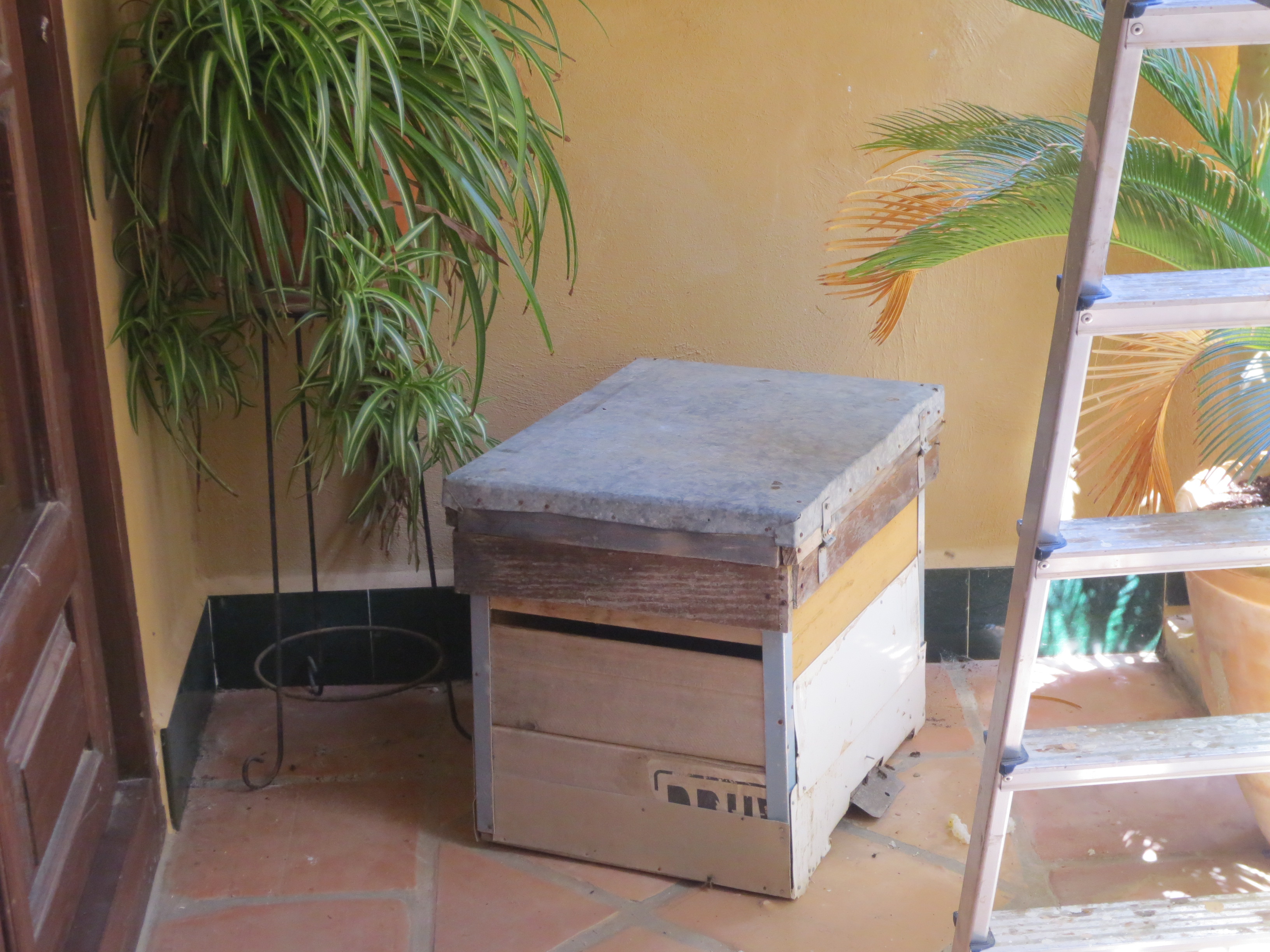
I asked around my friends and Antonio was recommended as the man for the job. He came and gave my bees a look over, and then returned the next day with a hive and his full white suit of overalls and a netted hat. Antonio carefully moved the swarm into the hive while I watched from a safe distance. Only later did I read that moving a queen was one of the most dangerous jobs for a beekeeper.IMG_0285IMG_0282

In the ten days or so that the bees had been in the patio they had constructed three round honeycombs about fifteen centimetres in diameter, and had already got quite an amount of honey stored in them as well as some embryo bees. I was quite surprised and impressed at how much work they had done in such a short space of time. Antonio advised that we leave the bees for two or three days to settle in when he would return in the evening once all the worker bees were back in the hive and take them to a new home.IMG_0288

He enquired if I wanted to keep the bees and put the hive somewhere further away from the house, and I did consider the idea. But bees are precious and important creatures, and I have no knowledge or experience of beekeeping and wasn’t sure that would be able to look after them well enough.

The honey though, was delicious.IMG_0293

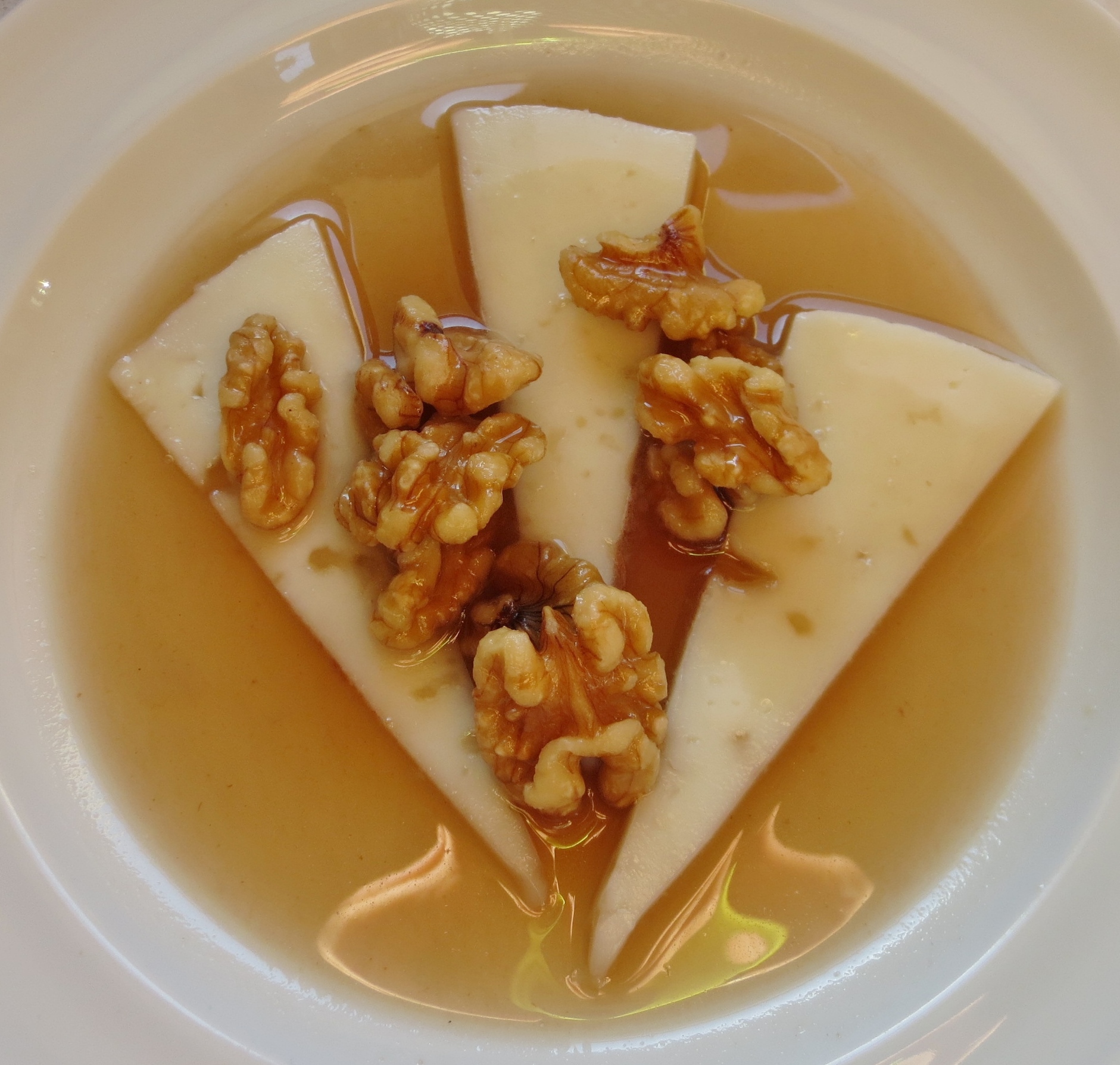
Here is a very simple northern Spanish dessert using honey. It is exactly my sort of dessert, mixing salt and savoury with sweet and nutty.  A mild immature sheeps cheese works best for this.IMG_0389

For 4

100 grams sheeps cheese

2 tablespoons honey

2 – 3 tablespoons water

60 grams walnut pieces

Slice the cheese and lay it out attractively on individual plates.

In a small pan warm the honey with enough water to have it pourable. When it is hot add the walnuts and heat them through for 30 seconds. Don’t  leave the walnuts too long or they will darken the colour of the honey.

Spoon over the cheese and serve.

Share this:

  • Click to share on X (Opens in new window) X
  • Click to share on Facebook (Opens in new window) Facebook
  • Click to share on WhatsApp (Opens in new window) WhatsApp
  • Click to email a link to a friend (Opens in new window) Email
Like Loading...

New Years Eve Dinner

09 Wednesday Jan 2013

Posted by Nevenka in Main Courses, Starters, Sweet Things

≈ 2 Comments

Tags

Cima Di Rapa, Menu Planning, Semi-Freddo, Turkey


THE MENU

Salad of mangetoute peas, chima di rapa and yellow plum tomatoes with poached egg and smoked fish dressing.

———————————————

Ragu of Turkey and Wild Mushrooms

Steamed New Potatoes with Chives

Braised Beetroot with Garlic

——————————————

Orange Semi-Freddo

——————————–

Cheeseboard


When planning a celebratory dinner like that for New Years Eve I generally start jotting down menus several days before the dinner so that I have time to really think through how the meal will be put together on the day. I look through the cupboards, vegetable garden and the freezer to see what I have already that could do with being included. Then I think about how rich or light I want the whole affair to be. After the excesses of Christmas I felt a meal on the lighter side was called for on this occasion.

My first draft menu was a starter of Foie Gras with a salad as above but without the tomatoes and with some of the gorgeous figs that I dried this summer, and a ginger dressing. Ginger with Foie Gras is a favourite flavour combination of mine. This I was thinking maybe of following with a fish dish, either salmon or swordfish steaks.

I wrote in a previous post of an eleven kilo  free range turkey that had come my way which was cut into portions and frozen. I thought I ought to consider turkey for the main course. There were two very good sized legs. Do I bone, stuff and roast them, or will they be too tough prepared like that? A casserole would suit the meat, but is it smart enough for a celebration dinner? I am assured by one of my guests that a Ragu would be perfectly smart enough and welcome change from the richness of the previous days. I have some dried wild mushrooms brought back from a trip to Italy, a perfect accompaniment to the gamey flavour of the turkey.

But then brown ragu preceded by brown foie gras would not do. I want to stick with a salad for several reasons, it is a healthy, light and colourful way to start a meal and I have in the garden some tip top ingredients for one, and most of the preparation can be done in advance which means I don’t have to abandon my guests for too long while I serve it up.

I have some fresh free range eggs that have come from my neighbour Marias happy chickens, a salad topped with a poached egg would be both colourful and the soft yoke mixed with a tangy dressing would make the salad interesting to the palate. For the dressing I used a tin of smoked fish roe in oil that I pureed and thinned with lemon juice and more olive oil.

Having had another look in the garden there are enough baby yellow plum tomatoes to make salads for seven, they are sweet and acidic at the same time and the colour will set off the yellow yolk of the egg.

So I recap in my mind the plan. Crispy mixed salad leaves, the baby yellow tomatoes cut into halves, lightly steamed mangetoute peas and cima di rapa which will still be warm when served, topped with a warm poached egg dressed with a thick dressing of smoked fish roe. Some pickled sprigs of capers to garnish. I am happy with that.IMG_3601

The ragu for the main course I will serve with steamed new potatoes tossed with chives and butter, and for a vegetable beetroot braised with garlic.

I have a good cheese board to end the meal which means that the dessert that I thought I wanted to make will not fit. I make mincemeat each year to sell in the farm shop, and there are a couple of jars left. Having a lime farm the mincemeat is lime and quince, which is wonderfully tangy. I had been thinking to make a cheesecake based on the Yorkshire Curd Tart of a previous post, but in place of the currants and raisins use the mincemeat. I still plan to try it at some point but for this meal it is too rich and cheesecake followed by cheese…..no.

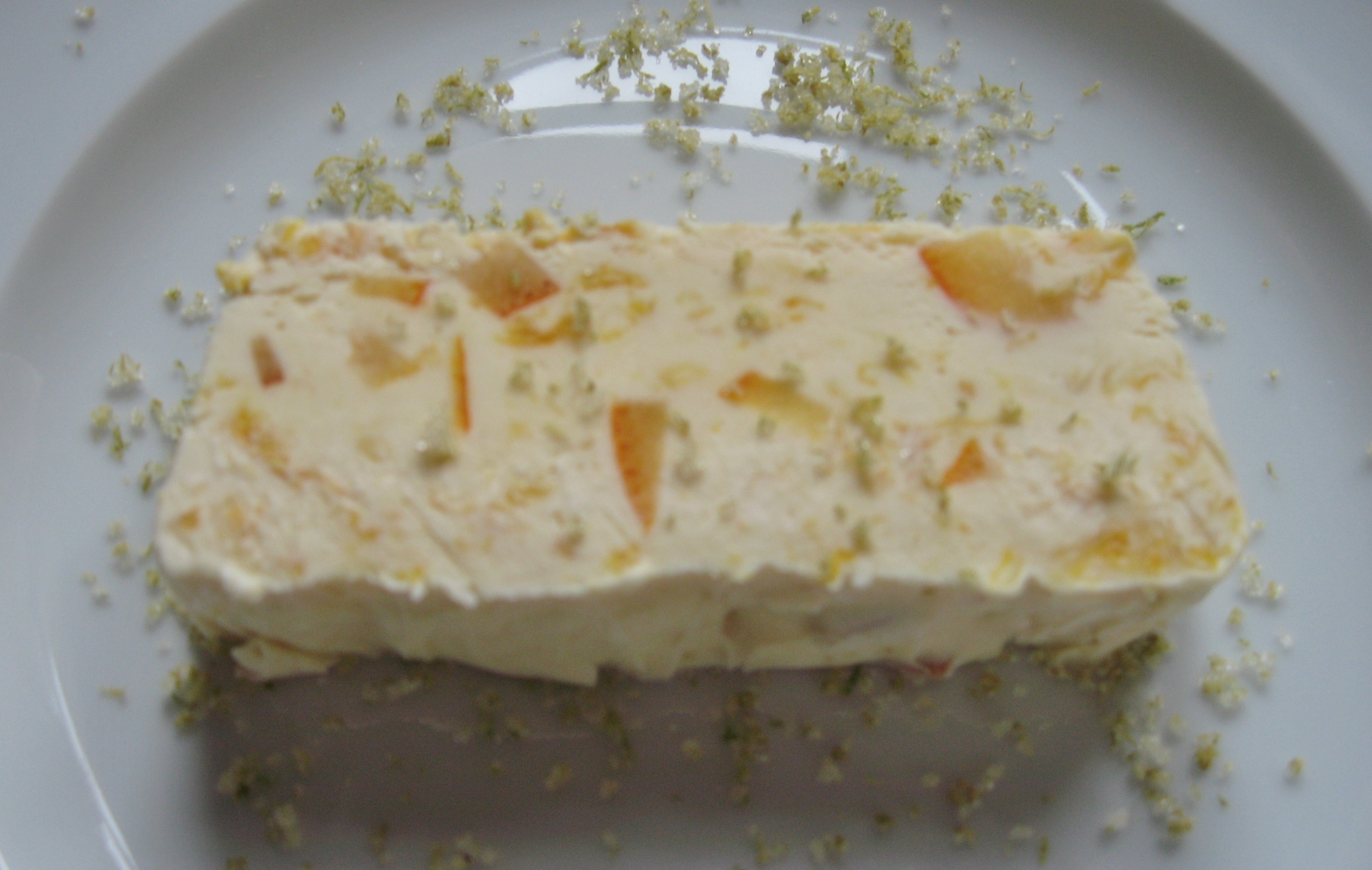
How about a little ice cream?  Small, light, tasty, perfect.  An orange semi-freddo will fit the bill.IMG_3608

I will write a whole post on Semi-freddos in the future, but today I will give you the recipe for the Turkey Ragu which was really good.

TURKEY AND WILD MUSHROOM RAGUIMG_3606

As with all stews it is a good idea to cook it the day before needed to let the flavours mature. As you know there is something about the time and the cooling and reheating that really improves the flavour of any stew.

2.5 Kilos turkey meat from the legs cut into chunks roughly three centimetres square

1 bulb of garlic

2 large onions

400 grams streaky bacon/ pancetta cut  into lardons

Sea salt and freshly ground black pepper

1litre stock made from the turkey bones

75 grams  dried mixed wild mushrooms

Good fat for frying, either beef dripping, bacon fat or duck

2 heaped tablespoons flour

Break the garlic into cloves and peel and chop them finely.

Finely chop the onions.

Melt some of the fat in a large heat proof casserole. When hot add the onions and garlic. Fry for five minutes or so until transparent.

Add the bacon and continue frying stirring from time to time for another ten minutes.

Add the turkey pieces. Continue frying and turning the pieces until they are sealed all over. Season well with the sea salt and freshly ground black pepper.

Add just enough stock to cover the meat. Bring to a slow simmer and cover. Leave to cook for half an hour.

Add the mushrooms and stir in. Continue cooking on a very slow simmer until the turkey is cooked. I thought that the turkey I had, being very large and having run around free would have needed a couple of hours cooking as a minimum, but it only needed about three quarters of an hour more cooking at this point. I would recommend to start checking for doneness after half an hour.

Bear in mind as well that with such a large volume of ragu it will retain heat and the meat will continue to cook for quite some time after the heat is turned off.

To thicken the stew, melt some of the fat in a frying pan and add to it the two tablespoons of flour. If it is dry in the pan add more fat. Fry slowly stirring all the time until the flour starts to caramelise and turn a fudge brown.  Add a ladleful of the stock from the stew and stir into the flour. It will fizz and thicken. Continue adding the stock a ladleful at a time until the sauce is thinner and moveable.

Return this to the pan with the meat and stir gently to mix in.

Reheat the ragu and serve.

Share this:

  • Click to share on X (Opens in new window) X
  • Click to share on Facebook (Opens in new window) Facebook
  • Click to share on WhatsApp (Opens in new window) WhatsApp
  • Click to email a link to a friend (Opens in new window) Email
Like Loading...

Yorkshire Curd Tart

28 Wednesday Nov 2012

Posted by Nevenka in Sweet Things

≈ Leave a comment

Tags

Cheesecake, Curd, Tart

This tart is something that I grew up with. It was an occasional Saturday treat. One of us would be sent after lunch to get in the queue of the bakery that made the best ones in the area. Once the bag of the warm tarts had been bought, then it was a ten minute, or less if you could, run home before they cooled too much. yorkshire_curd_tart

They are a baked cheesecake very much in the eastern European style and have been made in Yorkshire for a very long time, the first published recipe dating from 1741. I have not come across another cheesecake type tart that is native to the UK and why this one crops up in Yorkshire is a mystery. If any of you know of any other then do please let me know. It could even date back to when the Romans were in Yorkshire, some of the older recipes include washing the butter in rosewater, which was a favourite flavouring of the romans, and it is very similar to the sweet ricotta and lemon tarts still made in Italy today.

There quite a few variations of this tart and I sampled some while back in Yorkshire recently. Many use short crust pastry, sometimes enriched with ground almonds, and many have a cheese filling that is less rich and drier than in my favourite version. The tart that I remember from childhood was made with flaky pastry and was very buttery – maybe more calories that other versions – but if you are worried about that make small ones but good ones and ration yourself – if you can.

For the cheese the ideal is fresh curd cheese made from cows milk, it has a good acidity to it that offsets the sweetness of the sugar, but you can use a fresh ricotta or any fresh sheep or goat cheese. Avoid using cottage cheese, it is too sweet and watery. For my readers in Spain, I find that the Queso Fresco that is packed in plastic containers in the supermarket tastes of the plastic, so I prefer to buy the cheese from the deli counters at the market or from the butchers. I have been using the fresh goat cheese that my neighbour Maria makes and is available from the farm shop, and that works perfectly.

Any size of tart works, the tart tins just need to be shallow whether you are making a large one for a dessert or baby ones to have with your coffee.

YORKSHIRE CURD TART

250 gram pack ready made flaky pastry or make your own

250 grams curd cheese

75 grams butter

75 grams sugar

2 large eggs

grated zest of 1 lemon

50 grams currants or raisins

Start by creaming the butter and sugar together in the food processor until light and creamy.

Add the cheese cut up into cubes and pulse to mix. You don’t want the cheese to become a total puree and lose its texture.

Add the lemon zest and the eggs and pulse to combine.

Finally add the fruit and again pulse to combine.

Roll out the pastry and line the tart tin or tins. Prick the base with a fork. Fill with the cheese mix.

Bake at 180 Centigrade for about 40 minutes until golden brown.

Share this:

  • Click to share on X (Opens in new window) X
  • Click to share on Facebook (Opens in new window) Facebook
  • Click to share on WhatsApp (Opens in new window) WhatsApp
  • Click to email a link to a friend (Opens in new window) Email
Like Loading...
← Older posts
Newer posts →

Blog at WordPress.com.

Privacy & Cookies: This site uses cookies. By continuing to use this website, you agree to their use.
To find out more, including how to control cookies, see here: Cookie Policy
  • Subscribe Subscribed
    • fincafood
    • Join 103 other subscribers
    • Already have a WordPress.com account? Log in now.
    • fincafood
    • Subscribe Subscribed
    • Sign up
    • Log in
    • Report this content
    • View site in Reader
    • Manage subscriptions
    • Collapse this bar
 

Loading Comments...
 

    %d