• About
  • La Micaela Farm Shop

fincafood

~ culinary and horticultural life on a Spanish farm

Category Archives: Sauces

Thai Green Curry with Seafood & Oriental Salad

26 Monday Aug 2013

Posted by Nevenka in Fish, Food for One, Main Courses, Sauces, Vegetable Dishes

≈ Leave a comment

Tags

Oriental Salad, Salad, Seafood, Thai Green Curry

THAI GREEN CURRY WITH SEAFOOD

I fell in love with Thai cooking on a visit there many years ago, and took copious notes of everything that I ate. Once home I set about recreating the dishes that I had enjoyed while there. I started by buying in the curry pastes, but now that I grow all the essential ingredients on the farm, I make my own, and I am not sure that I could now go back to the bought ones. The difference is the freshness of the taste, that if you do not over process you can have texture to the paste, and also of course that you can balance the proportions of the ingredients depending on how spicy you require it to be.

For a seafood curry, I like spice, but not overpoweringly so, but I still want a good strong flavour of ginger, garlic and lemon grass, so I put with them a milder pale green chilli which still has spice together with a good pepper flavour.

????????????????????????

For the paste – enough for a curry for 4

4 cloves garlic

2 stalks of lemon grass

A piece of ginger, or galangal if you can get it, roughly 5 cm x 2 cm

2 tablespoons Nam Pla – Thai fish sauce

Roughly chop the garlic and pound to a pulp in a mortar.

Take the outer leaves off the lemon grass and cut off the tough base. Finely slice the tender part at the base, usually you get about 2 cm of tender part.

Add to the garlic.

Scrape the skin off the ginger and grate into the mortar with the garlic and lemon grass. Mash with the pestle until a paste adding the fish sauce as you go along.

This paste can be made in advance and be left developing its flavours in the fridge until needed.

For the fish –

Large peeled prawns

Mussels

White meaty fish like swordfish, shark, monkfish, cod, haddock

1 tablespoon each of red and black fish eggs

A large sweet onion or 5-6 spring onions

Large can of coconut milk

Good bunch of basil leaves or Thai parsley

Olive oil for frying

Peel and slice the onion. In a pan big enough to take the curry, soften the onions in oil.

Add the curry paste and fry for a few minutes.

Add the coconut milk and stir well to mix in. Bring to a simmer and start adding the fish.

Keep the curry on a low heat while the fish cooks to ensure that it doesn’t overcook.

The white fish wants to be cut into chunks. If you think that all the fish requires the same amount of cooking, you can add it all in one go.

The fish shouldn’t need more than five minutes to cook.

Lastly add the fish eggs. I had assumed before putting these in hot dishes that they would melt into the sauce, but they don’t and so add colour and texture to fish dishes. They look particularly effective on Salmon with pasta.

Garnish with the chopped herbs and serve with plain boiled rice.

ORIENTAL SALAD

This is adapted from a recipe in Sri Owens fabulous book of Indonesian recipes. I would not call this a fixed recipe as I use whatever is fresh in the vegetable garden. If I plan ahead enough, I get some beansprouts sprouting a few days in advance. They are not available to buy fresh here in Spain, so you have to grow your own. If you cannot get fresh ones, miss them out rather than use the cooked ones that come in jars, the flavour and texture are just not the same.??????????????????????????????????

A selection of the following –

Fresh bean sprouts

French or Yard Long beans – blanched by pouring boiling water over them, leaving them a minute, and then draining and leaving to cool

Chinese leaves or other greens – finely shredded

The following all cut into fine julienne –

Radishes

Carrots

Small tender courgettes

Green peppers

Red peppers

Plus –

Basil leaves – Thai is best, but the usual or Lettuce Basil will do – shredded

Fresh mint leaves

For the dressing – these amounts are for a salad for 4

100 gms roasted peanuts

1-2 cloves of garlic – finely chopped

1teaspoon crumbled shrimp paste or 1 tablespoon Thai fish sauce

Red chilli – to taste – it wants to be quite spicy – finely chopped

1teaspoon soft brown sugar

Juice of a lime

Salt to taste

Put all the prepared vegetables in a dish with the herbs and mix together.

Prepare the dressing. In a mortar pound all the ingredients except the lime juice until a rough paste with the nuts still having some bigger bits for texture. Add the lime juice and mix. Add just enough water to make into a sauce.

Pour over the salad and mix well. Serve at room temperature.

Share this:

  • Click to share on X (Opens in new window) X
  • Click to share on Facebook (Opens in new window) Facebook
  • Click to share on WhatsApp (Opens in new window) WhatsApp
  • Click to email a link to a friend (Opens in new window) Email
Like Loading...

Fishcakes with Passion Fruit Sauce

16 Saturday Feb 2013

Posted by Nevenka in Fish, Sauces

≈ 2 Comments

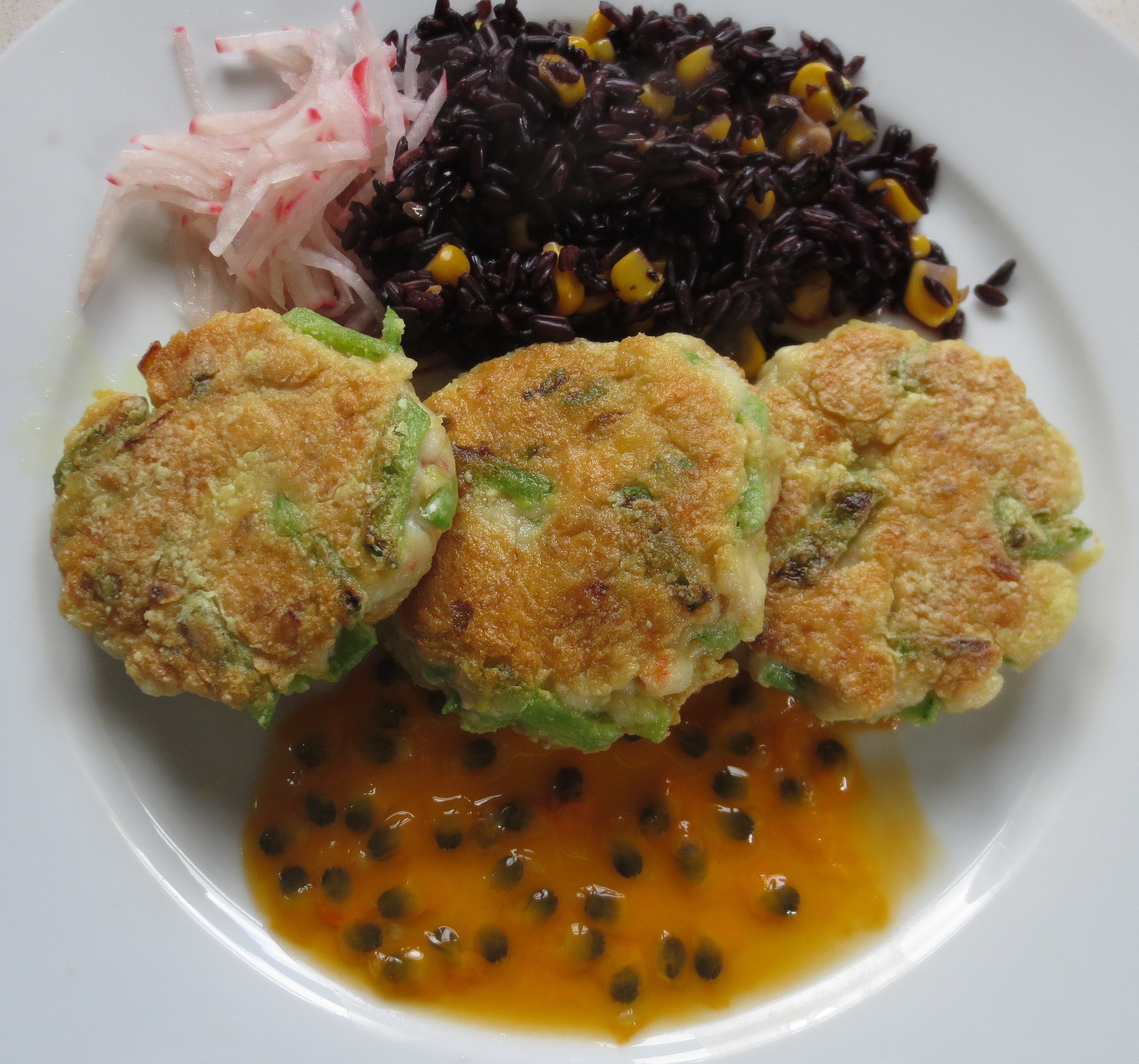
A passion fruit is a capsule of readymade sauce– aromatic, sweet and sour with its own distinctive colour and texture in a neat one-person portion sized container.  In Madeira it makes a sauce for fried fillets of fish, but I had in my minds eye/stomach that it would be better if the fish had more texture and flavour to balance the intense fruitiness of the passion fruit. Crispy gougons? Or little Thai style fish cakes? With a hint of ginger, chilli, lemongrass and garlic, but not too much, I don’t want these seasonings to compete with the flavour of the passion fruit. And some finely sliced beans for colour and texture.IMG_0009

Per person

1 passion fruit

120 gms white fish – I used a type of shark which has a nice texture –  swordfish, conger eel, monkfish would all work well

3 or 4 prawns

Pinch of grated ginger

Pinch of grated garlic

Pinch of finely chopped red chilli

Pinch finely chopped lemon grass

Pinch salt

Mangetoute peas or green beans

1 level teaspoon cornflour plus extra for dusting the fishcakes

1 tablespoon beaten egg – it doesn’t have to be a quail egg, the one in the photo just happened to be lurking in the fridge and was the right size for one person. Here in Spain quails and their eggs are not the expensive delicacy that they are in other countries.

Olive oil for frying

Dice the fish and put it into a food processor. Peel the prawns and add to the fish.

Add the grated ginger and garlic, the chopped chilli and lemongrass, and the salt.

Process to a lumpy mix. You don’t want to over process and have a mush, plus you still have a bit of processing to do.

Add the egg. Pulse to mix in.

Add the cornflour. Pulse to mix in.

Add the beans or mangetoute and stir in with a spoon.

Sprinkle some cornflour onto a plate and take a spoonful of the fish mix and form into a small fishcake coating it with the cornflour as you go along.

Do this with the rest of the fish mix. You will have 3-5 fishcakes depending on how small you like them.

Warm some olive oil in a frying pan over a medium heat and when hot add the fishcakes. They will only need about three to four minutes each side by which time they should be a light golden brown.IMG_0014

Serve with the passion fruit pulp as a sauce. You can leave this cold or cut the passion fruit in half and give the halves a quick warm in the microwave before scooping out the pulp onto your fishcakes.

Share this:

  • Click to share on X (Opens in new window) X
  • Click to share on Facebook (Opens in new window) Facebook
  • Click to share on WhatsApp (Opens in new window) WhatsApp
  • Click to email a link to a friend (Opens in new window) Email
Like Loading...

Passata

31 Tuesday Jul 2012

Posted by Nevenka in Preserves, Sauces

≈ Leave a comment

passata

There are two slightly different ways of making this. One method, you leave the tomatoes whole, skin them and then make them into the passata and jar the passata straight away. The other method you chop the tomatoes without skinning them, make them into the passata, put the pulp through a mouli, re-heat the passata and then put it into jars.

Each method has  its advantages. For the first you obviously don’t need a mouli, and you get a much chunkier texture. I tend to use this method when I have a garden full of perfectly formed but small tomatoes.

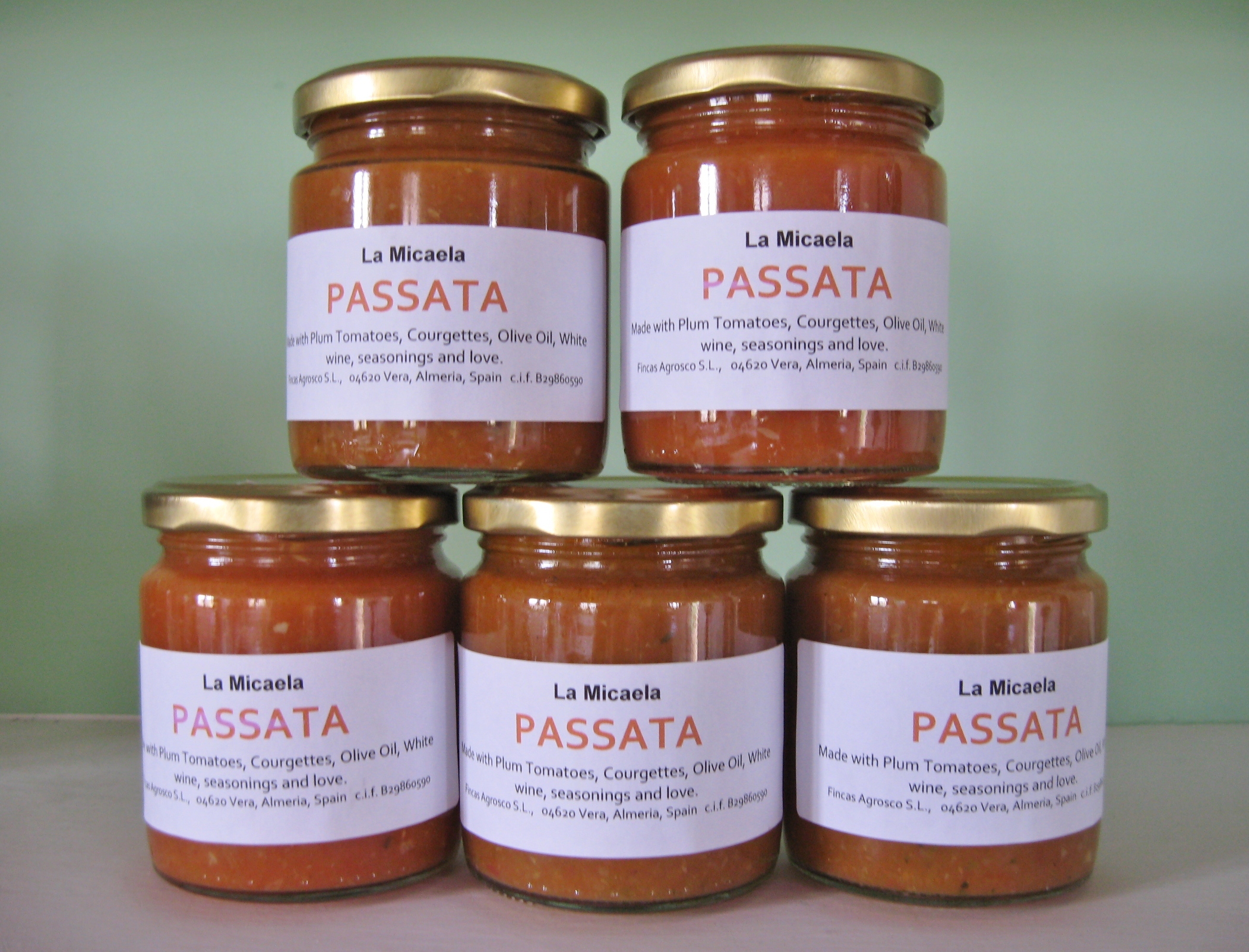
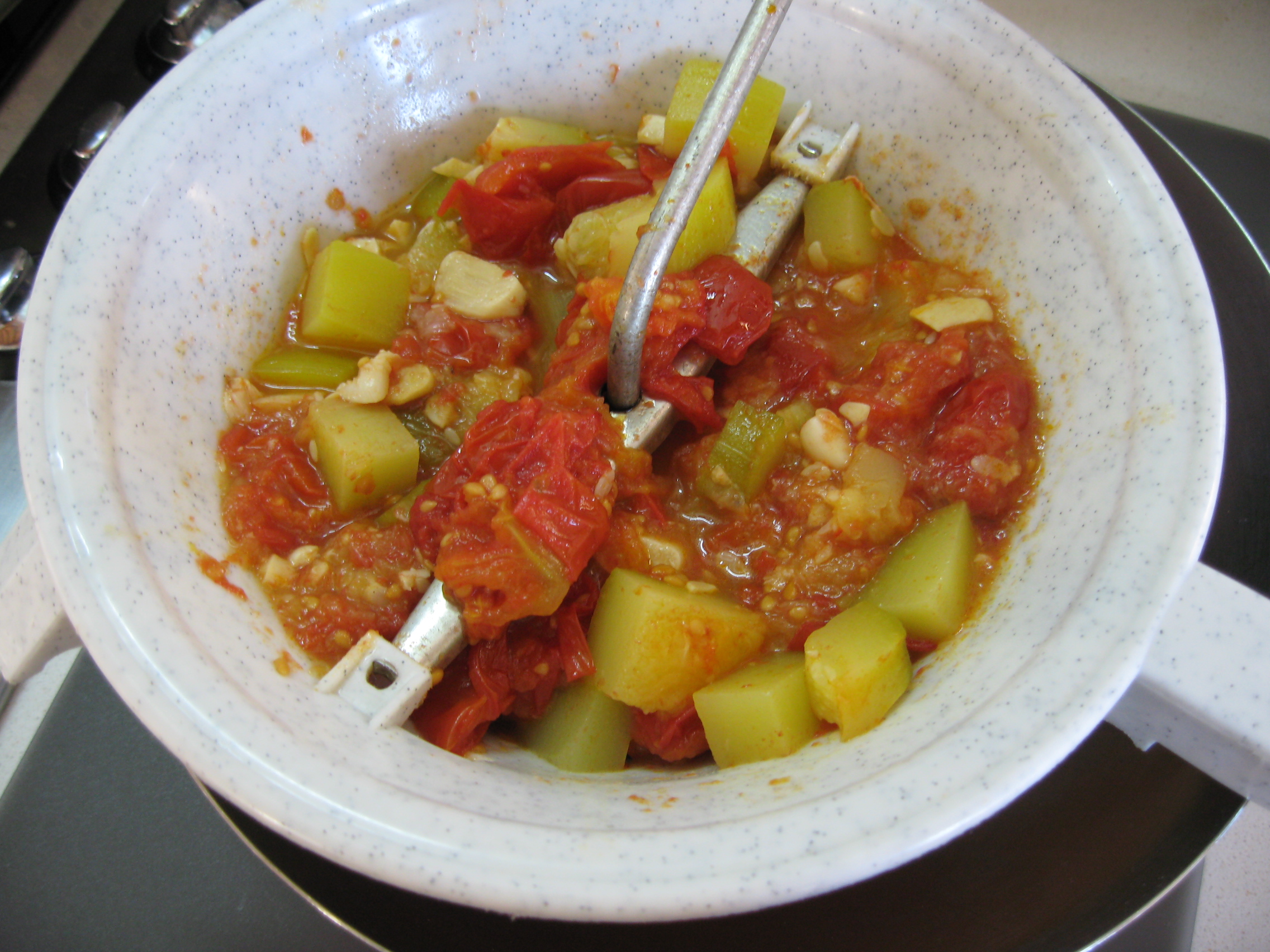
The second method is good for when your home grown tomatoes are a little less than perfect. Maybe they have a tad of blossom end rot or woody centres but most of the tomato is OK. Because you cut up the tomatoes you can use the good bits and send the rest to the compost heap, thus not wasting any of your crop. Also this method despite having to re-heat the pulp is actually quicker than the first method with all the tomato peeling. Another plus to this method is that you can mix in other vegetables. Although the recipe below is for tomatoes alone, when I made the batch in the photos, I had some courgettes that had raced off and were aspiring to be marrows, so they were peeled and chopped and added to the mix.  Red peppers work very well, but not green as they are too bitter. Onions, all types of squashes, auberines. All add thier own flavours. I would never go more than one third of the other vegetables to two thirds tomatoes.

Before I get into the recipe a note about jars. I keep all jars that have the type of lids that create a vacuum and have a plastic seal around the inside of the lid. These can be re-used as long as they will still fasten tight. The lids must not be pierced, rusty or bent round the edges  or they will not seal and create a vacuum. When you come to use them for preserving the passata they need to be hot and sterile. I find that a hot wash in the dishwasher with a steam dry works really well. You need to be ready to use the jars straight from the dishwasher when they are pretty well too hot to handle.

Alternatively, if the jars are already clean, put them with thier lids a few at a time in a large pan with boiling water and heat to a simmer to sterilize them. Fish them out, drain them and use while still hot.making_passata 1

For 1 kilo of tomatoes

2 or 3 cloves of garlic – finely chopped

1 tablespoon olive oil

1 bayleaf

pinch of sugar

salt and pepper

Firstly prepare the tomatoes. If you are doing the first version peel the tomatoes by bringing a pan of water to the boil. When it is boiling add a few of the tomatoes. You don’t want to lower the temperature of the water by adding too many. As soon as you see the skins of the tomatoes start to split, which will only take a couple of minutes, scoop them out and let them cool. Carry on with the rest of the tomatoes. When the tomatoes are cool, slip the skins off.

If you are going for the second method, just cut up the tomatoes. Remember to weigh them after cutting if there is a lot of waste.

In a pan large enough to take all the tomatoes, heat the oil gently. Add the garlic and cook a minute or two. Add the tomatoes, bayleaf and seasonings. Stir to mix. Cover and leave to stew on a low heat for about half an hour.making_passata 2

If you are with method one, taste the passata to check the seasonings and adjust accordingly. Then put in hot jars filling to half a centimetre from the top. Make sure that there are no bits of sauce around the top where the glass will meet the seal in the lid. You can just wipe the top with kitchen roll. To begin with put the lids on loosely, the passata will then warm the lid a bit more. After a couple of minutes you can tighten them up.making_passata_3

If you are on method two, put the pulp through the mouli using the coarsest disc, this will sieve out the pips as well as the skin. Return the pulp to the pan and bring back to the boil. Lower the heat and simmer for three minutes to kill any bacteria that may have infiltrated  the pulp. Then continue as above adjusting the seasoning and jarring up the passata.making_passata_4

The herbs in the passata can be changed as you like. Instead of the bayleaf, try fresh basil or oregano.

Uses? Pasta sauces, ready made tomato topping for pizza, soups, stews. Anywhere where a recipe calls for tomatoes.

Share this:

  • Click to share on X (Opens in new window) X
  • Click to share on Facebook (Opens in new window) Facebook
  • Click to share on WhatsApp (Opens in new window) WhatsApp
  • Click to email a link to a friend (Opens in new window) Email
Like Loading...

Green Aliolli

23 Friday Mar 2012

Posted by Nevenka in Sauces

≈ Leave a comment

Tags

Garlic Mayonnaise

Some French cooks have laid claim to mayonnaise being an invention of theirs, but there is no logic to this claim. Notwithstanding that Mahon, which is the origin of Salsa Mahonesa, and thence Mayonnaise, is a port on the Island of Menorca in the Baleriac Islands of Spain, but spanish cuisine is rich with oil based sauces. There are several types of Aliolli which is a sauce flavoured with garlic, then there is Salsa Romesco flavoured with dried peppers and garlic and thicken with almonds which is served with shellfish, plus a myriad of green sauces with different combinations of herbs, garlic and chillies that are used to enliven everything that can be grilled, from spatchcocked quail to lamb chops to ‘Secreto de Cerdo’ (the secret bit of pork) in the meat range plus every type of fish.

I would like to lead you through the range of Aliollis. I am not going to start with the most basic, which is made by pounding garlic cloves and salt in a mortar with a pestle, and then slowly adding extra virgen olive oil until you have a thick sauce, for the simple reason that at this time of the year the dry garlic has been in store for quite some time and is not at its best for eating uncooked. The best garlic at the moment is spring garlic, with which one makes a light sweet Aliolli that is a beautiful pale green colour.

This sauce uses all of the egg and sunflower oil rather than olive. If you have had Aliolli in a restaurant while visiting spain, wether it was made with green garlic or the while cloves, the chances are that it was made this way. The texture of this Aliolli is much more solid and light at the same time than when using olive oil.Image

The other key thing to mention before you get started, is that all your ingredients must be at room temperature or above for the sauce to thicken. It is impossible to make any sort of oil based sauce with cold ingredients.

GREEN ALIOLLI

4 Spring garlic

I large egg

pinch of salt

300 ml sunflower oilImage

Clean off the outside layer and any tough green leaves of your garlics and then wash them. Chop them into chunks and put into the food processor, then blitz them to cut them up.

Add the egg and the pinch of salt. Process to cut the garlics smaller and mix the egg well.

Very slowly add the oil. It is ideal if your processor has a tube where you can add the oil as the mixer is on. If the sauce looks thin at any time, stop adding the oil until it thickens again.

Eat your sauce with crusty bread instead of butter, as a dressing on plain boiled potato cubes, with fish, with pork chops, with………..

Share this:

  • Click to share on X (Opens in new window) X
  • Click to share on Facebook (Opens in new window) Facebook
  • Click to share on WhatsApp (Opens in new window) WhatsApp
  • Click to email a link to a friend (Opens in new window) Email
Like Loading...

Rocket and Walnut Pesto

29 Wednesday Feb 2012

Posted by Nevenka in Sauces

≈ Leave a comment

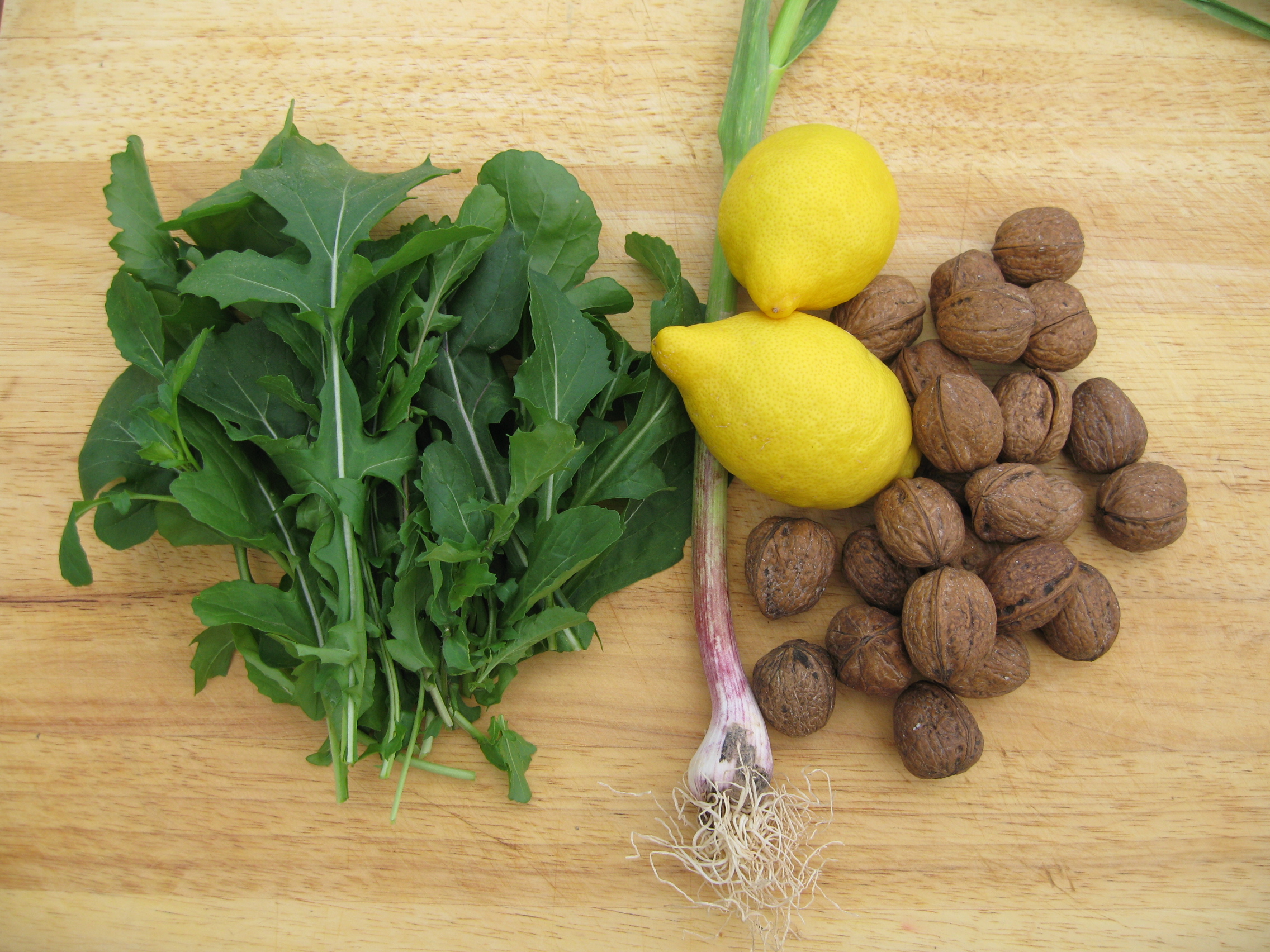
Spring has suddenly arrived and the the warmer weather is making the rocket in my vegetable patch race away. What I cannot use fresh I make into pesto. Although pesto made with basil is the best known, it is a very useful method of preserving all the more delicate herbs that do not dry well.

This recipe combines the peppery flavour of rocket with the sweetness of roasted walnuts and the acid of fresh lemon juice, but you can also make a more oriental version with fresh coriander, lemon grass and lime bound together with either sesame oil or olive oil. These sauces will keep up to ten days in the fridge, but if you pack the paste into sterilised jars making sure that there are no air bubbles and then pour at least one centimeter of oil on it to create a seal, it will keep for several months if stored in a cool dark place.

For Rocket and Walnut Pesto you will need;

100 gms rocket – washed and dried

100gms walnut pieces

1 stem spring garlic

walnut or extra virgen oilive oil

the juice of half a lemon

salt

Firstly roast the walnuts. Heat a thick bottomed pan on a low heat and add the walnuts.  Toss from time to time to turn the nuts. They are done when the oils in the walnuts give off a rich odour.

Put the nuts together with the rocket, chopped garlic and a couple of tablespoons of oil into the food processor and whizz to a pulp. Add more oil to get to a paste consistency. Add the salt and lemon juice bit by bit tasting as you go along until you find that the seasoning and balance is right.

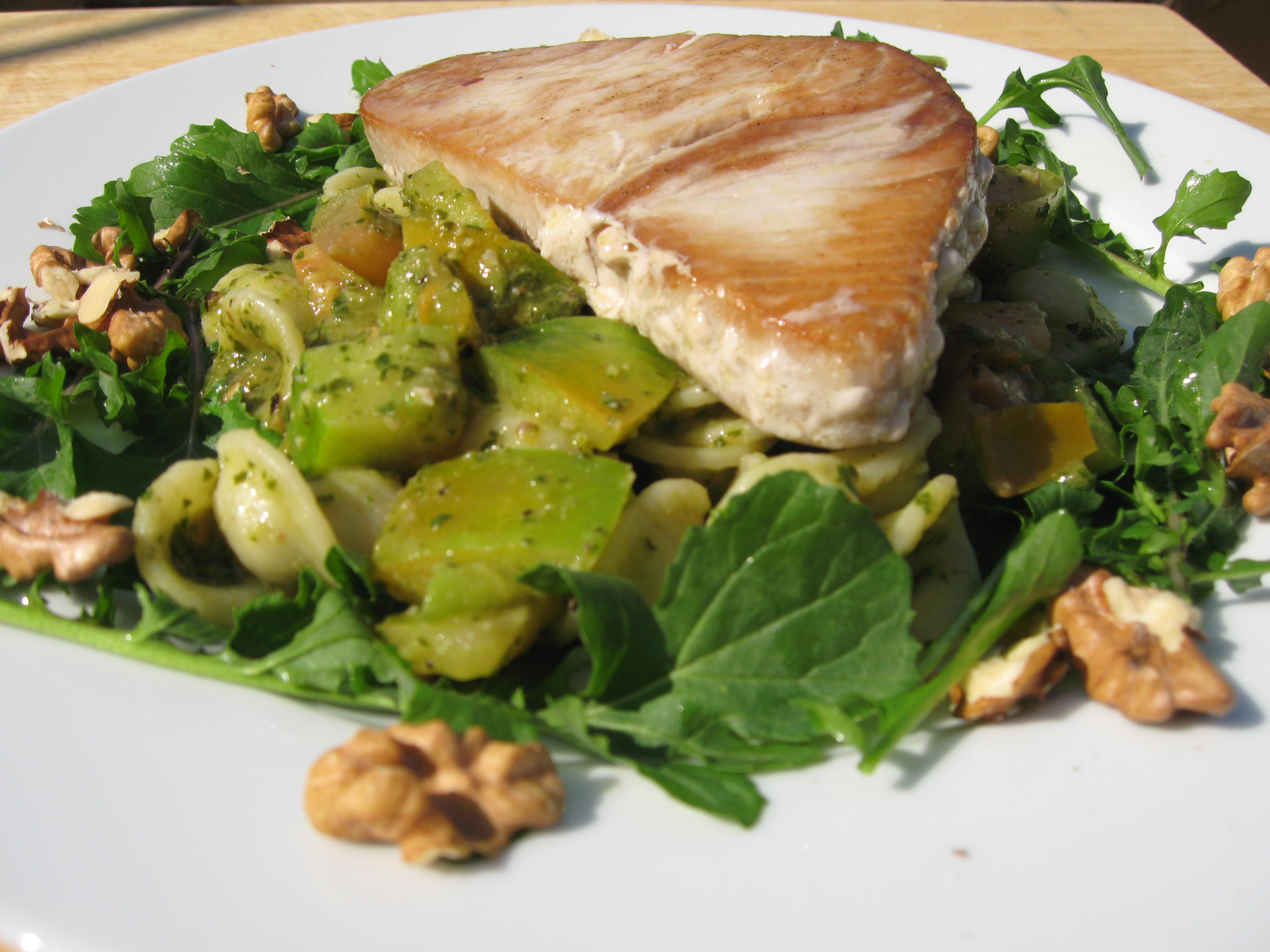
Thats it. This pesto goes particularly well with fish and that is what I am having it with today. I’ve used it as a sauce on the pasta shells to accompany a piece of grilled tuna.

Share this:

  • Click to share on X (Opens in new window) X
  • Click to share on Facebook (Opens in new window) Facebook
  • Click to share on WhatsApp (Opens in new window) WhatsApp
  • Click to email a link to a friend (Opens in new window) Email
Like Loading...
Newer posts →

Create a free website or blog at WordPress.com.

Privacy & Cookies: This site uses cookies. By continuing to use this website, you agree to their use.
To find out more, including how to control cookies, see here: Cookie Policy
  • Subscribe Subscribed
    • fincafood
    • Join 103 other subscribers
    • Already have a WordPress.com account? Log in now.
    • fincafood
    • Subscribe Subscribed
    • Sign up
    • Log in
    • Report this content
    • View site in Reader
    • Manage subscriptions
    • Collapse this bar
 

Loading Comments...
 

    %d