• About
  • La Micaela Farm Shop

fincafood

~ culinary and horticultural life on a Spanish farm

Category Archives: Techniques

……….More Cheek!

04 Saturday Jan 2014

Posted by Nevenka in Main Courses, Techniques

≈ Leave a comment

Tags

baked eggs, ceps, Eggs, Mushrooms, Pork, pork cheek, rovellones, stews

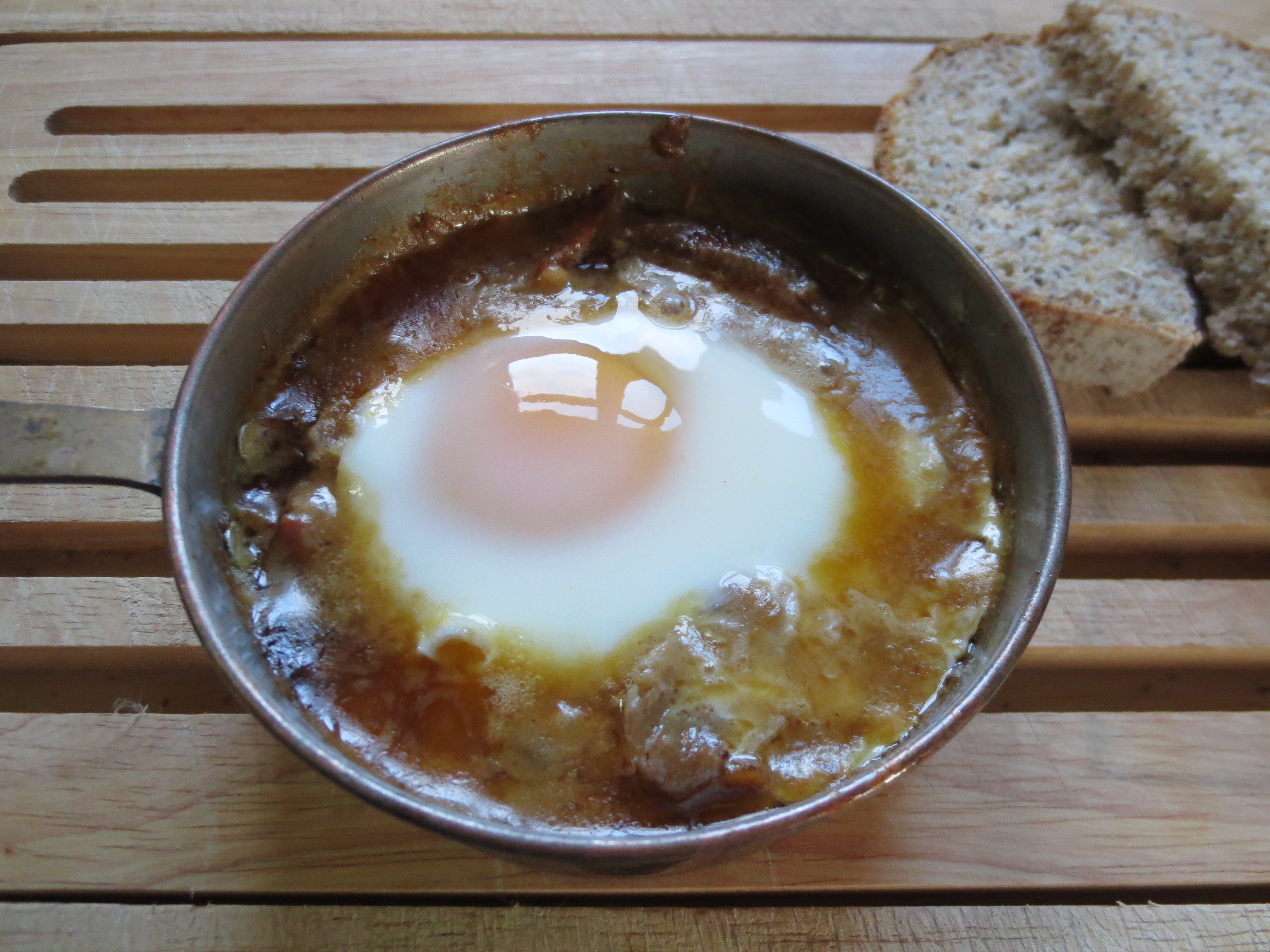
Following on from the previous post, when you serve the Pork Cheek Stewed in White Wine with Wild Mushrooms remember to leave yourself a bit in the pan so that you can behave like a proper Bourgoine and treat yourself to Oeuf Murette or Baked Egg with Pork and Mushroom Gravy.

??????????????????????????????????

During the lunch where I served the Cheeky casserole, we were discussing the merits of this cut of meat, and my friend Jane recounted how she not eaten the cheek stewed before, but had been served it in a local restaurant, butterflied open and grilled. So I thought I would give it a try.IMG_0881

I slice the meat across to be able to open it like a book, and then gave each piece a good hammering with the smooth side of the meat tenderiser.

I then made a salt marinade by crushing a clove of garlic in the mortar with half a teaspoon of salt and a generous amount of freshly ground black pepper. Coat the meat in this and leave to further tenderise for several hours.

Grill and enjoy. It was super succulent and tasty.

IMG_0882

Share this:

  • Click to share on X (Opens in new window) X
  • Click to share on Facebook (Opens in new window) Facebook
  • Click to share on WhatsApp (Opens in new window) WhatsApp
  • Click to email a link to a friend (Opens in new window) Email
Like Loading...

Yuca Dumplings

19 Tuesday Feb 2013

Posted by Nevenka in Techniques, Vegetable Dishes

≈ Leave a comment

Tags

Cassava, Fish Stew, Manioc, Yuca

Following on the theme of Ultramarinos – things from far away across the sea – I thought you would like the recipe for these little dumplings made from Yuca root. IMG_0027

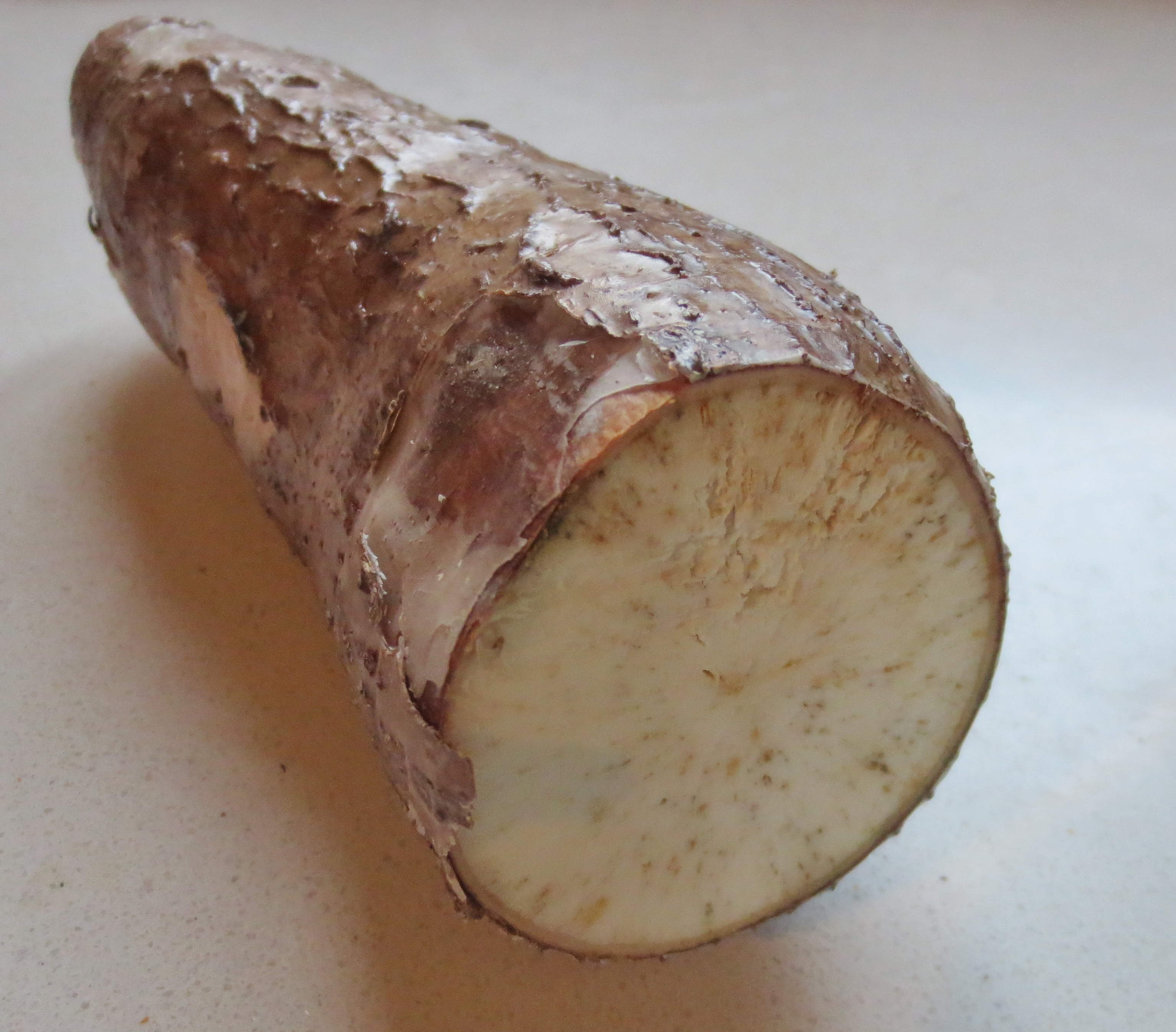
Manihot Esculenta – Yuca, Cassava, Manioc, Mogo started to appear on the markets here about ten years ago with the arrival of Equadorians and Bolivians who came to work in Spain. It has been cultivated in Peru for more than 4,000 years and is more of a staple in South America than potatoes. Nowadays it is also grown extensively in Africa and Asia. It can be simply boiled and mashed, cut into fat fingers and fried like chips, or dried and ground into flours of various levels of fineness for making from cous cous style grains to sweet cakes.IMG_0017

The tapioca of school dinner infamy is made from Yuca – but don’t let that put you off from trying it in a different form. The chips I have to say I found dry and a bit hard, but do try them. The dumplings I love.  They have a firm slightly glutinous texture and a bit of sweetness. I love them with spicy curries instead of rice, with sweet and sour sauce as a vegetarian dish, and in soups, again because of the slight sweetness they fit better with a spicy soup.IMG_0019

I have totally forgotten where I came across this recipe, I am constantly collecting recipes and food ideas from magazines and newspapers, so it may well have come into my life that way, the original bit of paper now long lost but the method firmly locked into my memory.

Top and tail the yuca root and then peel it with a potato peeler. Wash it and then grate finely. This is easier done with a food processor.

There may be a thick fibrous thread in the centre of the root, discard this.IMG_0020

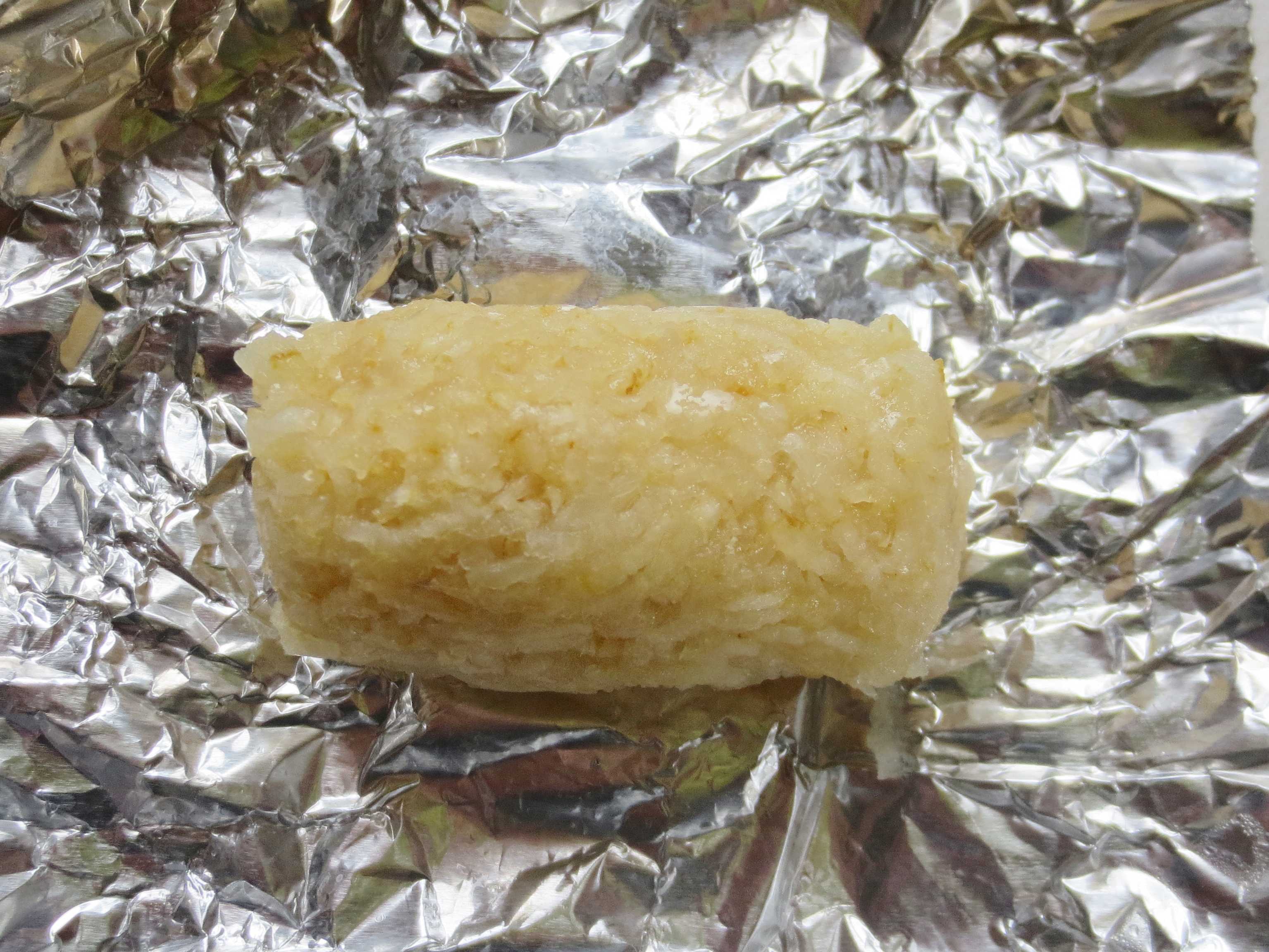
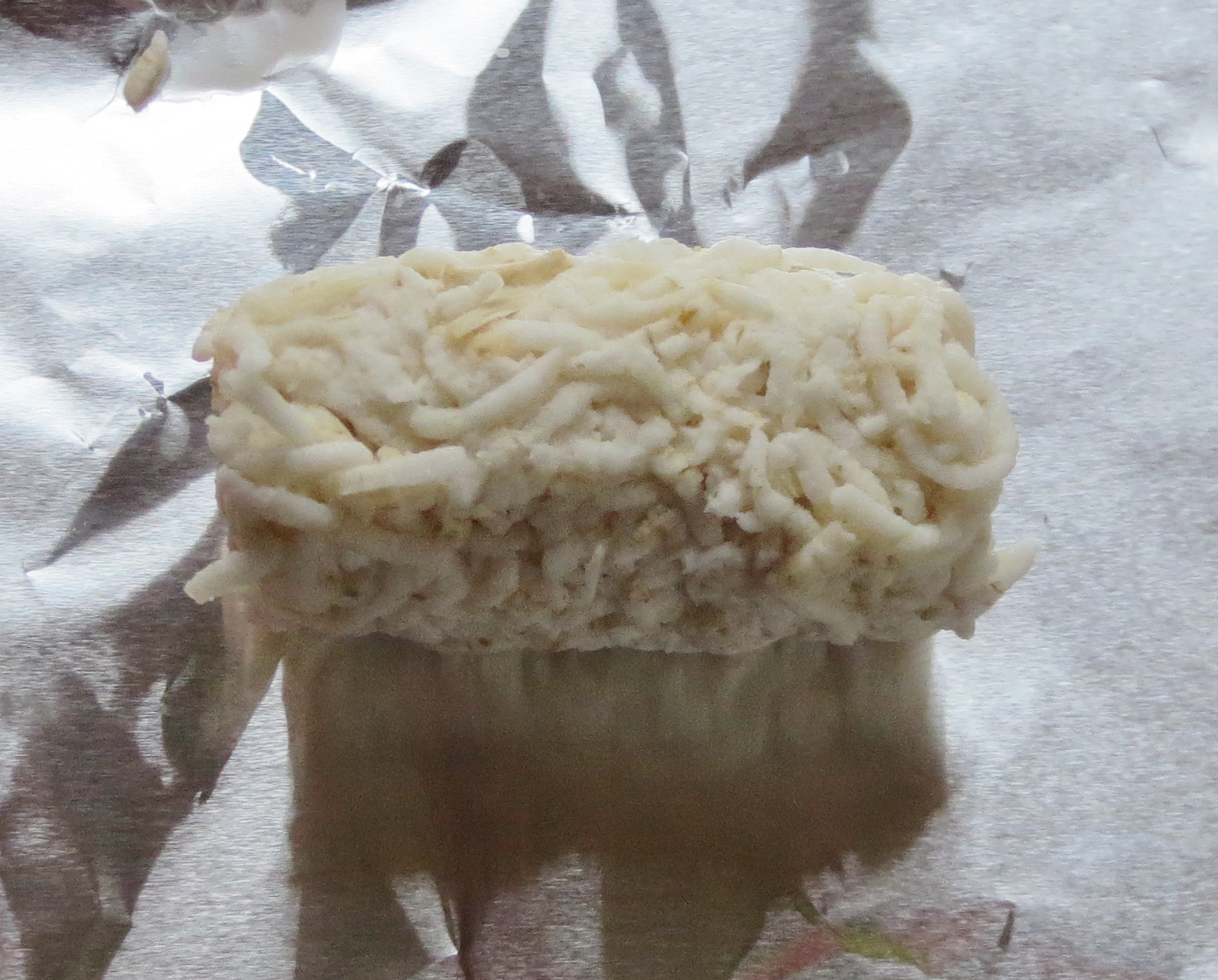
Take a handful of the grated root and squeeze it into a small cylinder. This may seem difficult at first, but with pressure and turning it in your hand the pulp will start to stick together.

Put the dumpling on a small square of tin foil and wrap it into a parcel. If you wanted to be truly authentic, then I suppose a banana leaf would be a better wrapper.

Do this with all the pulp.IMG_0025

Steam for 45 minutes. Let cool in the steamer.

Once they are cool enough to handle they can be unwrapped and used.

Any surplus dumplings will freeze well. I recommend taking them out of the tin foil to freeze them as the foil disintegrates in the freezer and leaves bits on the dumplings which is not very nice. You can tell that I am speaking from hard experience here.

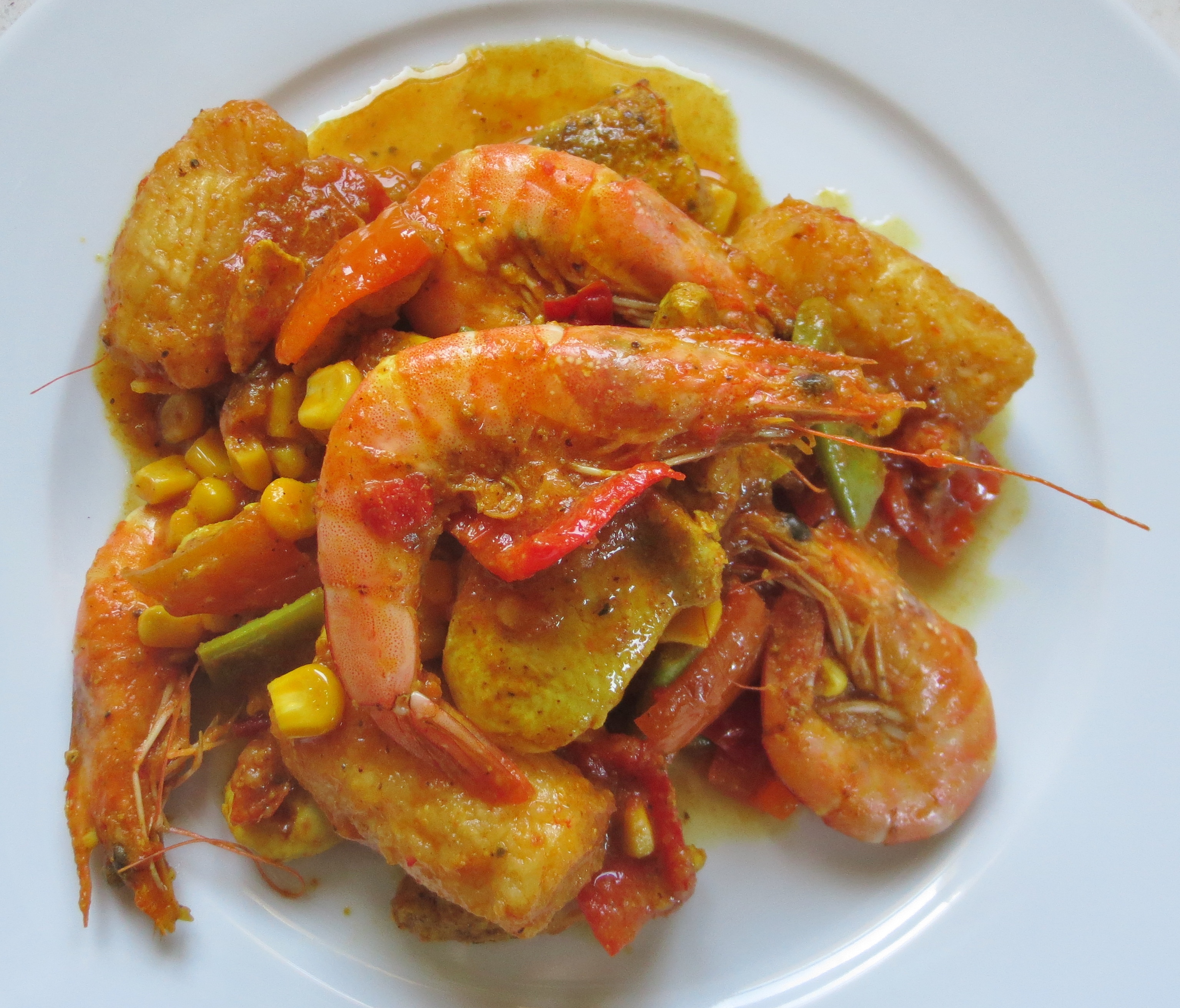
Next post the Spicy Fish Stew with Yuca Dumplings illustrated below to whet your appetite.

IMG_0030

Share this:

  • Click to share on X (Opens in new window) X
  • Click to share on Facebook (Opens in new window) Facebook
  • Click to share on WhatsApp (Opens in new window) WhatsApp
  • Click to email a link to a friend (Opens in new window) Email
Like Loading...

Sardines – How to descale and bone them

01 Saturday Sep 2012

Posted by Nevenka in Techniques

≈ Leave a comment

For those of you who have looked at the recipe for Sardines with a Pine Nut and Raisin Stuffing and thought – I haven’t the first idea of how to bone a sardine! – this is for you.

The scales on sardines are not at all sharp or well attached, they are more like thin plastic discs. To remove them, hold the fish by its head and with an ordinary eating knife that has not got a serrated blade, run the blade from the tail towards the head and this will detach the scales. Do this all over the fishes body until the scales are all loose. Wipe them off with kitchen roll, then rinse the fish to remove any remaining scales and wipe them dry. Wash your chopping board and the work area to remove any scales. They are a bit sticky and peskily adhere to your tools.

Now for the boning.

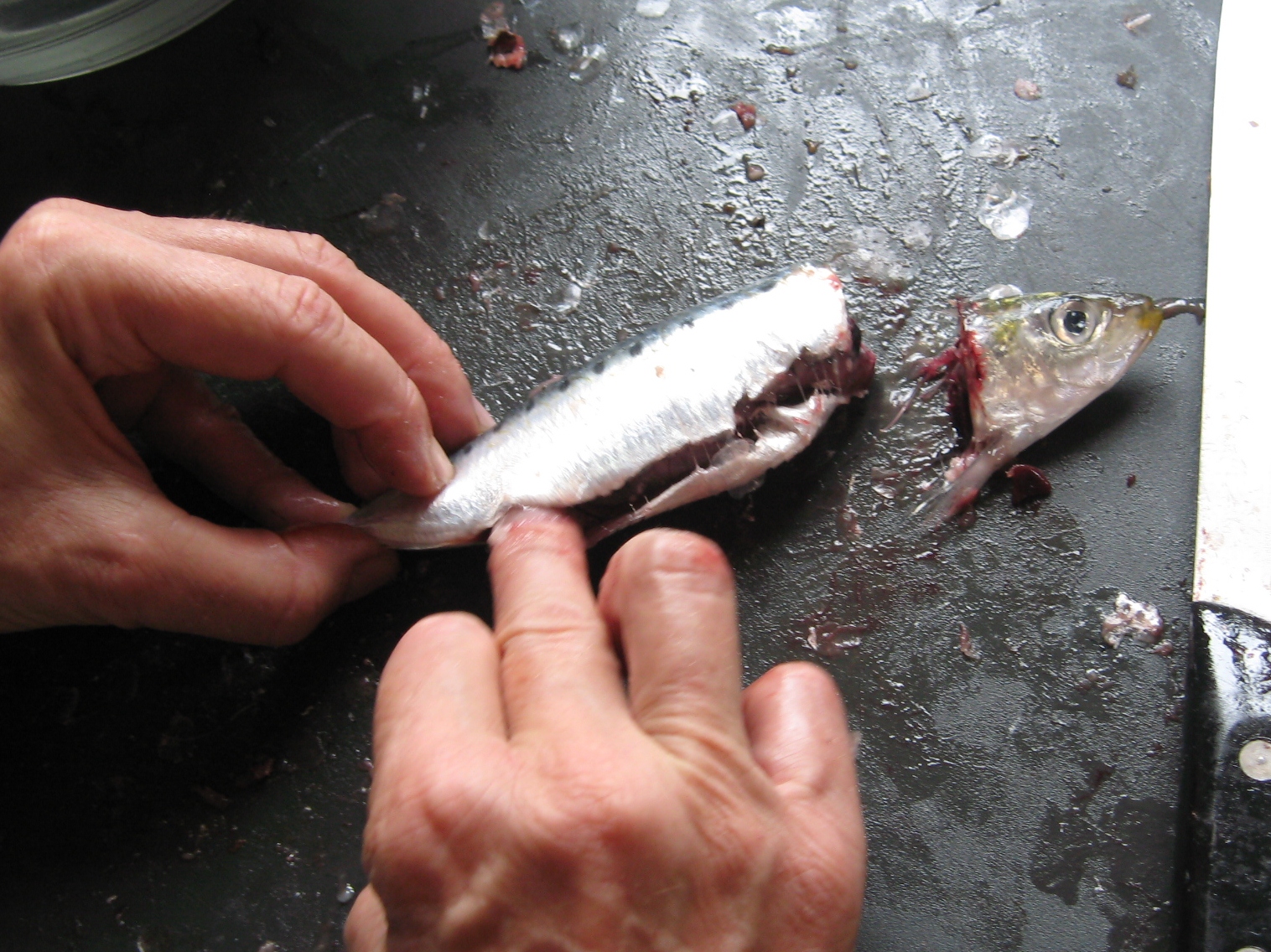
Cut the head off the fish and discard.

Tuck your fingers into the belly cavity and open the body along the underneath of the belly.

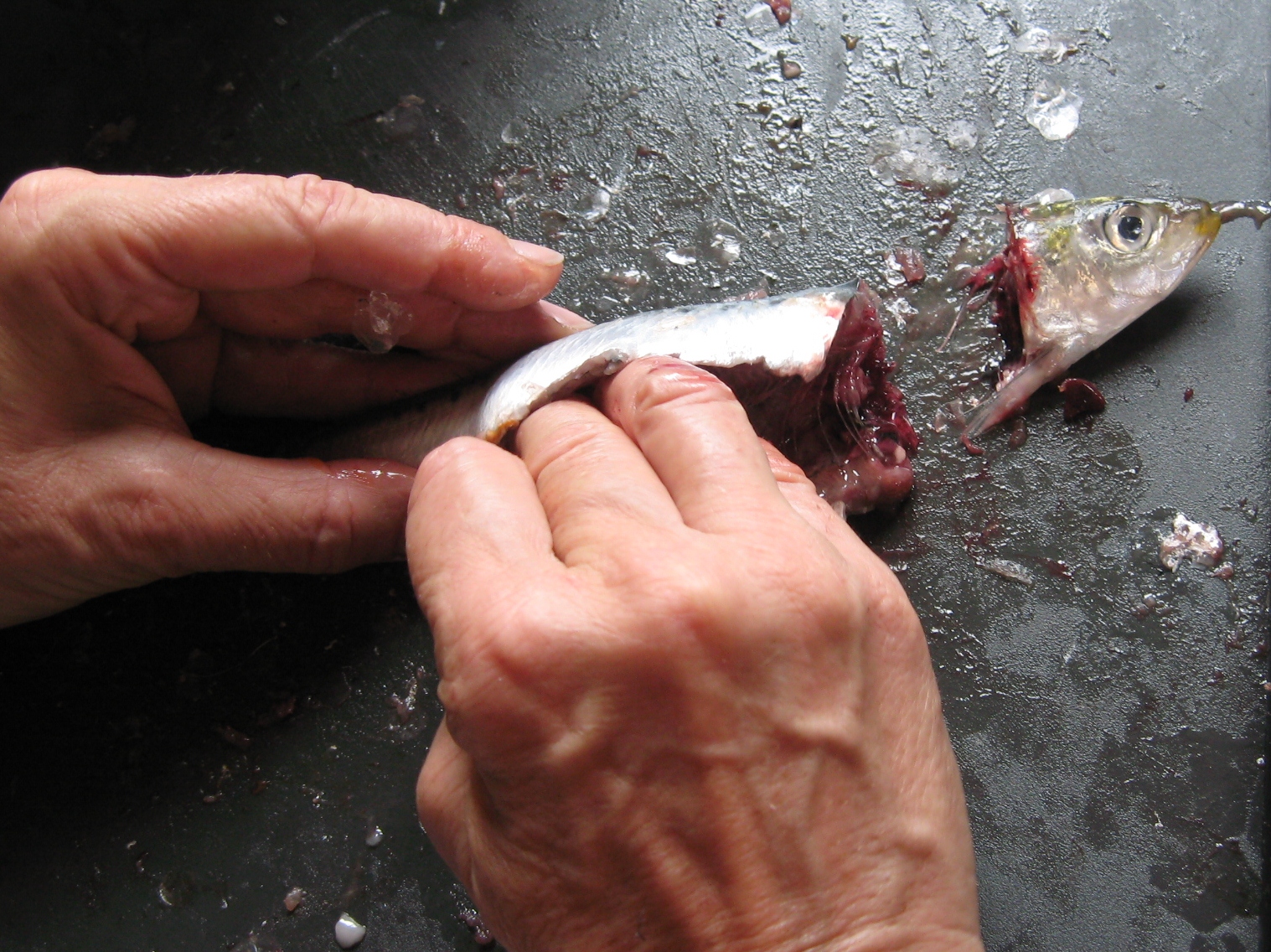
With you fingers prise the backbone away from the flesh along one side of the fish until you can open the fish out flat.

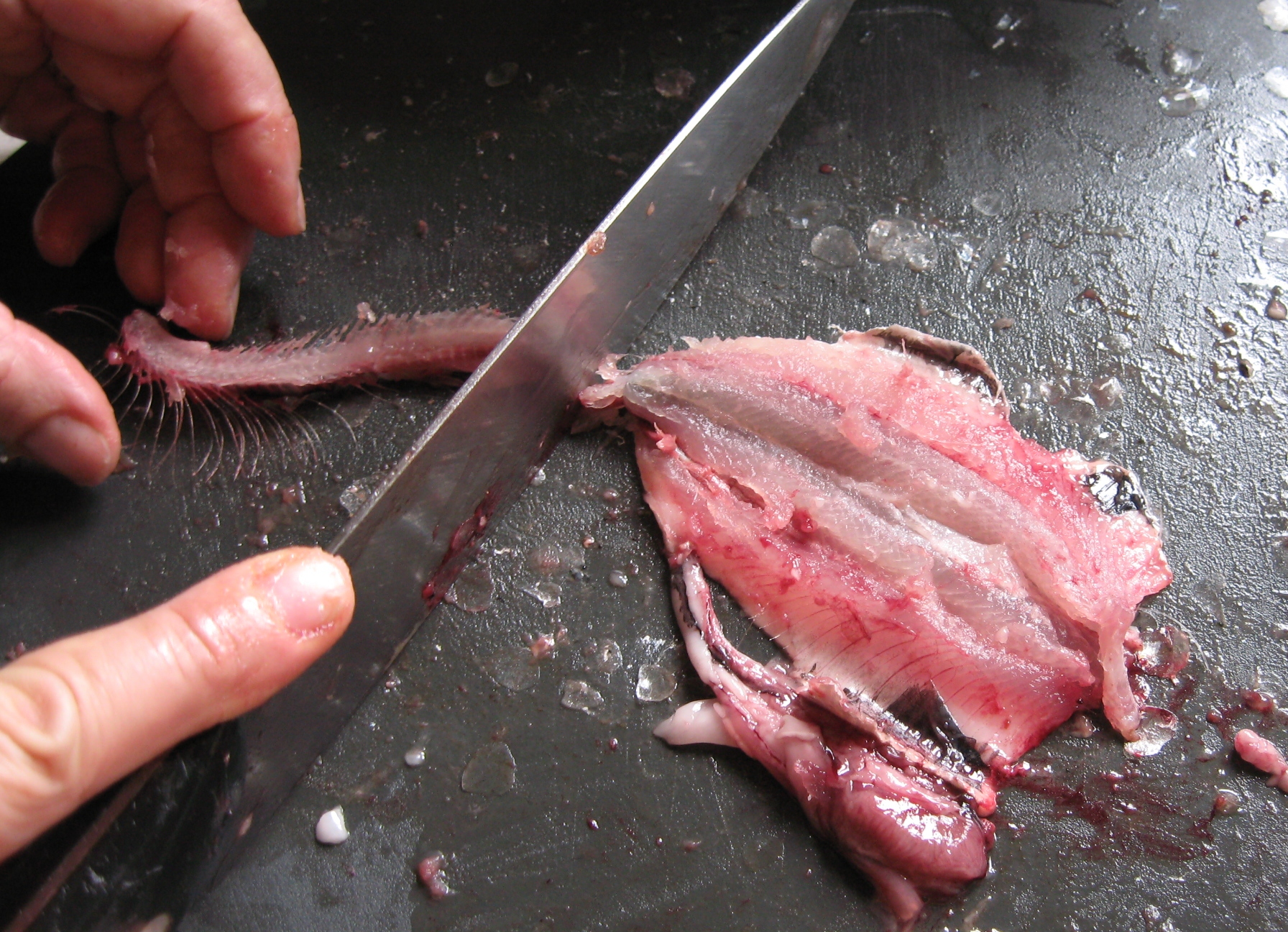
Then prise the backbone away from the flesh of the other side of the fish until it is only attached at the tail.

Cut the backbone off with a knife or scissors.

There will be a fin on one side of the fish that was below the stomach, cut this off and scrape away any guts.

If the fish are large then check whether there are any remaining bones and remove them.

Wipe the fish with kitchen roll. You are now ready to do your recipe.

Share this:

  • Click to share on X (Opens in new window) X
  • Click to share on Facebook (Opens in new window) Facebook
  • Click to share on WhatsApp (Opens in new window) WhatsApp
  • Click to email a link to a friend (Opens in new window) Email
Like Loading...

Fresh Fig Tart

28 Tuesday Aug 2012

Posted by Nevenka in Starters, Sweet Things, Techniques

≈ Leave a comment

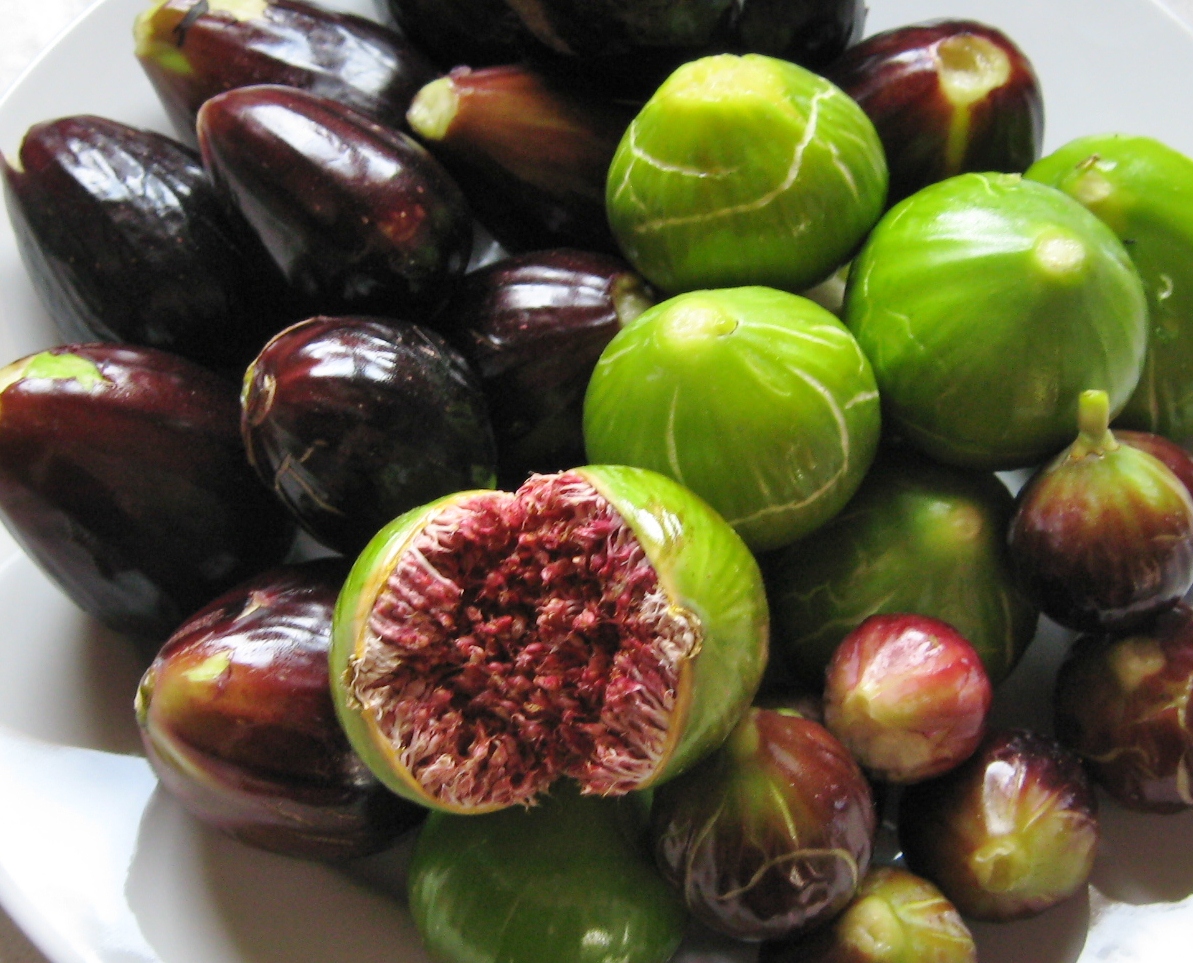
la_breva_green_eating_do_it_yourselfMy fig trees are behaving themselves this year. We planted four varieties – actually that is not strictly speaking true – we planted three varieties and another planted itself. It could not have worked out better though. The trees we planted were an early black variety called La Breva, which has a very early small crop in May, followed by its main crop of very sweet large fruit throughout the month of July going into August. As these come to an end the green figs start to ripen. One tree has large fruit for eating and the other smaller fruit for drying. The do-it-yourself tree crops from June to October with small black very sweet fruit that are good to eat or dry. I wish that I knew which variety it was then I could reccomend it.

The above description is how the trees are supposed to behave, but some years, depending on the weather, all the trees crop at the same time which makes quite a lot of work to deal with them.

The surplus Breva are made into Caramelised Fig Jam which is sold throught the farm shop and is very popular. The small figs are dried for the winter. As for the sun dried tomatoes, I use a fold out clothes drier with a sheet of mesh or fabric pegged to it to make a flat surface, and place it in a spot with all day sun and a breeze. Leave the figs whole and just place on the mesh. Bring them in at night so that they are not re-moistened by the dew. Turn them each day. I have problems with bugs getting in the green figs, but not the black ones. I think that this is because the end where the flower was on the green ones, it leaves a little hole that the bugs can use as an entrance. I am experimenting at the moment with stopping up this hole with a paste made from bread and water. I will report back on success or lack of it.fig_goat_cheese_Mint_salad

The fresh figs are complemented by anything salty, so are very good with Serrano Ham or salty cheese as in the above salad of Oak Leaved Lettuce, La Breva Figs, Goats Cheese, and Fresh Mint dressed with Basamic Syrup.

For eating as a sweet, try putting them into a tart.fig_tart

For a shallow 28 cm diameter tart tin

500 gms fresh figs

100 ml thick cream

3 large eggs

Fresh or bought puff pastry to line the tart tin

250 gms crema de almendras / 200 gms ground almonds and 50 gms sugar

This is a very quick and easy tart to prepare particularly if you are using bought puff pastry.

Preheat the oven to 180 C.

Roll out the pastry and lay out in the tart tin. You will see from my photos that I like to line the tart tin with baking parchment, it just makes it that little bit easier to slide the tart out of the tin.

Wash and dry the figs. Cut them into quarters. Arrange them on top of the pastry close together and in a pattern that pleases you.

Mix together the eggs, cream and almond cream or ground almonds and sugar.

When well amalgamated, spoon evenly over the figs. 

Bake for 1 hour at 180 C until golden brown. Let cool slightly before serving.

Share this:

  • Click to share on X (Opens in new window) X
  • Click to share on Facebook (Opens in new window) Facebook
  • Click to share on WhatsApp (Opens in new window) WhatsApp
  • Click to email a link to a friend (Opens in new window) Email
Like Loading...

Sun Drying Tomatoes

30 Monday Jul 2012

Posted by Nevenka in Techniques

≈ Leave a comment

Those of us who have tomatoes growing in their huertas – vegetable gardens – are finding that we have more than we can eat fresh, so I am going to give you two methods of preserving them. If you live in a climate with not much sun, you may wonder what use the instructions for sun drying would be to you, but should you find yourself holidaying somewhere hot, you may be grateful to have the knowledge that in the space of three to four days you can have your own sun dried tomatoes to take home as a culinary memento of your stay.

sun_dried_komato

Komato Sun Dried

First principle is only use perfect fruit. Small tomatoes are quicker and easier to dry than large ones. So certainly while you getting used to drying tomatoes, and particularly if the weather looks uncertain, go for smaller ones if you have the choice.

Wind is as much of a factor in successful drying as heat. Look for a drying spot that has all day sun and a breeze. You may have to have a morning drying spot and a different afternoon one.

Any flat tray/plate can be used to dry the tomatoes on. Because I dry a lot, I have an old fold out clothes drying rack to which I peg teatowels to make a flat surface. But I have used oven trays, unused cupboard shelves and plates.

Always bring the tomatoes in at night. No matter how hot it feels there is always too much condensation at night, which will encourage your tomatoes to rot. Not to mention all the vermin, cats and bugs that roam around at night.

sun_drying_tomatoes_day_1

Beginning of day 1

Start at the beginning of the morning to give the tomatoes a good full day of drying for their first day.

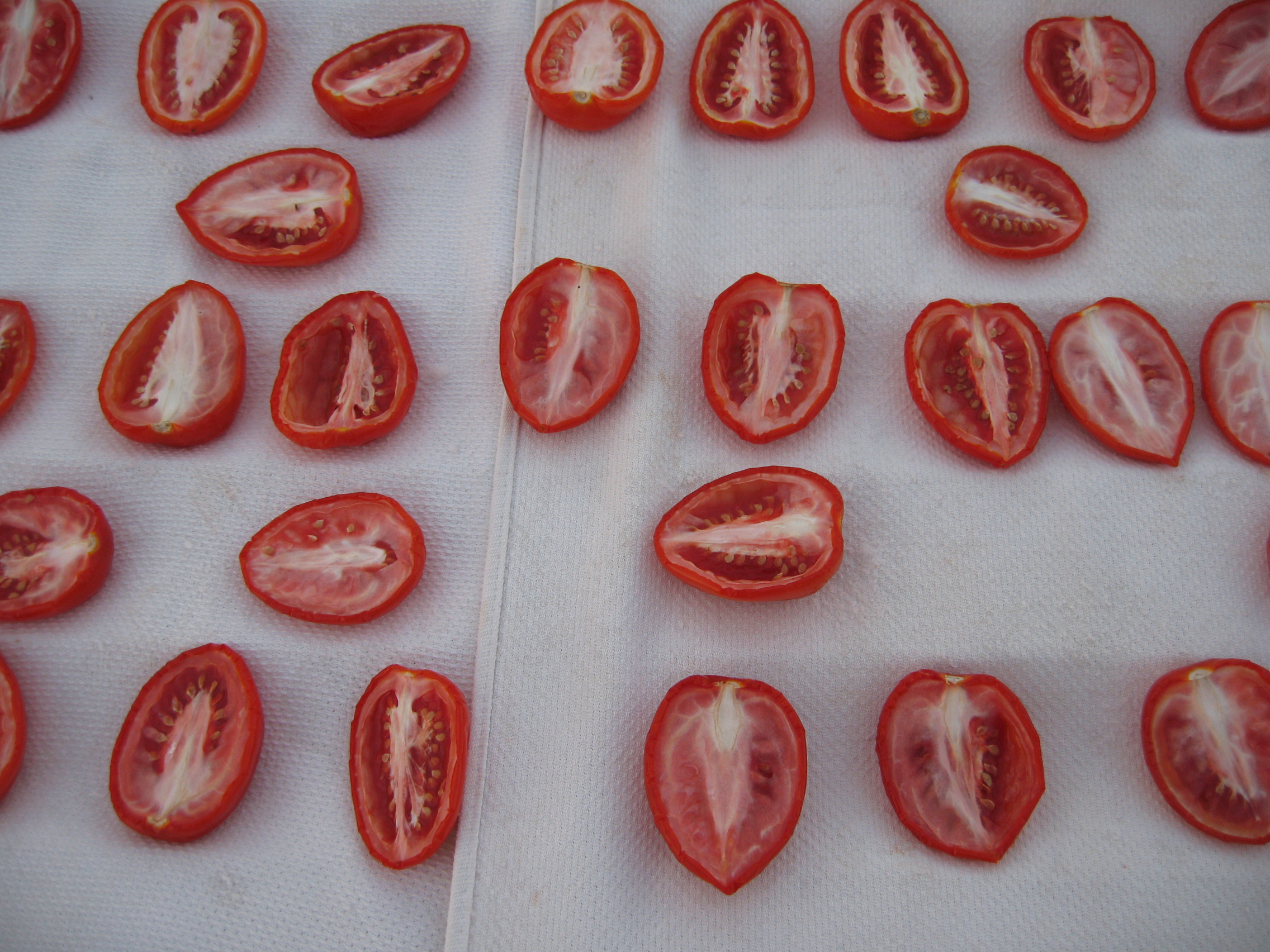
Wash the tomatoes. For plum tomatoes cut them in half as above. For round varieties cut them in half across their equators.

Lay out the tomatoes on a tray cut side up and sprinkle generously sea salt onto the flesh.

Put them outside in a sunny and breezy spot.

sun_drying_tomatoes_day_2

End of Day 1

sun_drying_tomatoes_day_2

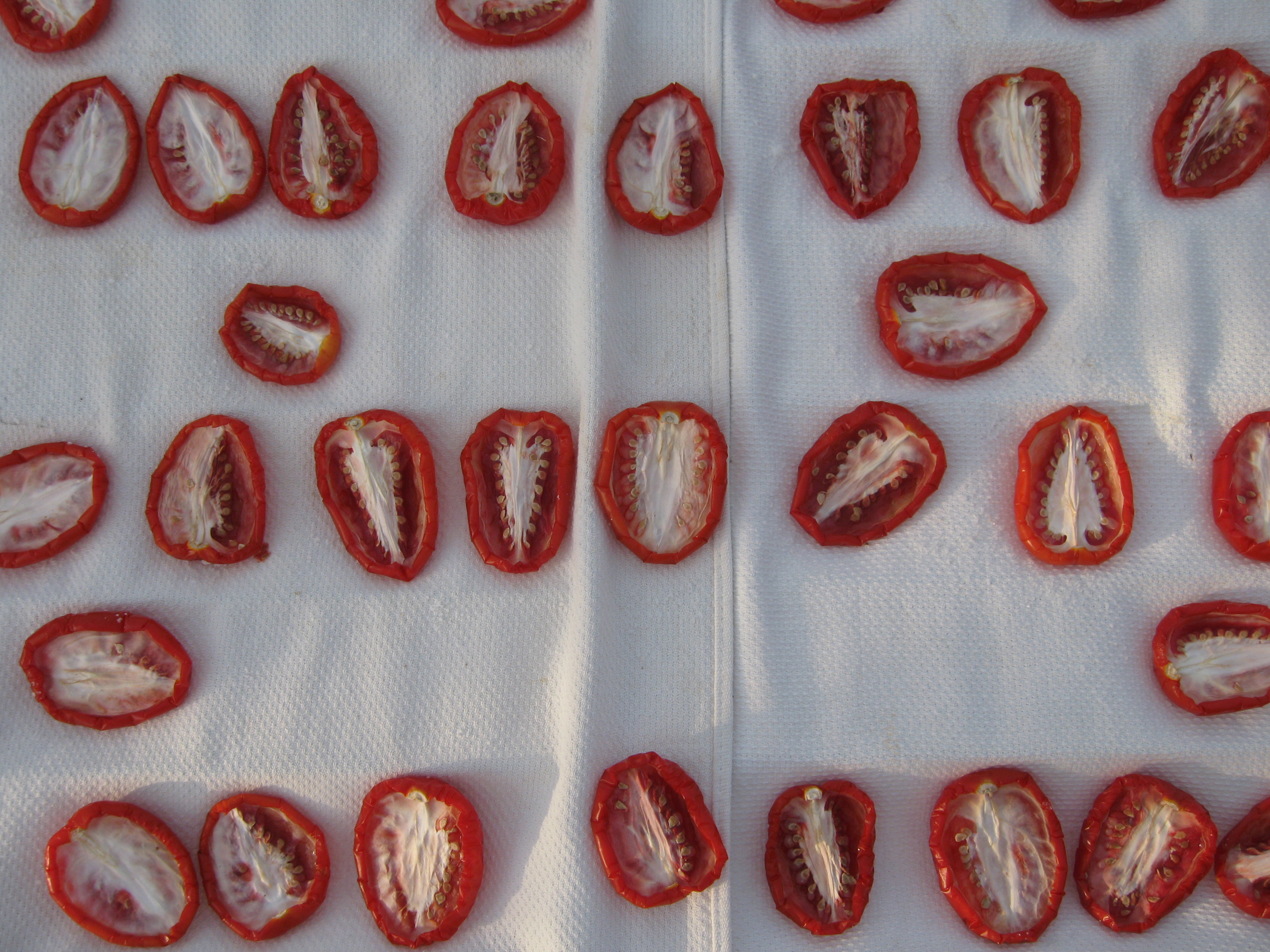
End of day 2

After one and a half to two days of drying the tomatoes will have curled inwards, so to enable them to keep drying you need to uncurl them and flatten them out. Sometimes little bugs may have crept into the curled up edges, just evict them.

sun_drying_tomatoes_end_of_day_4End of day 4 – the dried tomatoes

The length of time that tomatoes need to dry varies depending on the size of tomato and the weather conditions. Normally here in the second half of July the conditions are perfect for drying, which they were for the Komato variety at the beginning of the post, which dried in two and a half days. Just because I wanted to do a step by step with photos for you, the plum tomatoes last week took four days to dry as we had unseasonal cloud and humidity. Occasionally and usually towards the end of the season the weather turns too humid and you have to abandon the drying half way through and use the tomatoes for something else.

Don’t be tempted to leave the tomatoes out in the sun too long either. I have done this thinking that extra drying will help them keep longer. It doesn’t and you end up with tomatoes like dried up bits of leather. So stop when the tomatoes feel dry but still have some flesh to them.

To store I pack the tomatoes into jars with olive oil. The first year that I dried tomatoes I had read somewhere that they could be stored in paper bags. By November they were covered in little spots of a type of mould. Maybe harmless – but not appetising. This would probably happen even more quickly in a less dry climate than here. Putting them in oil holds the colour much better too.

Put a little oil in the jar first, and then layers of tomatoes and oil making sure that you have no air bubbles. Make sure that there is about 1cm of oil above the last tomato. Seal and store in a cool dark place.

Next post will be the recipe for Passata.

I leave you with Pablo Neruda

Ode to Tomatoes


The street

filled with tomatoes

midday,

summer,

light is

halved

like

a

tomato,

its juice

runs

through the streets.

In December,

unabated,

the tomato invades the kitchen,

it enters at lunchtime,

takes its ease on countertops,

among glasses,

butter dishes,

blue saltcellars.

It sheds its own light,

benign majesty.

Unfortunately,

we must murder it:

the knife sinks into living flesh,

red viscera,

a cool sun,

profound,

inexhausible,

populates the salads of Chile,

happily,

it is wed to the clear onion,

and to celebrate the union we pour oil,

essential child of the olive,

onto its halved hemispheres,

pepper adds its fragrance,

salt,

its magnetism;

it is the wedding of the day,

parsley hoists its flag,

potatoes bubble vigorously,

the aroma of the roast knocks
at the door,

it’s time! come on!

and,

on the table,

at the midpoint of summer,

the tomato,

star of earth,

recurrent and fertile star,

displays its convolutions,

its canals,

its remarkable amplitude and abundance,

no pit,

no husk,

no leaves or thorns,

the tomato

offers its gift of fiery color

and cool completeness.

Share this:

  • Click to share on X (Opens in new window) X
  • Click to share on Facebook (Opens in new window) Facebook
  • Click to share on WhatsApp (Opens in new window) WhatsApp
  • Click to email a link to a friend (Opens in new window) Email
Like Loading...

The Butchers Art

23 Monday Jul 2012

Posted by Nevenka in Techniques

≈ Leave a comment

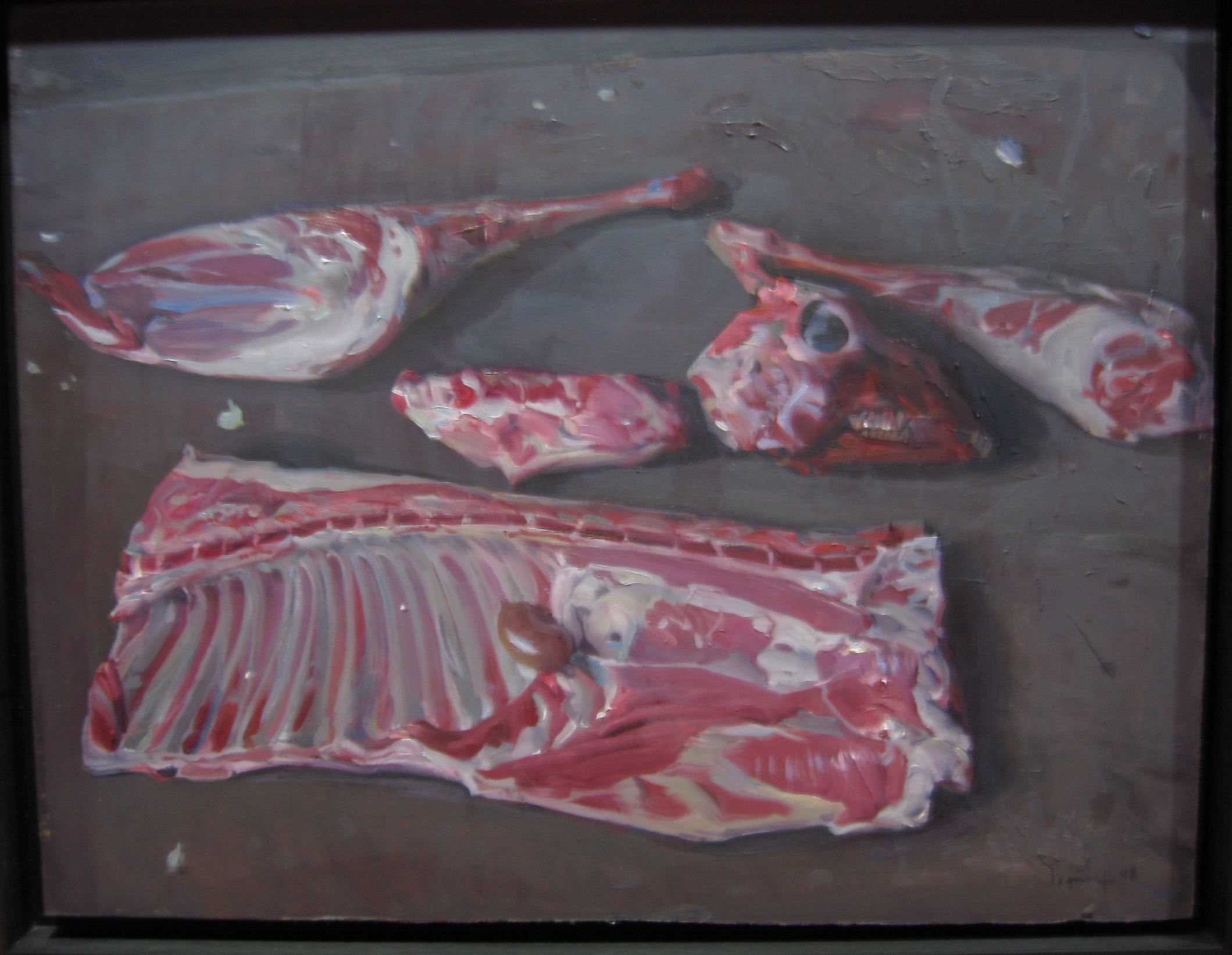
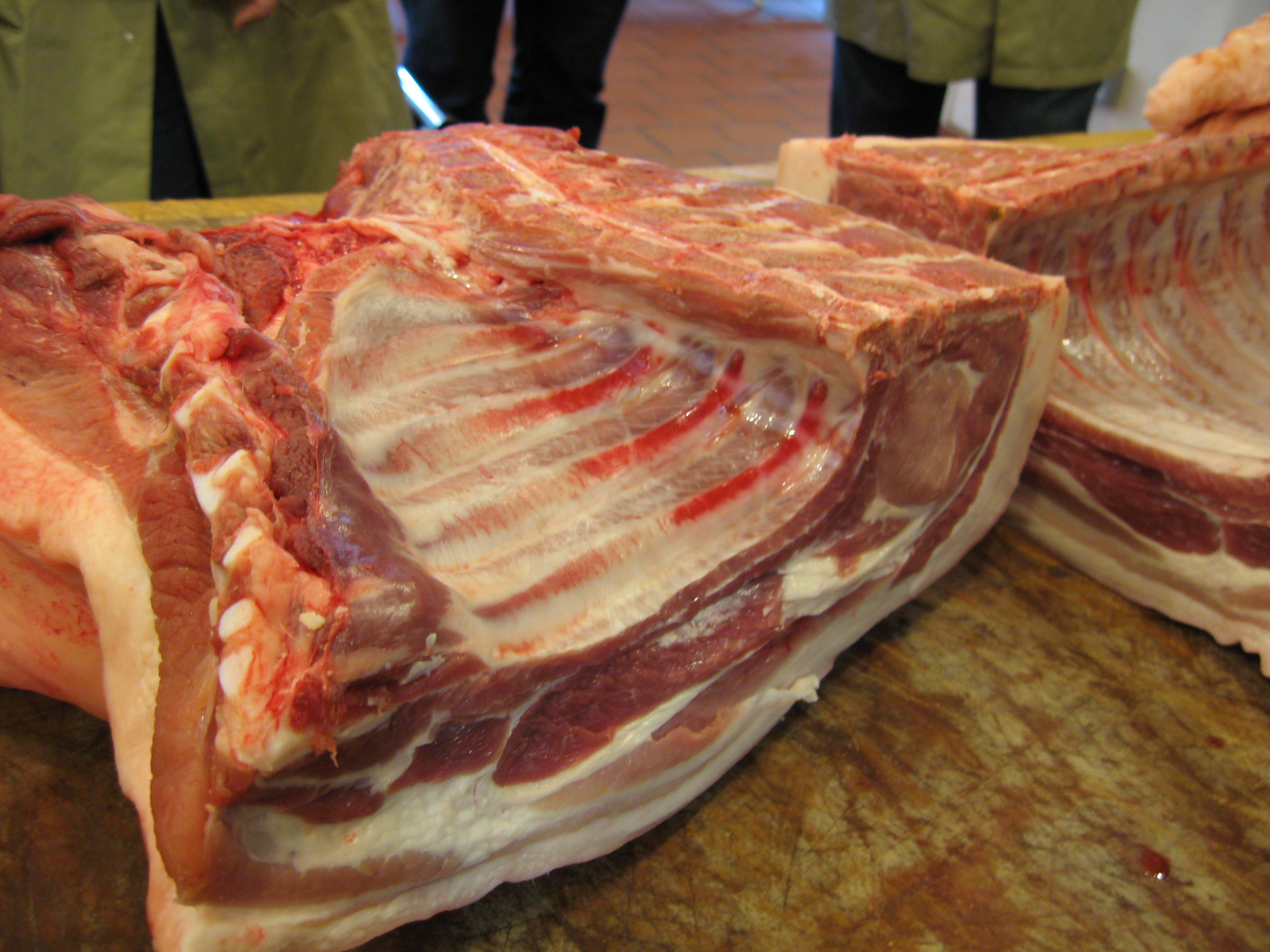
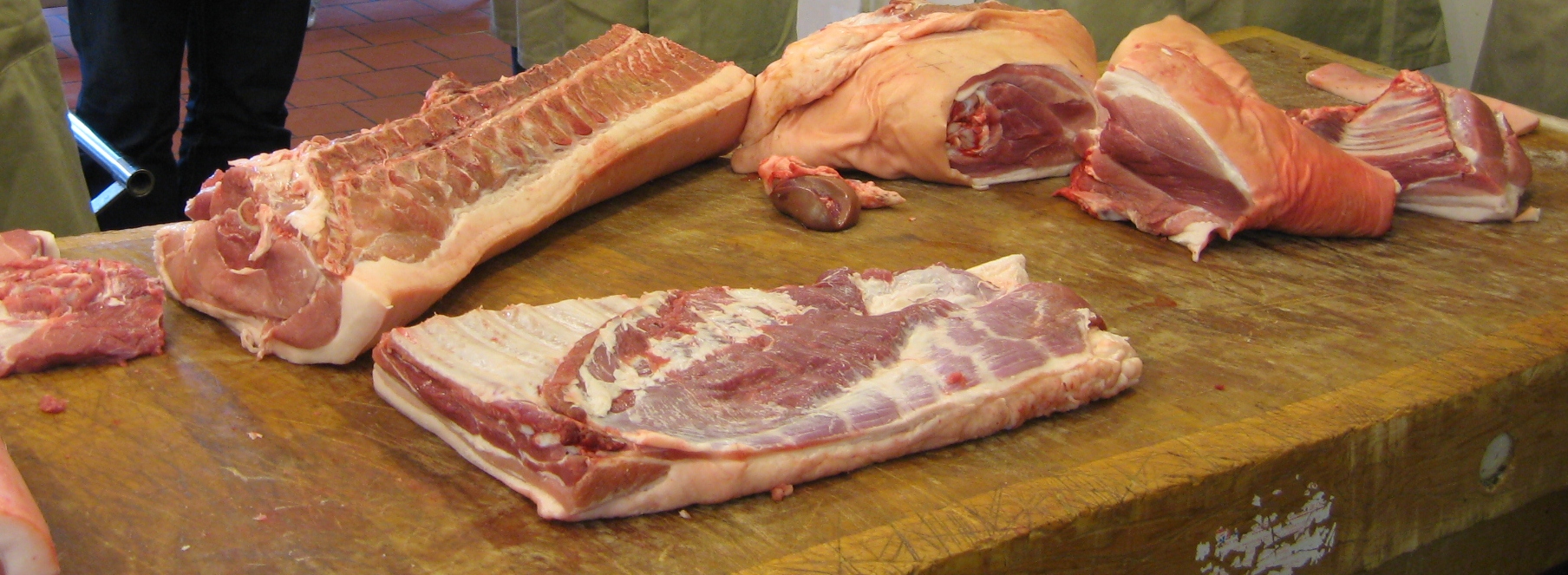
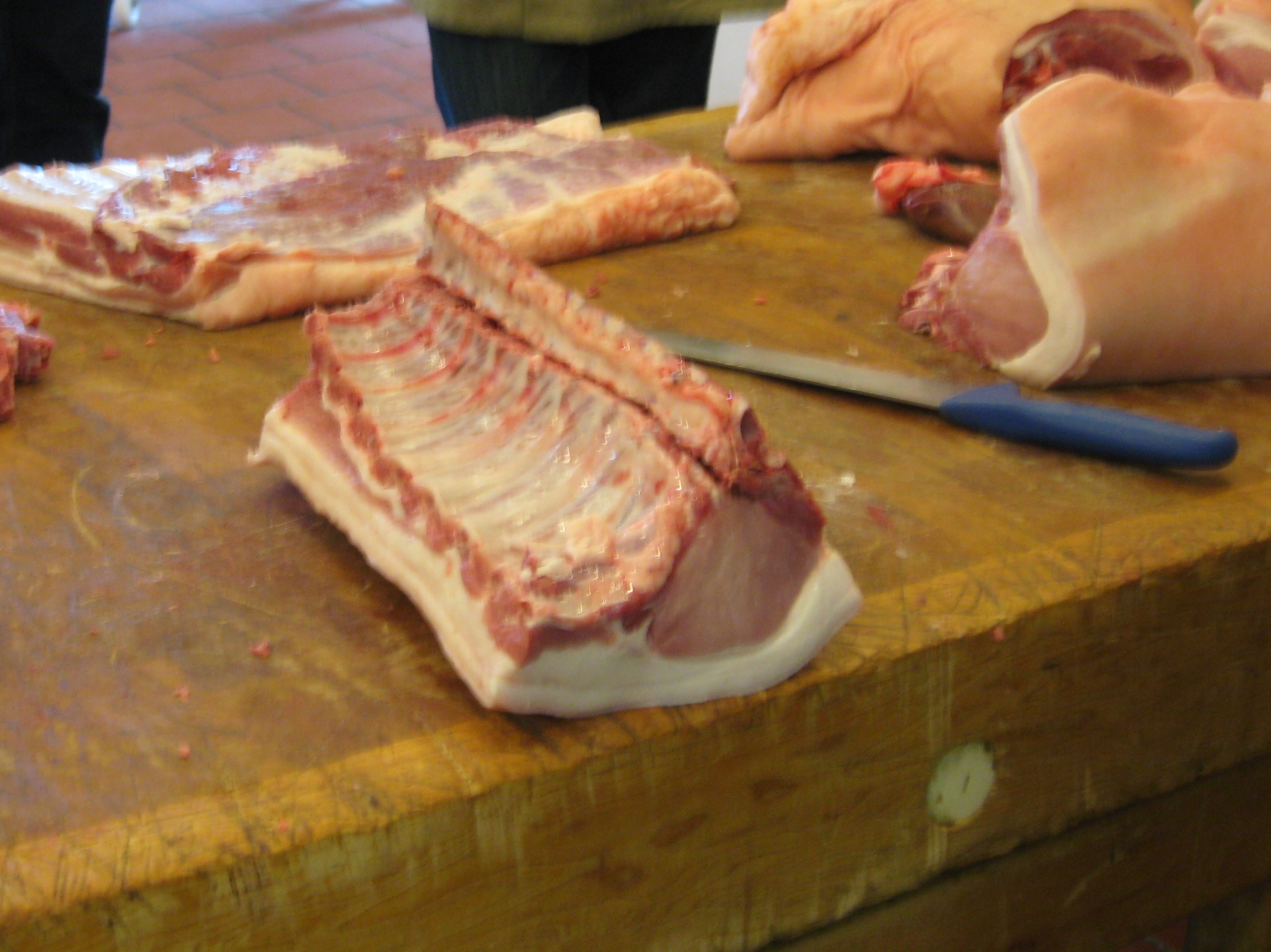
andres_garcia_ibanez_cerdaLast week I was in London where I was treated to a course on pork butchery at The Ginger Pig. Then this week I visited the gallery of Andres Garcia Ibanez, one of Spains foremost contemporary artists, who has recently added a selection of paintings from his series Naturalezas Muertas to the anthology of his works.andres_garcia_ibanez_cabeza_y_trozos_de_cabritoThe gallery in Olula Del Rio is where the artist has his house and studio, is a little cultural oasis in this very rural part of spain. Although I have included here as a tempter for you, two of his meat pictures, being a blog about food, any of out of his recent series of portraits was what I wanted to take home and look at for a long period of time. If you are in the vicinity, go and have a look.

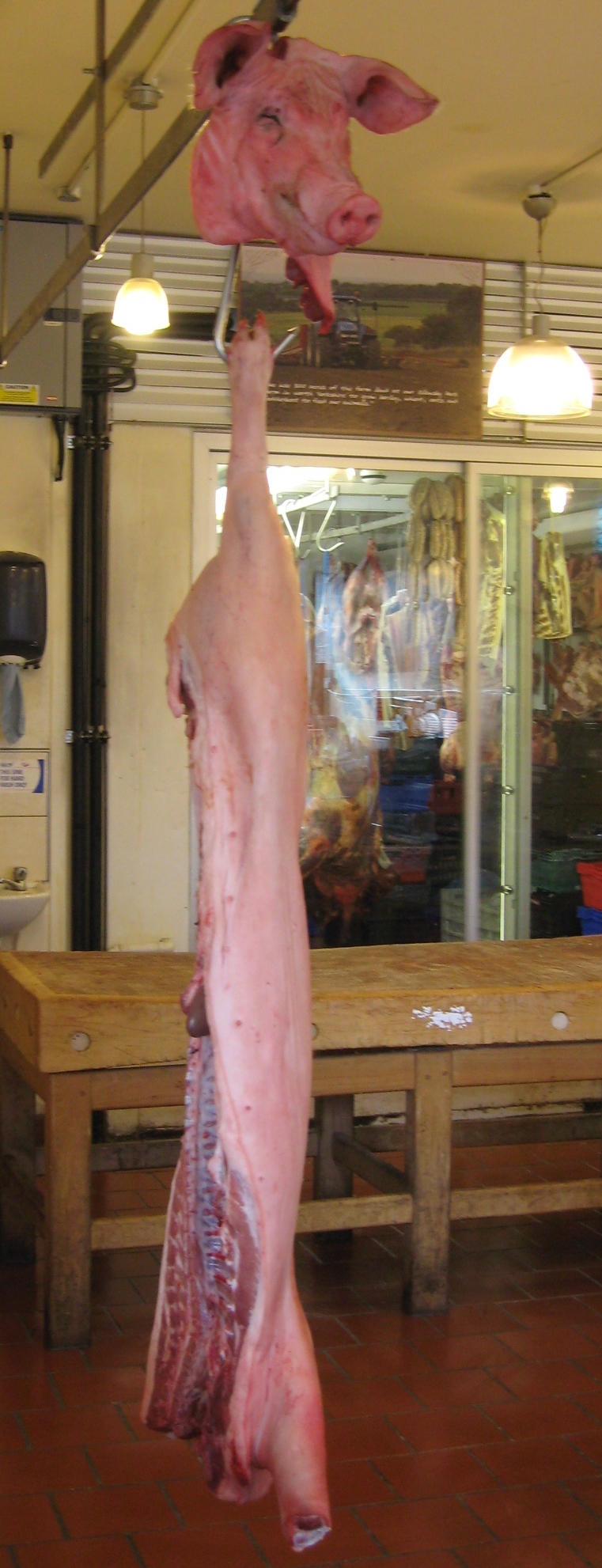
On to the real flesh and blood and my date with a pig. Half a pig to be exact.

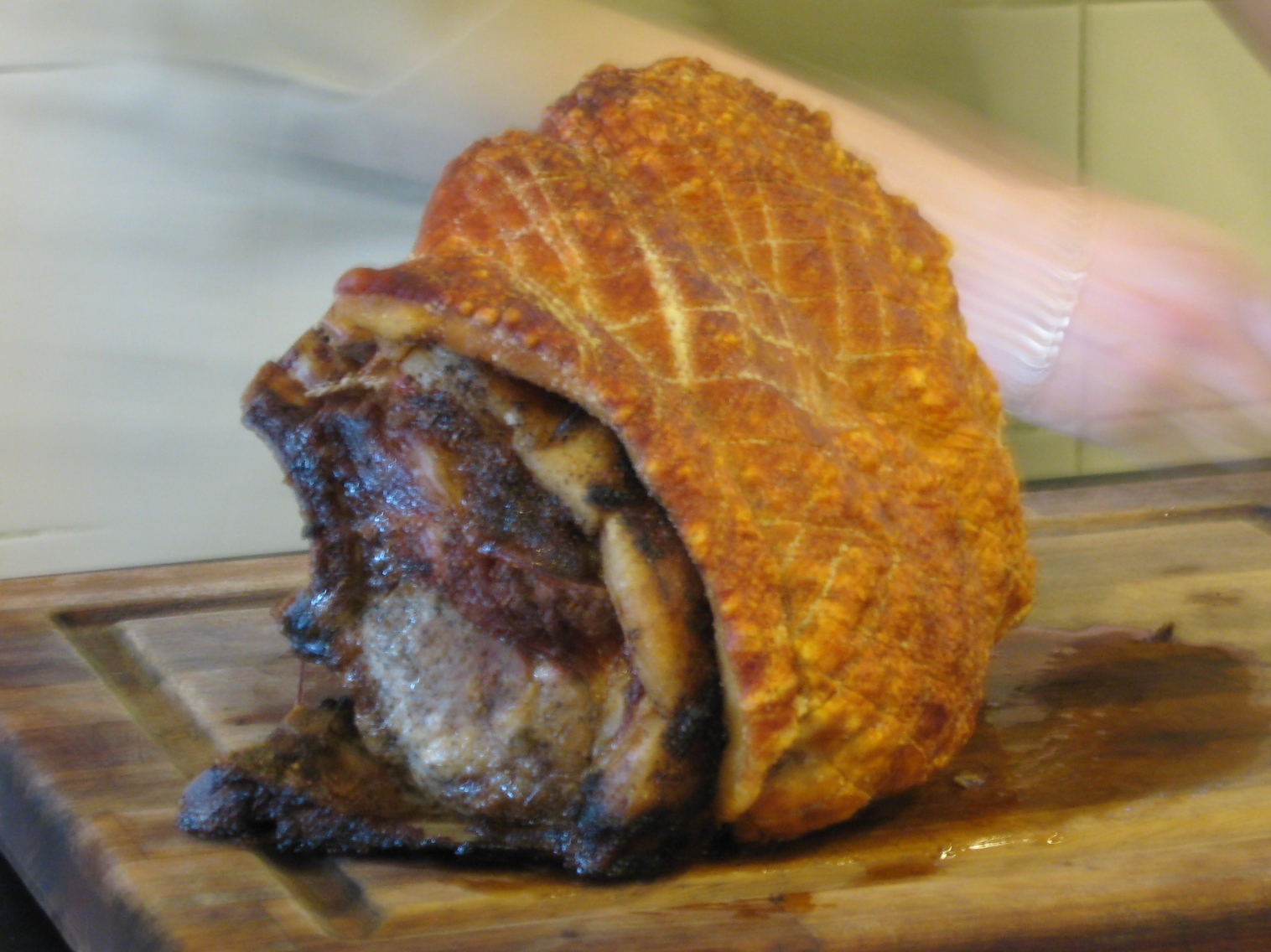
The roast in the final picture was treat for us after we had done lots of tiring sawing, cutting, chining and tying of pieces of pork.

The course was very good. They are not trying to turn you into a master butcher in three hours, but to have you come away with a much better understanding of which cuts come from which part of the animal, and what the best use of those cuts would be. On top of that they give you a roast dinner of their excellent pork featuring the best crackling that I have ever had, and I am not normally a crackling fan, and a good joint to take home and cook yourself. Highly recommended.

Share this:

  • Click to share on X (Opens in new window) X
  • Click to share on Facebook (Opens in new window) Facebook
  • Click to share on WhatsApp (Opens in new window) WhatsApp
  • Click to email a link to a friend (Opens in new window) Email
Like Loading...

Preserved Salads

04 Monday Jun 2012

Posted by Nevenka in Preserves, Techniques, Vegetable Dishes

≈ Leave a comment

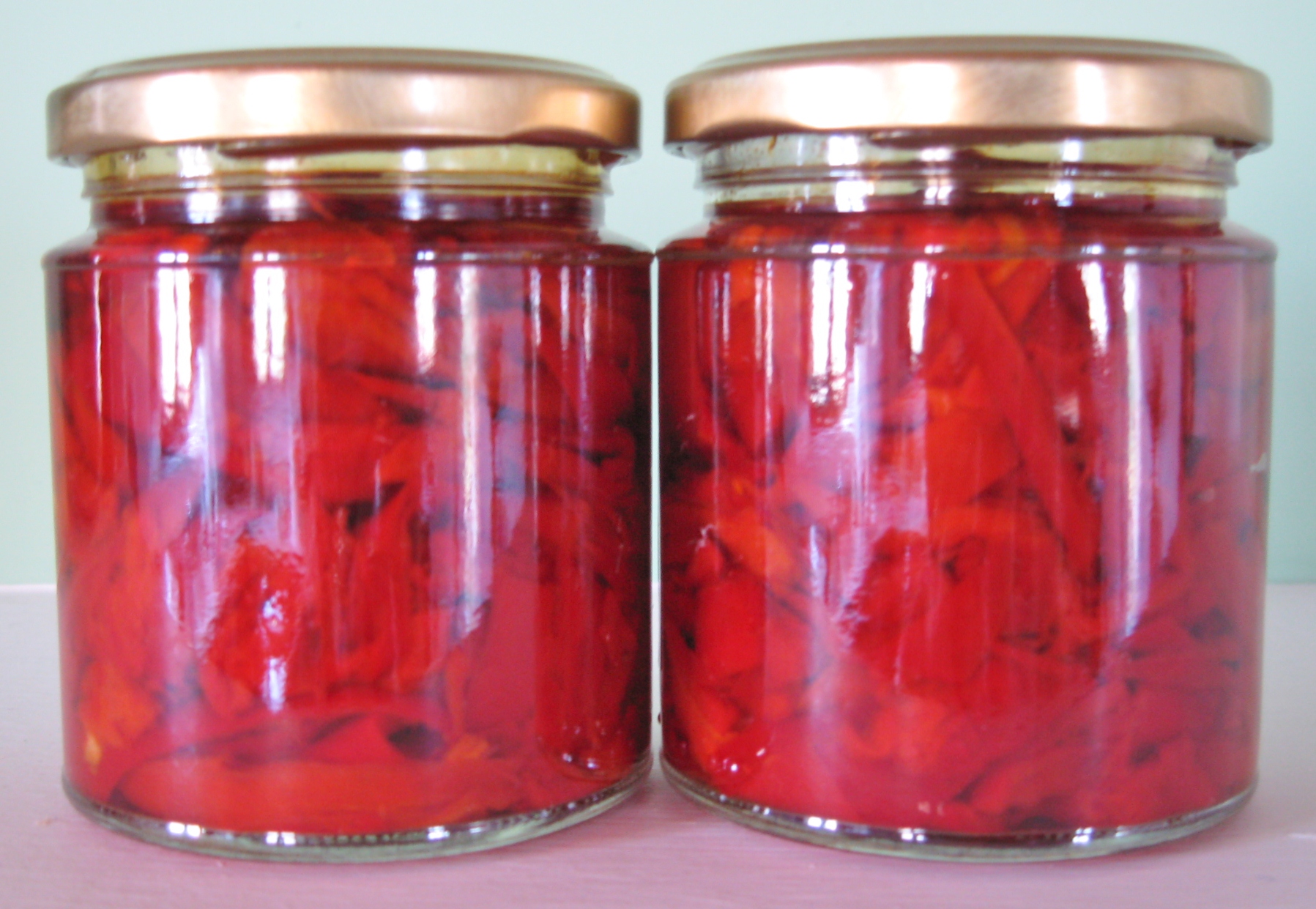
red_pepper_salad

Red Pepper Salad

Waste is one of the biggest crimes of modern times, and particularly food waste. When you have gone to all the trouble of digging, manuring, digging again, then sowing and watering your own vegetables, and nurturing them into maturity, then the last thing you want to do is waste any of them.

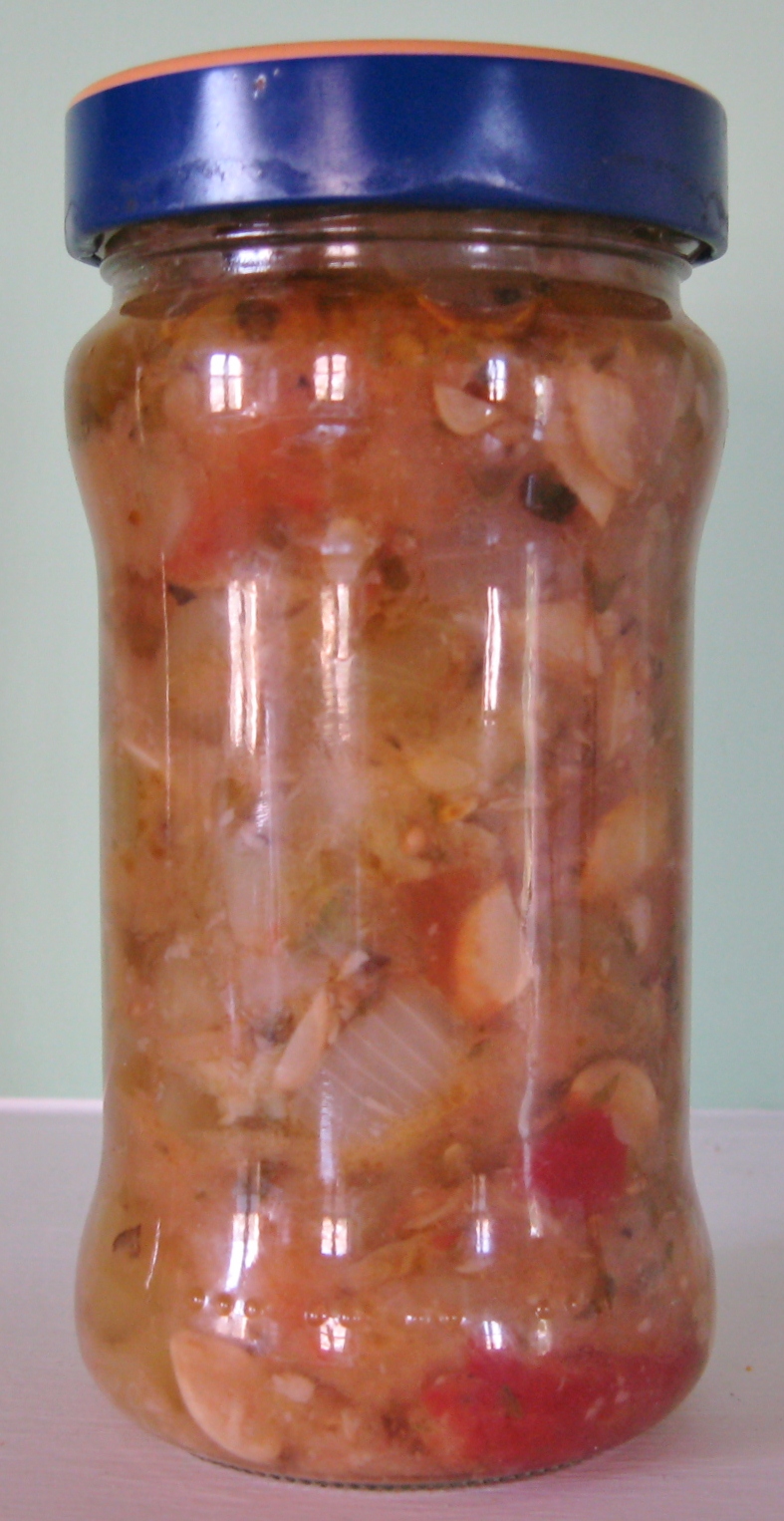
No matter how well you plan to grow the amounts of produce that you actually need, there will always be moments when there are surpluses. This method of preserving deals very well with small surpluses. When I started developing these recipes I had an idea in my head of the use I wanted for the resulting preserve. I wanted cooked vegetables that I could use as either salads as part of a mixed starter, or as the topping for crostini or pizzas, or as the base for a pasta sauce. I love those cooked vegetable salads that the Italians serve as part of antipasti. They are cooked al dente retaining a bit of firmness, and are well flavoured with lemon juice, garlic, olive oil and often herbs. Once you get your head around the basic principles of this preservation method and the flavouring you will be able to make your own combinations of ingredients.

Essential equipment for these recipes are jars. I find that as these salads are quite rich containing a large proportion of olive oil I don’t want to use a large amount at once, so save any small jars that come into the house. They need to have a screw top and plastic seal as so many modern jars do. They need to be scrupulously clean and then need sterilizing in a water bath just before use. Don’t be put off by the terminology, they just need to be put in a pan of boiling water with their lids and held there for five minutes.

I am going to start with Aubergine and Red Pepper Salad as this is one of the ingredients that I used in making Mini Chicken Pstilla which is the recipe that I was going to share with you today until I realised that it would be better to give you the salad first. The Pstilla recipe will follow I promise.

AUBERGINE AND RED PEPPER SALADaubergine_and _red_pepper_salad

4 aubergines

4 red peppers

6 large cloves of sweet garlic

300 ml olive oil

large sprig of fresh oregano

lemon juice

sea salt and freshly ground black pepper

Peel and coarsely chop the garlic.

Cut the red pepper into small dice.

Get the pan with the jars and lids on to warm. If you haven’t a pan big enough to take them all, start with as many jars as the pan will take and then you can add more once these are used. Don’t worry if they are ready too soon for the salad, you can always turn off the heat for a while and then reboil when needed.

In a pan large enough to take all the ingredients heat the olive oil slowly on a low heat. When it is warm add the garlic and peppers. Stir to cover with oil.

Cut the aubergines into dice about a centimetre square. Add to the pan. You don’t want to cut the aubergines in advance as they have a tendency to discolour and go brown. Stir to mix in.

Season with a good couple of pinches of salt and the chopped oregano leaves and stir again. Cook slowly for about ten minutes.

We are now getting to the tricky part, which is the amount of cooking. If you don’t cook the vegetables enough, they will ferment in the jar, too much cooking and you have a mush. It is a bit trial and error I am afraid. Start to check how cooked the salad is and add lemon juice and salt and pepper to taste. 

As soon as the salad is cooked turn off the heat. Drain the jars from the water and fill with the salad while the jars are still hot. Asbestos fingers are a help here. The salad wants to come to about half a centimetre from the top of the jar. Make sure that the rim of the jar is clean, so that you have a good tight seal, before putting on the hot lids. Put  the lids on loosely for a minute or two and then tighten up. 

Leave to cool totally before washing the jars and labelling. I always check that the jars are well sealed at this point. If the lids have a nipple in the middle you should have heard this ping as the jars were cooling and it should be concave and pulled in. If there is no nipple the lids should still be slightly concave and tight looking. If they are not then use these jars straight away.

Variations preserved_courgette_salad

Courgette Salad – I made this after returning from a short trip to find that my courgettes had turned into mini-marrows while I was away. Courgettes, peeled and diced, onion chopped small, garlic as above and a couple of peeled and chopped tomatoes. Follow the master recipe above for the method.

Red Pepper Salad – Strips of red peppers slowly stewed in olive oil to just cover and seasoned with salt and lemon juice. Don’t worry about the amount of oil, when you come to use the salad drain off the oil and use it for cooking or salad dressings later.

preserved_artichoke_saladArtichoke Salad – As you clean and prepare the artichokes put them into water to which a good proportion of lemon juice has been added so that they do not discolour. Drain and stew in olive oil to cover. Season with salt – the lemon is already added.

Share this:

  • Click to share on X (Opens in new window) X
  • Click to share on Facebook (Opens in new window) Facebook
  • Click to share on WhatsApp (Opens in new window) WhatsApp
  • Click to email a link to a friend (Opens in new window) Email
Like Loading...

The Beginners Guide to Making Fresh Pasta

26 Saturday May 2012

Posted by Nevenka in Techniques

≈ 1 Comment

I have had requests to give any beginners a step by step guide on how to make fresh pasta as effortlessly as I am able to do.

A question that I am often asked is – is fresh pasta that good that it is worth the effort of making it – and the answer is yes indeed it is. The taste and texture of home made pasta is superior to any manufactured pasta.

Not only that, there are several different recipes of types of pasta for you to choose from as well as the opportunity for you to add flavourings to the pasta as you make it. Rich Egg Pasta which is made with just egg yolks, flour and a pinch of salt. Whole Egg Pasta, which is more like the fresh pasta that one can buy in the supermarket but a much better texture and taste when you make it yourself. Both of the above can be varied by the addition of dry flavourings. Cocoa powder is particularly successful for chocolate pasta to go with rich game sauces. Ground dried mushrooms work well too.

And then there is one which is made with flour and whole egg, with the addition of oil and liquid. The liquid giving you the opportunity to vary the flavour and colour of the pasta with non dry flavourings, so it can be wine, or squid ink for black fish flavoured pasta, a strong prawn stock for a pink fish pasta, fruit juice concentrates give other interesting flavours and colours. The variations are as great as your imagination allows. And this is before we get to considering all the shapes and thicknesses that the pasta can have – Ravioli, Linguine, Tagliatelle, Lasagne, Lasagnete, Canneloni……….

But let’s not get ahead of ourselves, back to the beginning.

Firstly you need to invest in a pasta machine, or dig that gifted one out of the back of the cupboard where it has been left for far too long. There are a huge range available on the internet at a huge range of prices. For a beginner it is best to go for a simple machine that is turned by hand. The speed of the electric ones is a bit too fast for the inexperienced, and really you only need an electric machine if you are regularly making pasta for more than six people. Amongst the hand operated ones, it is useful to have one that has rollers for cutting linguine and tagliatelle, but other than that they are all pretty similar. With the more expensive ones, in my opinion, you are paying the extra money for the brand name and the paint job. My machine which I am very happy with came from Ikea.
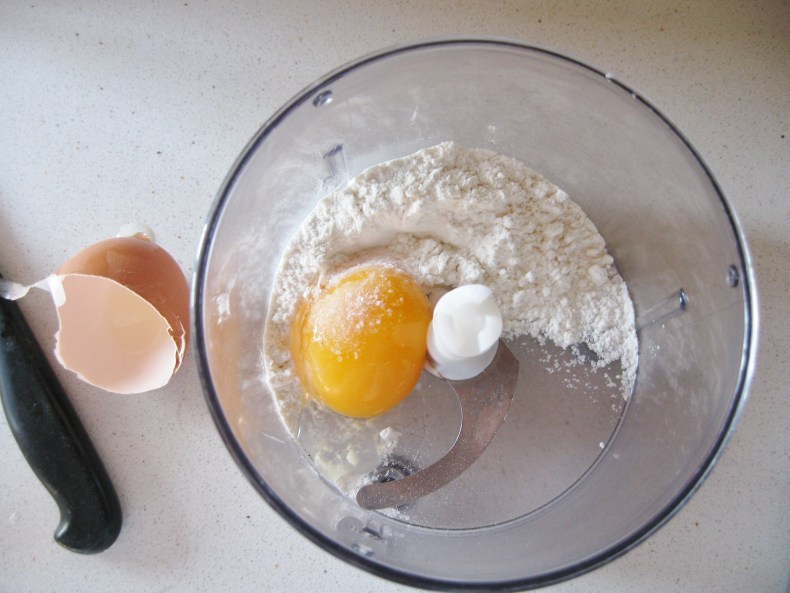
A small food processor is a useful although not essential piece of equipment when making pasta, especially if time is short.

The flour. For successful pasta making, a strong flour is required so that you have an elastic dough. If you can get the Italian 00 strong pasta flour, this is the ideal, as not only is it a strong flour to give elasticity, it is very finely ground, so it gives a fine texture that can be rolled very thin. White bread flour would be my second choice. For those of you itching to make wholemeal pasta, the bran in the flour reduces the elasticity and makes the dough more crumbly, so get the hang of making pasta with white flour first and then you can progress onto wholemeal. Standard plain white flour will make pasta, but will need more delicate handling, so to be avoided for the begginer.

Space. As you roll the pasta it will become long strips the width of the pasta machine, so you need a floured surface on which to put these while you are rolling the other strips. So make sure that you have a clear clean space on your work surface or table before you start rolling.

Time. Try out making pasta for the first time when you have an hour or so to dedicate to the operation. Once you get proficient, then you will be able to spend five minutes making the dough, and then a further 10 minutes rolling it out, but to begin with minimise the stress by giving yourself time without distractions to dedicate to the learning of a new skill.

RICH EGG LASAGNETTE

I recommend that for easy handling, that you make the amount for 2 people the first time that you try this.

Per person for a main course, halve the amount for a starter sized portion.

20 gms 00 pasta flour

1 large egg yolk

pinch of salt

If you are using a mini food processor simply put all the ingredients in it and process to a dough. If the dough is very stiff and dry and is not holding together, add a teaspoon of the egg white and pulse. If the dough is still very dry you may have to repeat this operation. The reason that the dough is sometimes the wrong texture is that different flours absorb different amounts of liquid, and of course there is slight variation in the size of a large egg yolk.

If you are mixing the dough by hand, mix the flour and salt, and pour in a heap on a board. Make a well in the centre and drop in the egg yolk. Slowly knead the flour and egg together until you have a firm dough. If the dough is very dry and doesn’t hold together, add egg white as above.

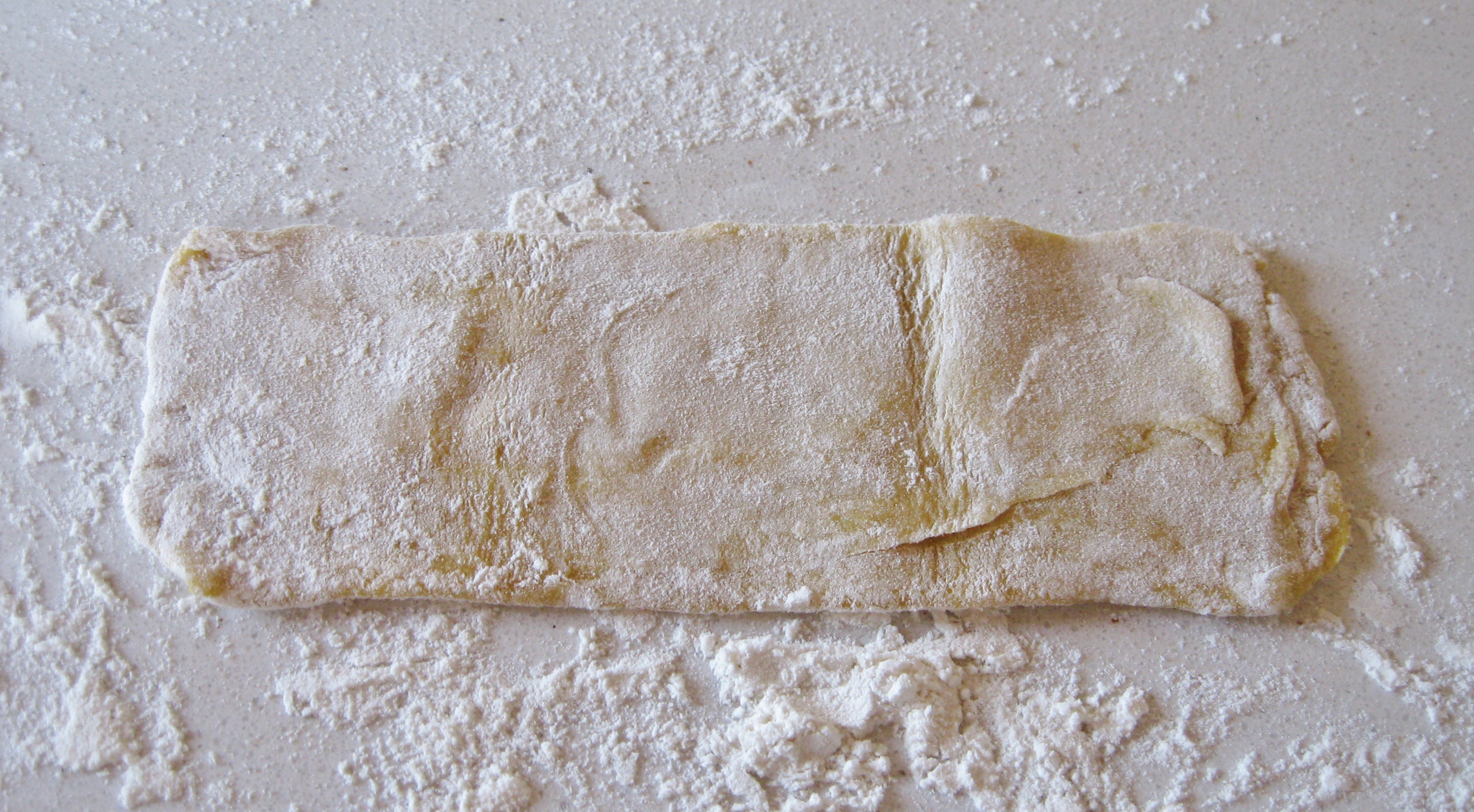
The dough at this stage can be floured and wrapped in cling film and then left to rest in the fridge until needed.pasta_dough

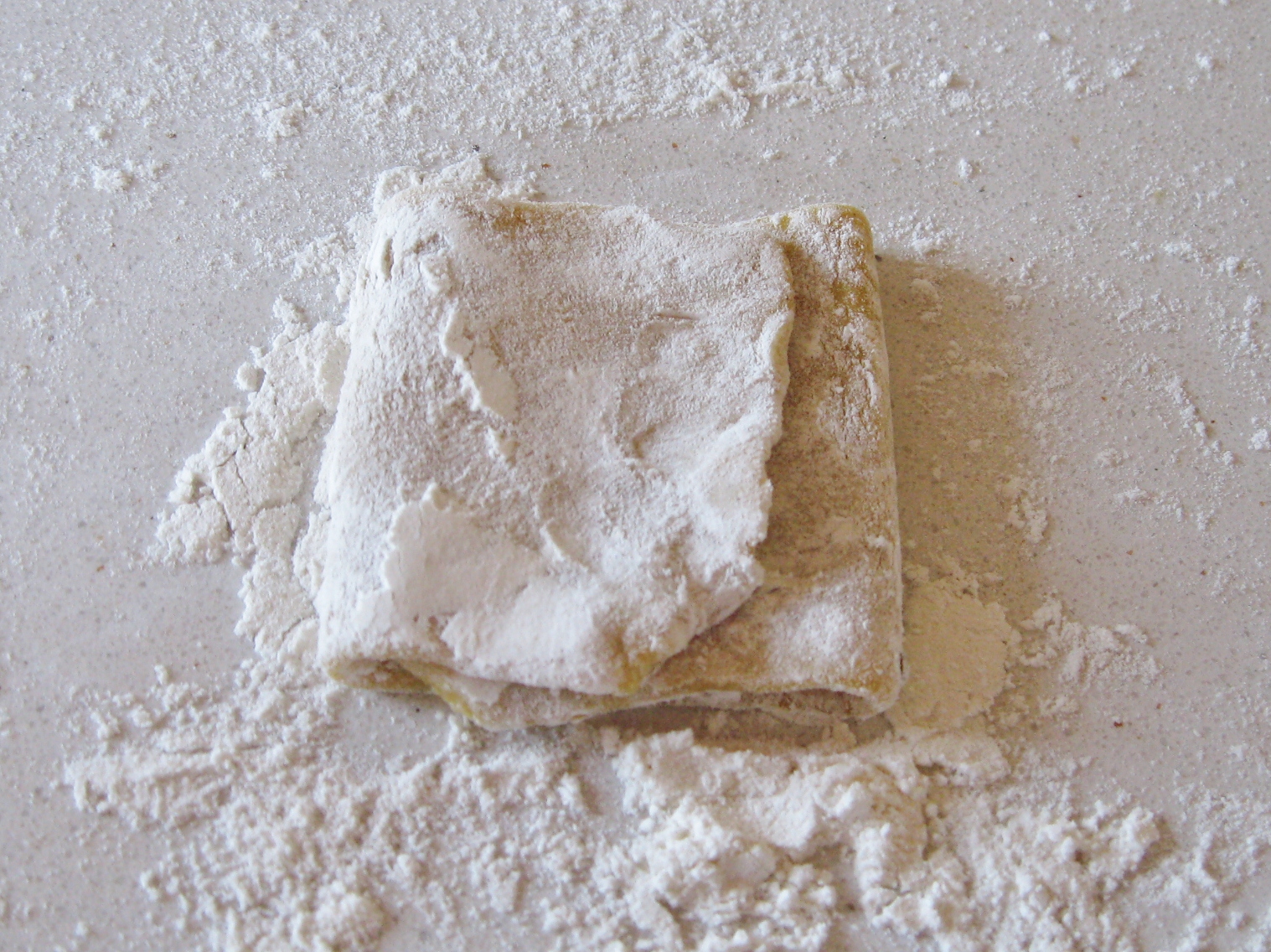
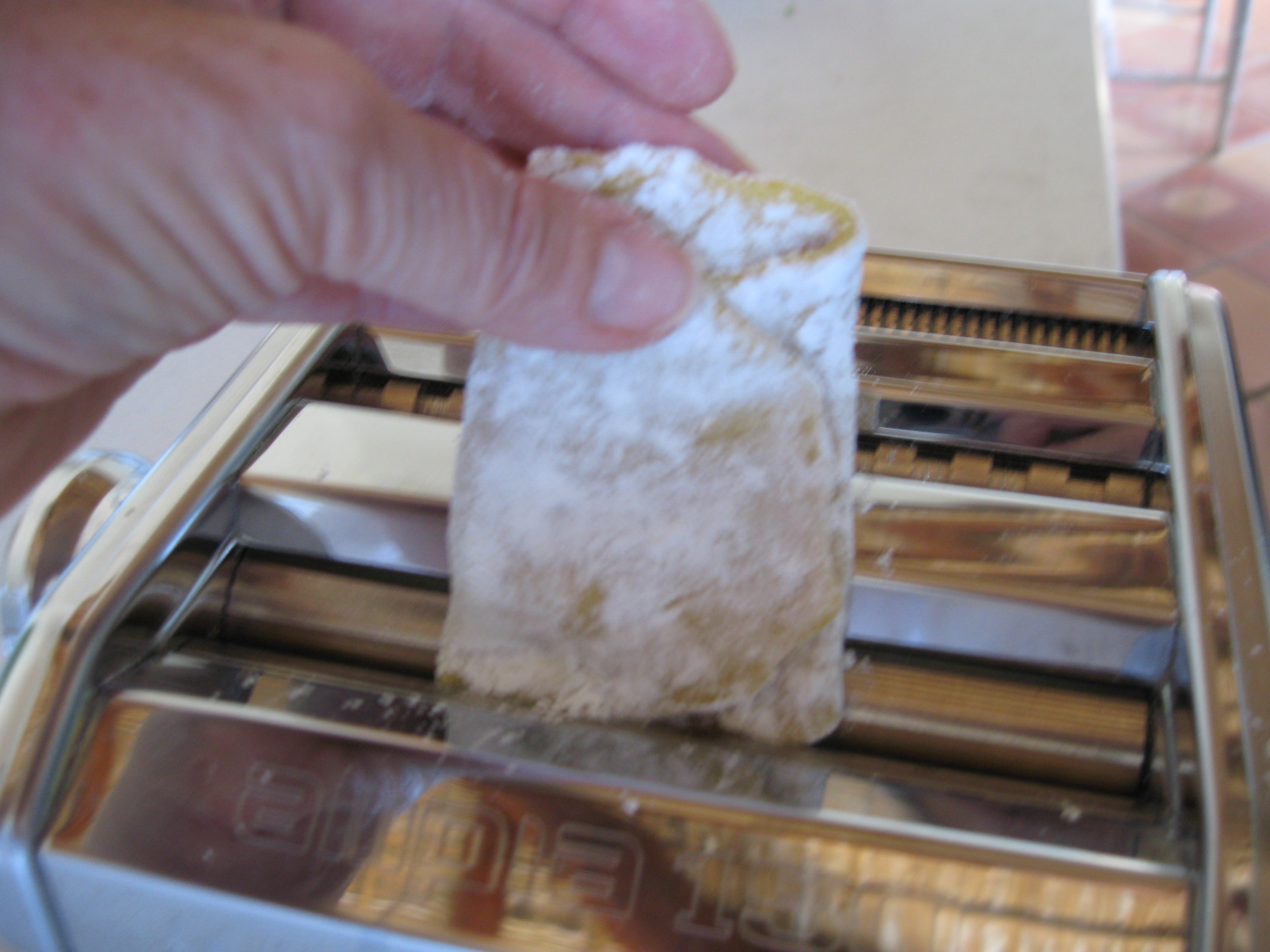
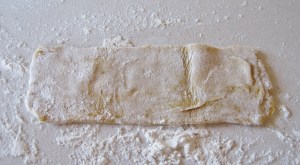
To roll the dough. Firmly attach the pasta machine to the work surface or a table. Flour the worktop around the machine. Make sure that the rollers are on the setting with the widest gap between them. Flour the dough and roll through the rollers turning the handle as you go. You will end up with a long oval of dough. Fold into 3 lengthways, turn 90 degrees and roll again.rolling_pasta rolling_pasta
rolling_pasta

Keep repeating this rolling and folding until the pasta is paler and silkier. With this type of pasta it is between 8 and 10 rollings. If the pasta starts to get crumbly and breaks up a bit, stop the folding and rolling and move on to the next stage.rolling_fresh_pasta

Move the setting of the distance between the rollers one number closer. Roll the dough, lightly dust with flour. Then move one more number and roll again, lightly dust with flour again. Keep moving one setting at a time until the dough is quite thin, number 7 or 8 on my machine. As the strip of pasta gets longer, do cut it into more manageable lengths.fresh_lasagnete

Lasagnette is pasta strips narrower than the lasagna sheets and wider than papardelle, so is easily cut by hand. I cut my wide pasta strips that have come out of the machine into three. The length can be whatever you find manageable, around 20 cms is about it. Do not worry about squaring off any rounded bits at the end of your strips, they will not be noticed when the dish is finished and it is a waste of a good little bit of pasta.

While you are preparing the sauce for the pasta and waiting for the water in which you are going to cook the pasta to come to the boil, you can leave the strips on the floured worktop. If they start to dry out a bit, it doesn’t matter, they will cook up the same. You only need to cover the pasta if you have flies lurking around, in which case just gently lay clean tea towels over it.

For cooking the pasta you need plenty of water that has a little salt and oil added to it. The reason for having a lot of water is so that when the pasta has been added the volume of water will not lose so much heat as a smaller amount and will therefore come back to the boil fairly quickly.

I like to use a pasta pan, which is a tall pan with a steamer type pan with holes in it that fits inside. As the inner pan doesn’t reach the bottom of the outer pan it means that there is always an extra well of water below it, which helps retain the heat and stops the pasta sinking to the hot base of the pan just about the heat and sticking to it. Also when it comes to serving, you do not have to dash across to the sink to drain your pasta, you merely slowly lift out the inner pan sitting it at an angle so that the water drains back into the lower pan. So that when you are ready the pasta is drained and next to the pan with the sauce for transferring to it. So a pasta pan is helpful but not essential.
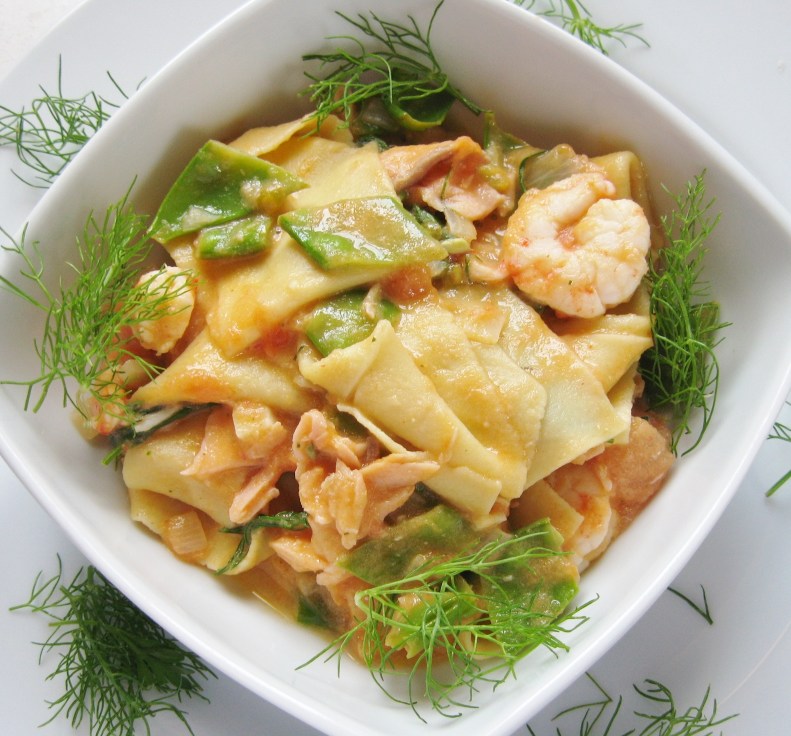
lasagnete_with_seafood

Lasagnete with Salmon and Prawns

Fresh pasta cooks in only 3-6 minutes depending on the thickness of it, and dries and sticks to itself fairly quickly once it has been drained from its cooking liquid, so always prepare the sauce before putting the pasta in the pan to cook. There are not so many sauces that will spoil by having the heat turned off and being reheated a few minutes later once the pasta is ready to be added. You will generally find that the sauce hardly needs reheating.

A final word on the sauce to go with your pasta. Remember that the sauce wants to be more of a dressing for the pasta than an event in its own right, so restraint on the amount of sauce that you put with the pasta.

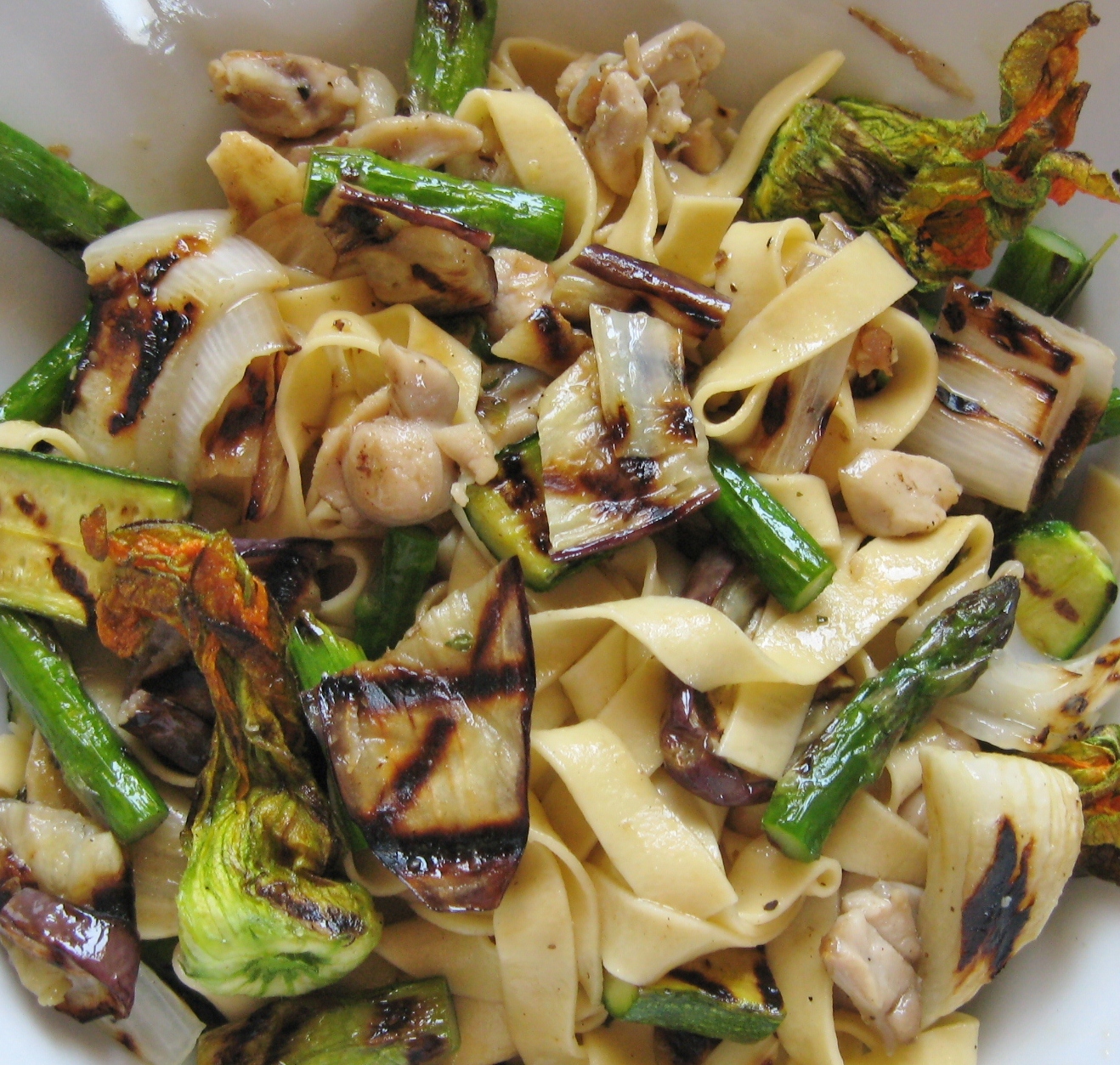
tagliatelle_with _grilled_spring_vegetables_and_rabbit

Tagliatelle with Grilled Spring Vegetables and Rabbit
Share this:

  • Click to share on X (Opens in new window) X
  • Click to share on Facebook (Opens in new window) Facebook
  • Click to share on WhatsApp (Opens in new window) WhatsApp
  • Click to email a link to a friend (Opens in new window) Email
Like Loading...

Globe Artichokes

03 Saturday Mar 2012

Posted by Nevenka in Techniques

≈ Leave a comment

I have Globe Artichokes in my veg patch, but mine are a late variety and so are not ready yet. Every year I say that I am going to put in a few plants of an earlier variety and every year I don’t get round to it. So as I am impatient to eat artichokes I will just have to go to the market and buy some.

Some of you out there are still quite fazed by this tasty and versatile vegetable, not helped by the styles of growing and preparing them being different in each country that grows them. I will take you through how to select, prepare and cook artichokes in the manner that is done here in Spain.

The part of the artichoke plant that is generally eaten is the flower bud. For these to be tender you want to select smallish tightly closed buds. If the buds are opening in the centre then the hairy choke has developed too much and does not make for pleasant eating. Another point to bear in mind is that the early season artichokes that are in the markets when the weather is still quite cold will be much more tender than the late season ones. As soon as the weather starts to really heat up then the artichokes will toughen to protect themselves against the heat.

When it comes to preparing the artichokes, you have to do it fast as any cut parts discolour quite quickly. You can put them into water acidulated with lemon juice, but if you are going to fry them as we are today, then you want them dry.
Firstly cut the stalk about a centimeter below the bud. Then start pulling of the tough outer petals from the bottom. You will know when you have pulled off enough and reached the tender part of the artichoke as the flesh of the petals changes colour to a much paler green as in the photo below.

Then you cut off the tips of the petals, again you will see where the colour changes from a darker green to a paler more yellow colour, this is the line where you cut. The artichokes can be either left whole or halved or quartered or sliced depending on your recipe.

Share this:

  • Click to share on X (Opens in new window) X
  • Click to share on Facebook (Opens in new window) Facebook
  • Click to share on WhatsApp (Opens in new window) WhatsApp
  • Click to email a link to a friend (Opens in new window) Email
Like Loading...
Newer posts →

Create a free website or blog at WordPress.com.

Privacy & Cookies: This site uses cookies. By continuing to use this website, you agree to their use.
To find out more, including how to control cookies, see here: Cookie Policy
  • Subscribe Subscribed
    • fincafood
    • Join 103 other subscribers
    • Already have a WordPress.com account? Log in now.
    • fincafood
    • Subscribe Subscribed
    • Sign up
    • Log in
    • Report this content
    • View site in Reader
    • Manage subscriptions
    • Collapse this bar
 

Loading Comments...
 

    %d