• About
  • La Micaela Farm Shop

fincafood

~ culinary and horticultural life on a Spanish farm

Author Archives: Nevenka

An Autumn Salad

12 Friday Oct 2012

Posted by Nevenka in Food for One, Main Courses

≈ 1 Comment

rainbow_saintYesterday I looked really hard for the pot of gold as I could clearly see the end of this rainbow in my neighbours orange grove, but alas, it eluded me. I didn’t let on to him how close he had been to being rich beyond his wildest dreams!

The rain was extremely welcome as I can’t order any irrigation water at the moment. In the recent storms and floods 14 kilometers of pipework that deliver water to all of us in the cooperative were washed away.

All this rain interspersed with warm sunny days has meant that the salads that can’t grow in the blistering heat of the summer here are green and tender and tasty. The asparagus is throwing up its autumn shoots and the herb bed hasn’t looked so healthy for quite a while. Here is a salad that glorifies these autumn offerings. grilled_beef_salad_mint_dressing

Grilled Beef and Goat Cheese Salad with Mint and Balsamic Dressing

Per person –

100 grams tender beef sliced very thinly

50 grams cheese – I used a fresh Goat cheese that I sell in the farm shop, but ricotta or mozarella work for this salad

6-8 spears of asparagus

Mixed salad leaves – mine were green and red lettuce, mizuna, pak choi, mustard greens, chives, basil and fennel fronds.

A handful of fresh mint

1 tablespoon balsamic vinegar

2 tablespoon olive oil

1 teaspoon lemon juice

salt and freshly ground black pepper

Spread the beef out onto a board and season with the salt and pepper. If you are not sure of its tenderness, then give it some hits with a meat tenderising mallet.

Heat a hotplate or heavy based griddle pan.

Lightly oil the asparagus and put to cook on the griddle. Turn from time to time as it is cooking.

Wash the salad and arrange on a plate.

Cut up the cheese and arrange on the salad.

Make the dressing. Wash and roughly chop the mint, put in a bowl with balsamic vinegar, olive oil and lemon juice and mix thoroughly.

When the asparagus is cooked al dente remove from the griddle and arrange on the salad.

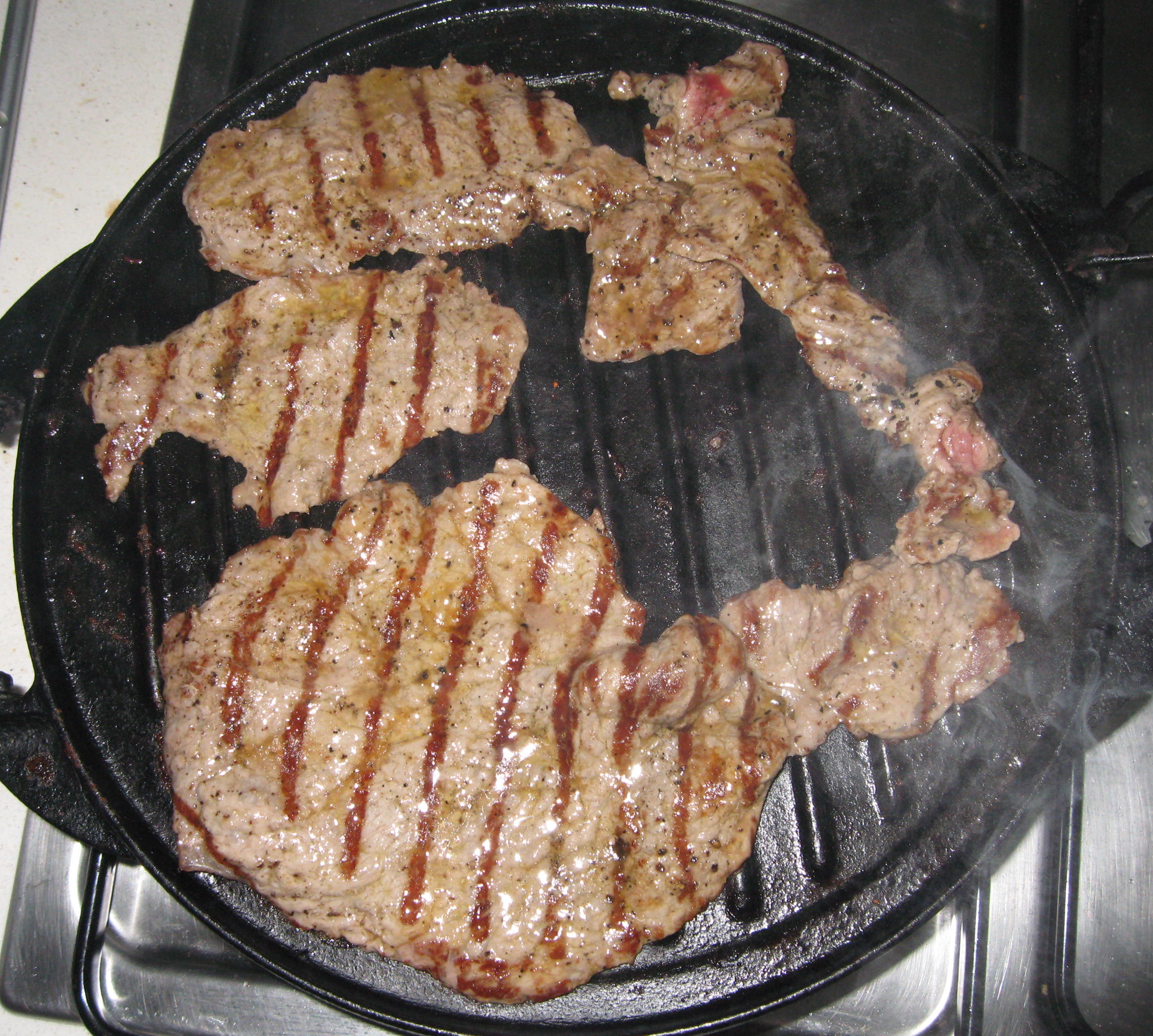
Cook the beef on the griddle. This should only take 2-3 minutes each side. Remove to a board and cut into bite sized slices. Arrange on the salad.

Spoon the dressing onto the salad. Enjoy.

Share this:

  • Share on X (Opens in new window) X
  • Share on Facebook (Opens in new window) Facebook
  • Share on WhatsApp (Opens in new window) WhatsApp
  • Email a link to a friend (Opens in new window) Email
Like Loading...

A Wedding Cake

11 Thursday Oct 2012

Posted by Nevenka in Sweet Things

≈ 3 Comments

I was recently commissioned to make a wedding cake that captured the essence of southern Spain. The traditional white iced fruit cake was not the brief, but a cake that was pudding and cake combined but still looked like a wedding cake. The palette of colours were corals and oranges with leaf green as a contrast. It was suggested maybe a cake flavoured with oranges and decorated with crushed pistachios as a contrast.

There is a rich cake that is found all around the Mediterranean which uses only four ingredients, almonds, eggs, sugar and citrus fruits, no flour. I have made it using oranges, lemons, clementines and of course limes being on a lime farm, all of which work really well. I was served a version in Portugal that was made with a mixture of the flesh of Angels Hair Gourd and oranges. This flesh is quite sweet and when cooked separates out into strands, hence the name. You can buy it here in tins ready cooked with lots of sugar to preserve it. It is quite sickly sweet, but when mixed with other things or used as a filling in pies is rather nice. The cake was cooked to a wonderful caramelised  – not burnt –  crisp around the edges and deliciously rich. I have intended to try cooking this version myself but haven’t got round to it yet, when I do I will report back to you the method.

When I came to be describing the options of orange cakes to the bride, the description of the flourless orange and almond cake elicited a “mmmh” that told me it had to be the one. I was confident that the cake would taste good, but how to get a plain cake of a burnt orange colour to look glamorous and festive? Layers of cream were not an option as the temperatures here were still in the 30’s even though it was late September. Then one of my friends came up with the genius suggestion of edible gold leaf. I hadn’t used this before, so was a bit nervous about it, but the idea of cracked gleaming gold with a background of  burnt orange for the walls of the cake to contrast with the topping of deep green crushed pistachios, was irresistible.

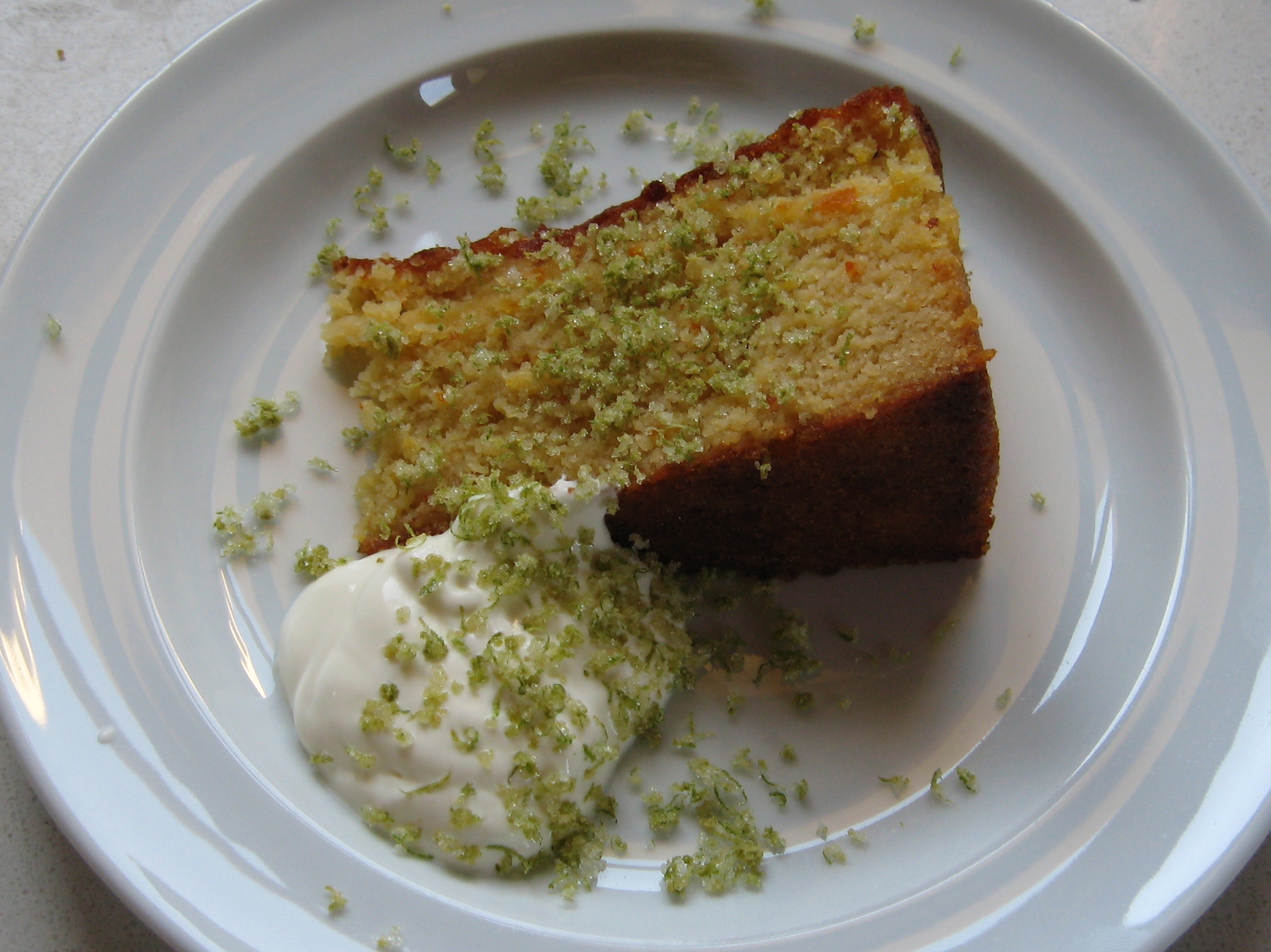
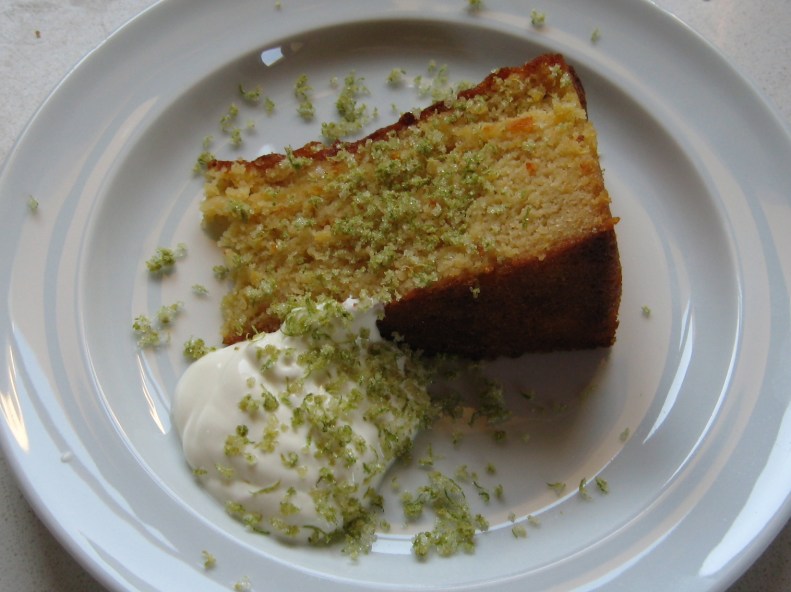
The cake was served with a mascarpone and fresh cream mix, and a generous sprinkling of lime sherbert and more of the crushed pistachios.

For a 20-24 cm cake tin that will serve about 10 -12 people.

500 gms oranges, or other citrus

8 large eggs

350 grams ground almonds

275 grams sugar (300 grams if using lemons or limes)

1.5 teaspoons baking powder

If the oranges are large cut them into 4 or 8, likewise for lemons, for smaller fruit leave them whole. Put the fruit in a pan with just enough water to cover. Bring to the boil and simmer for about an hour until the skins are soft. Check from time to time that they have not boiled dry, adding a little water if they are too dry.

Drain reserving the liquid. Remove any pips and put the fruit into the processor and process until a pulp.

While this is cooking line the cake tin with baking paper or buttered greaseproof paper.

Preheat the oven to 180 degrees C.

Break the eggs into a large mixing bowl and beat enough to amalgamate.

Stir in the rest of the ingredients, the fruit pulp, sugar, ground almonds and baking powder bit by bit until all is well blended.

Pour the cake mix into the tin and bake for 40 minutes at 180 C then turn the oven down to 160 C and bake for a furthur 20 minutes. To ensure that the cake is cooked in the middle, a skewer or cake tester pushed into the centre should come out clean. if not bake the cake for another 10 minutes at 160 C and test again.

Let the cake cool completely in its tin before removing it and its lining paper. This is one of those cakes that is better at least a day after baking, so can be made a couple of days in advance of being needed.

For a less formal occasion than a wedding the cake can be decorated with a dusting of icing sugar just before serving, or it can be topped with crushed pistachios. Use some of the leftover orange cooking liquid. Heat a little with a couple of spoons of sugar to make a syrup. Let this cool and then brush the top of the cake with it before sprinkling over the crushed pistachios. These will absorb the syrup and darken nicely if left for a few hours.

To make lime sherbert (or lemon which is just as good), sprinkle a thin layer of sugar onto a tray. Take unwaxed limes and using the finest rasp on the grater, grate the zest onto the sugar. You need enough zest for a thin layer all over the sugar. With you finger gently rub the zest into the sugar. Spread it out as evenly as you can on the tray again and put in a warmish dry place to dry out.

As it dries it will do so in clumps, so break these up every few hours. Once it is totally dry it is ready to use as a zingy garnish on sweet dishes. It will keep for a couple of weeks if stored in an air tight jar.
Share this:

  • Share on X (Opens in new window) X
  • Share on Facebook (Opens in new window) Facebook
  • Share on WhatsApp (Opens in new window) WhatsApp
  • Email a link to a friend (Opens in new window) Email
Like Loading...

Malaga Market

02 Tuesday Oct 2012

Posted by Nevenka in Shopping

≈ 1 Comment

Those of you who are regular readers of this blog will have spotted that I cannot resist a market. The more bustle and colour the more I like it. The scents of the spices and olives, the colours of the fruits, the exciting expectation of finding something not found anywhere else. All these things make a market interesting to me.

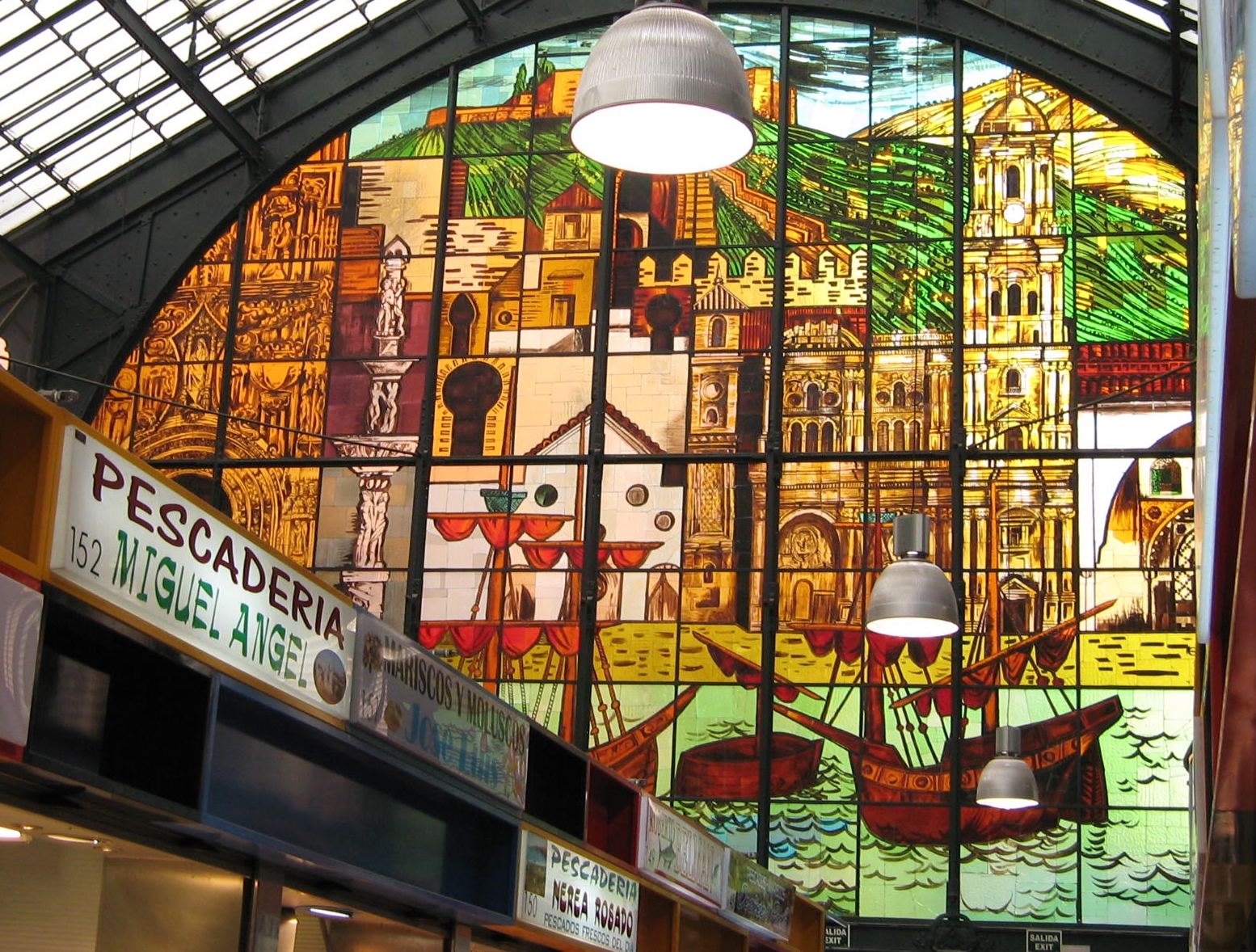
The central market in Malaga is housed in a building inspired by Les Halles in Paris, which not forgetting its arab origins is in neo moharabe style and retains one of the tenth century marble towers as well as its nazari name from when it was the Atarazanas – the shipbuilders. When I first visited Malaga the market building was still suffering from the “improvements” done in the sixties, which included a mezzanine floor which cut out the natural light and made the hall feel dingy and sliced in half the stained glass window that fills one end of the central hall. Thankfully the former glory has been returned to.malaga_market_window

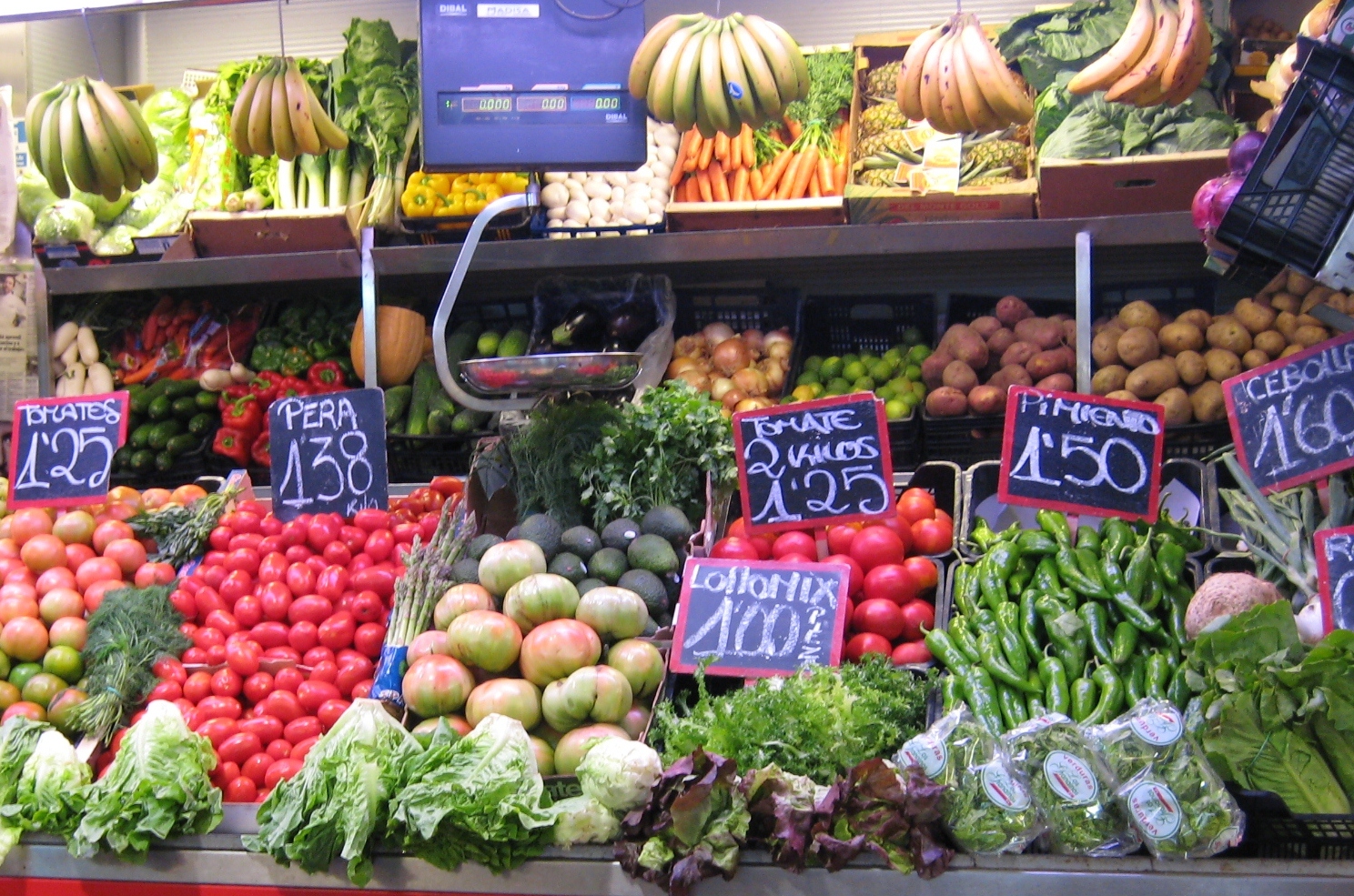
The stall holders then as now were the main attraction. Here are some of my new friends and their produce –malaga_market

Share this:

  • Share on X (Opens in new window) X
  • Share on Facebook (Opens in new window) Facebook
  • Share on WhatsApp (Opens in new window) WhatsApp
  • Email a link to a friend (Opens in new window) Email
Like Loading...

Malaga Modern

02 Tuesday Oct 2012

Posted by Nevenka in Snacks and Tapas

≈ 1 Comment

As some of you may have seen on the news we have been somewhat flooded out here. Thankfully the farm is on its own little hill with good walls holding up the terraces of lime trees, so nothing wandered off. One of my neighbours did lose some of his oranges trees to the torrent. The internet and phone were lost for a few days though, so I am catching up now.

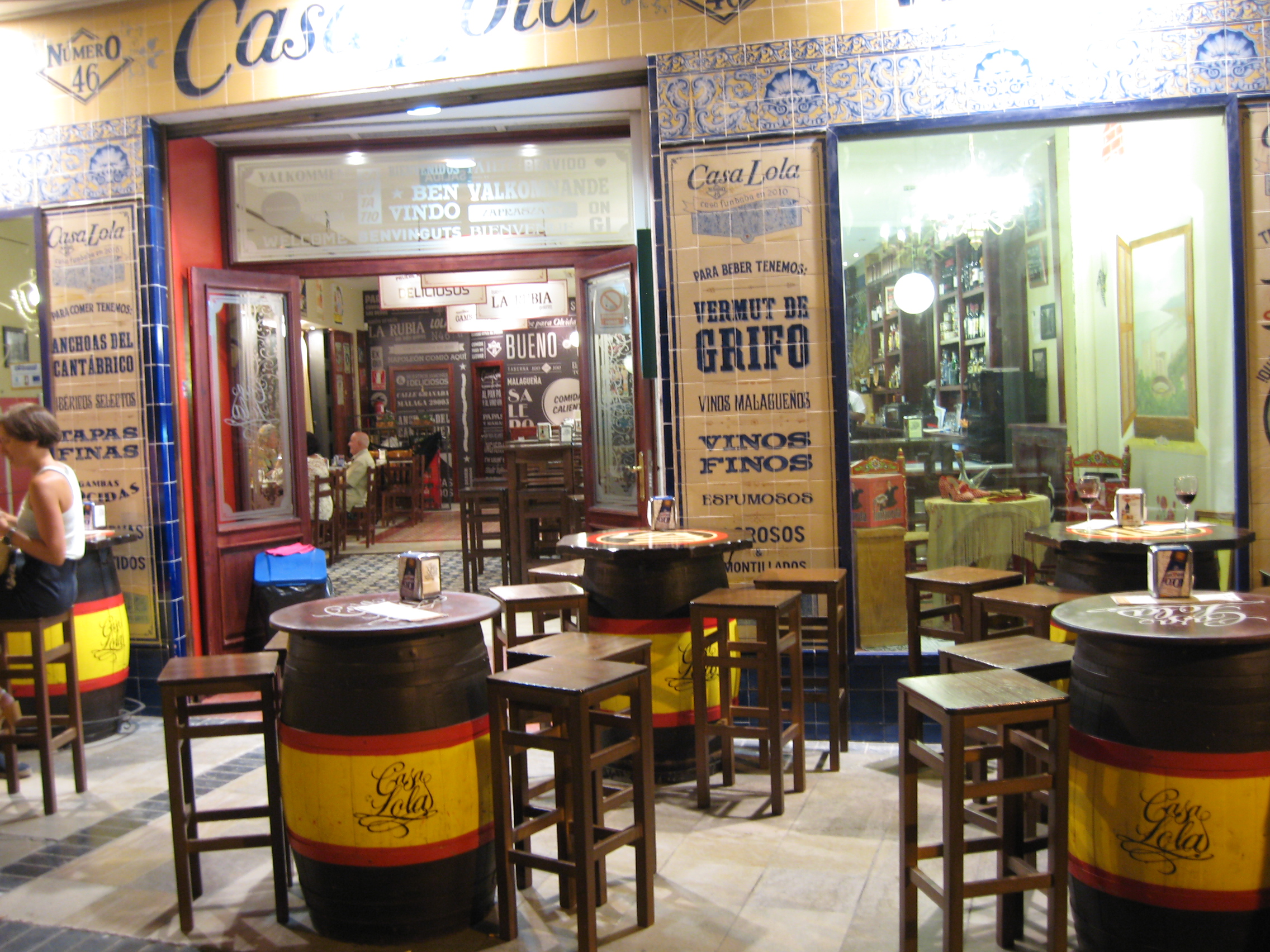
The cuisine of a country is like its language, if it stays the same, then it stagnates. The classic tapas of Spain are fantastic, but now with foreign influences and a move away from the heavier dishes that an agricultural society needed, young chefs are experimenting with new flavours and presenting us with some alternatives to the traditional dishes. Here are some of the dishes we tried in Bar La Plaza situated in the Plaza Merced, a couple of doors up from where Picasso was born.

Aubergine Caviaraubergine_caviar

This was a creamy puree of roasted aubergine mixed with chopped almonds, and flavoured with garlic, oregano, olive oil and seasoned with salt and pepper. The aubergine can be roasted in the oven or microwaved which is quicker. To microwave you must prick the aubergine all over with a fork to prevent explosions, then cook a couple of minutes on the top heat. Turn and cook again. Keep doing this until the aubergine is cooked and soft. Let cool before removing the flesh and mashing to make the puree.

The crisps that it was served with were interesting. I think that they were made from flatbread that was cut into bite sized pieces that were then dusted with the flavourful smoked sweet paprika  from Jarandilla La Vera, and then quickly deep fried until crisp. A perfect spicy foil to the creamy aubergine paste.

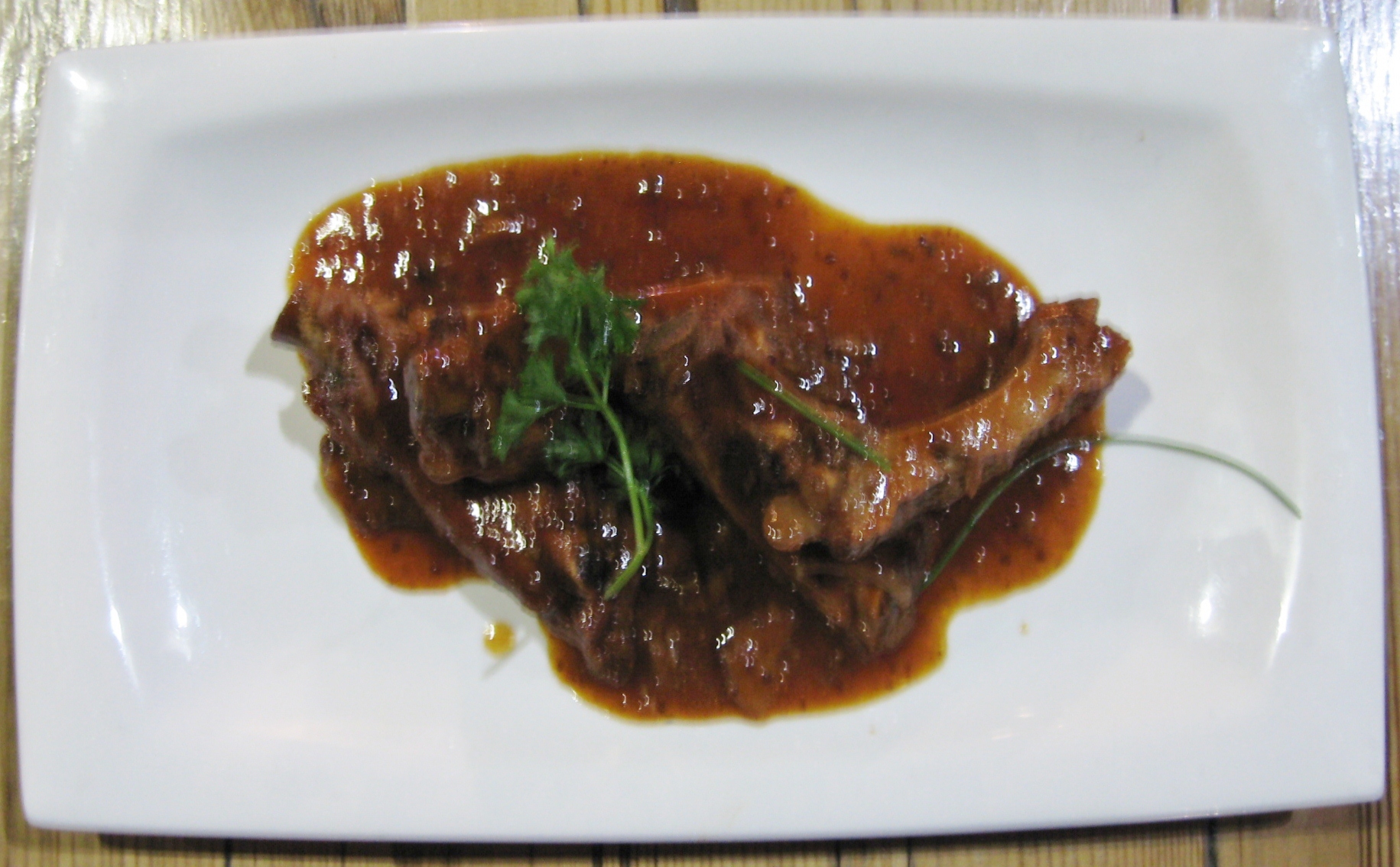
Sweet & Spicy Ribsspicy_ribs

Although not photogenic, these little ribs cooked in a sweet and spicy sauce were very tasty. The sauce was made with soy sauce, tomato puree, orange juice and white wine vinegar and flavoured with garlic, ginger, five spice powder, and brown sugar.

Lamb Tagine & Cous Couslamb_tagine_tapa

The classic Moroccan dish in miniature. Little cubes of lamb slow cooked with onions, garlic, cumin and coriander, a little chilli and raisins. Served with cous cous and a yogurt, mint and cucumber relish.

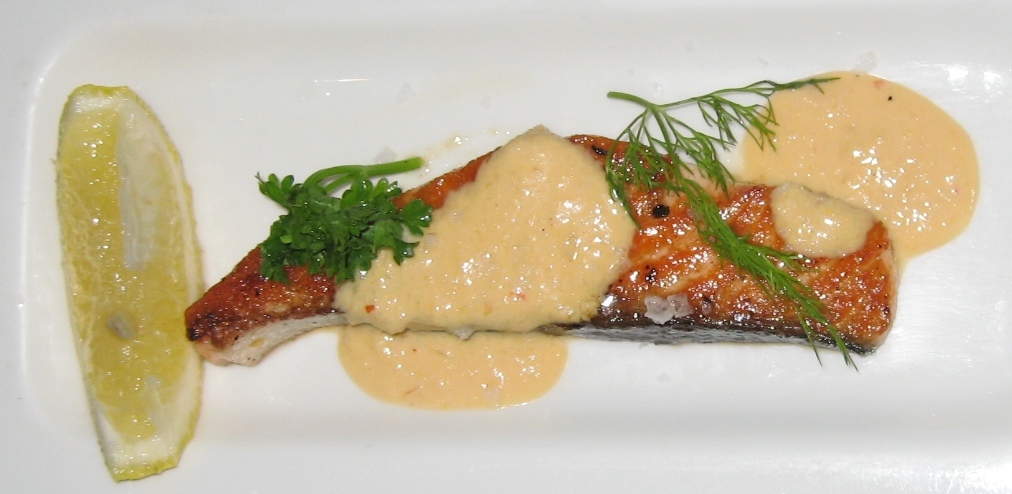
Seared Salmon with Anis Sauceseared_salmon_with_anis_sauce

A perfectly rare cooked miniature salmon steak served with a creamy sauce flavoured with Anis Dulce de Chinchon, Spains answer to the Pastis of France and garnished with fennel fronds.

Share this:

  • Share on X (Opens in new window) X
  • Share on Facebook (Opens in new window) Facebook
  • Share on WhatsApp (Opens in new window) WhatsApp
  • Email a link to a friend (Opens in new window) Email
Like Loading...

Malaga Tapas the -Traditional……..

25 Tuesday Sep 2012

Posted by Nevenka in Snacks and Tapas

≈ Leave a comment

Salmorejo – Similar to the famous cold soup Gazpacho Andaluz but left thick enough to spread onto or dip your bread into. It is traditionally made by pounding the ingredients in a pestle and mortar, but is much more easily made in a food processor.salmorejo

Soak some stale bread in water until soft and then squeeze out most of the water.

Roughly chop some good tasty tomatoes and turn them to pulp in the food processor. Put through a mouli with a fine disc or through a sieve to filter out the seeds and skins.

Whizz together in the food processor a clove of garlic, the tomato juice and a generous amount of good fruity olive oil. Season well and thicken with the bread pulp until you achieve a thick spreading consistency.

To serve decorate with chopped raw ham and boiled egg.pepper salad

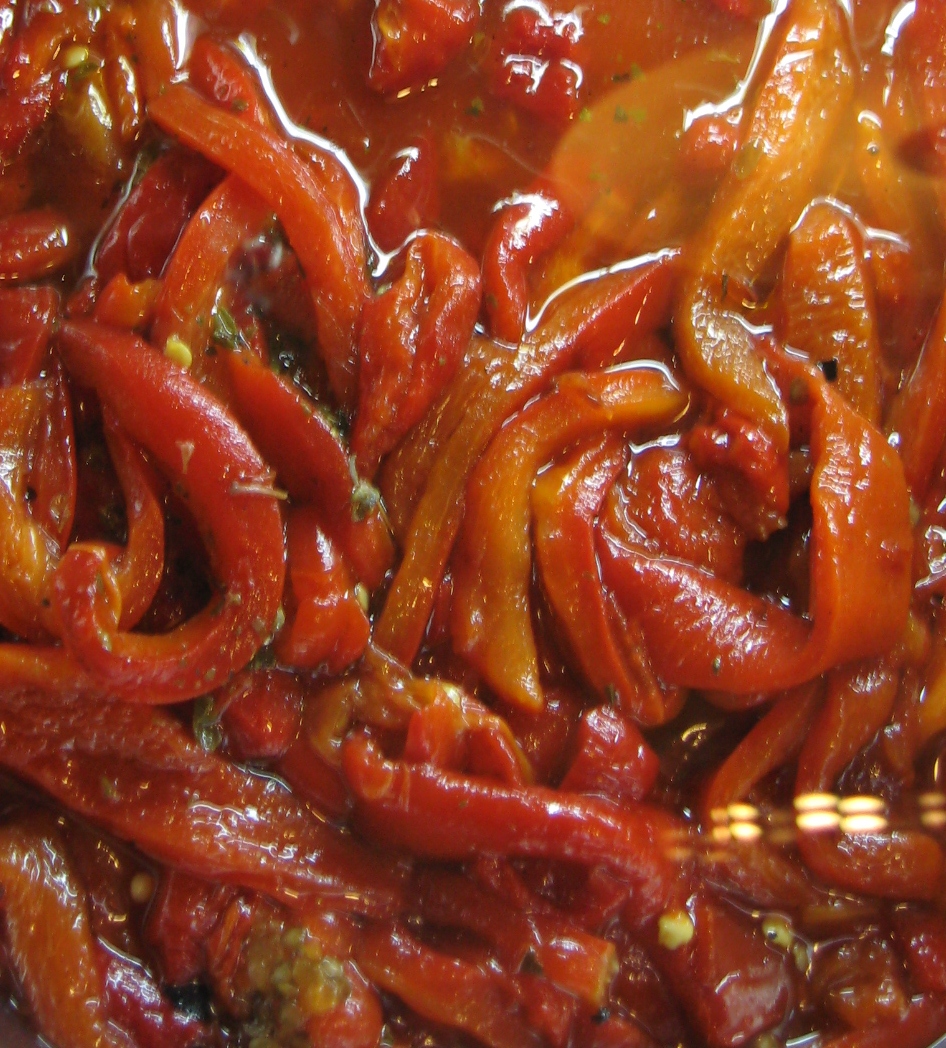
Pepper Salad – red peppers roasted or seared over a flame to remove the skins. Sliced and dressed with olive oil and seasoned with salt, pepper and chopped parsley.boquerones_al_limon

Boquerones al Limon – Smelts de-headed and de-boned, steeped in fresh lemon juice for half an hour then dried and dipped into thin batter and deep fried until crisp.

Ensalada_malaguena

Ensalada Malaguena – Boiled potatoes, Salt Cod soaked overnight to remove salt and then poached until tender, sliced onions, chopped orange flesh, a few strips of red pepper for colour, all dressed with olive oil, white wine vinegar, salt and freshly ground black pepper.berenjenas_con_miel_de_cana

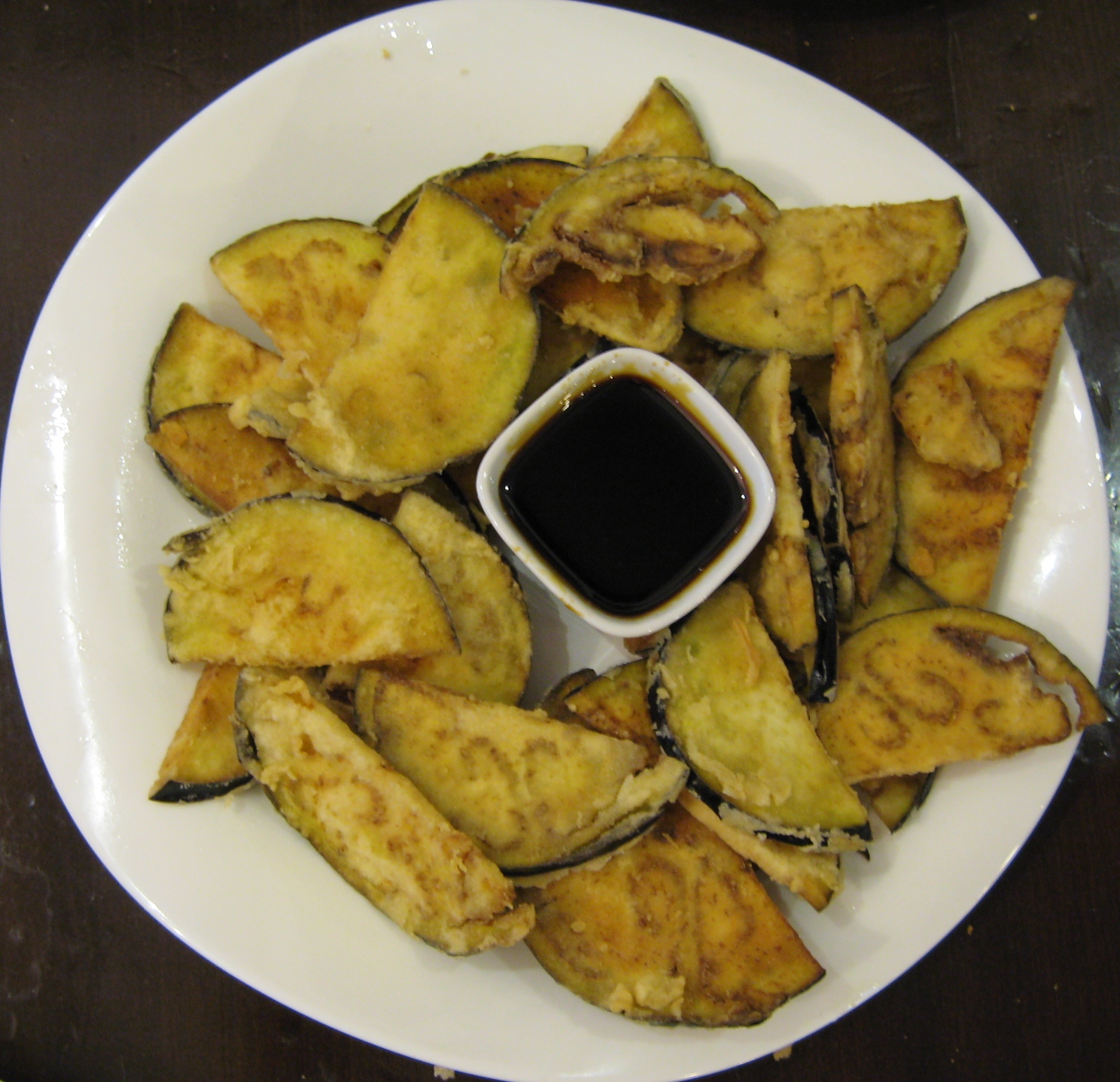
Berenjenas con Miel de Cana – This dish epitomises Malaga for me. In the tropical climate of the area sugar cane is grown and its bitter sweet syrup is used in many dishes of the region. The aubergines are sliced very thinly, dipped in a light batter and fried until crisp and golden brown. We were served them on this occasion with the sugar cane syrup in a little bowl for dipping, but more frequently it is drizzled over the aubergines.salpicon de mariscos

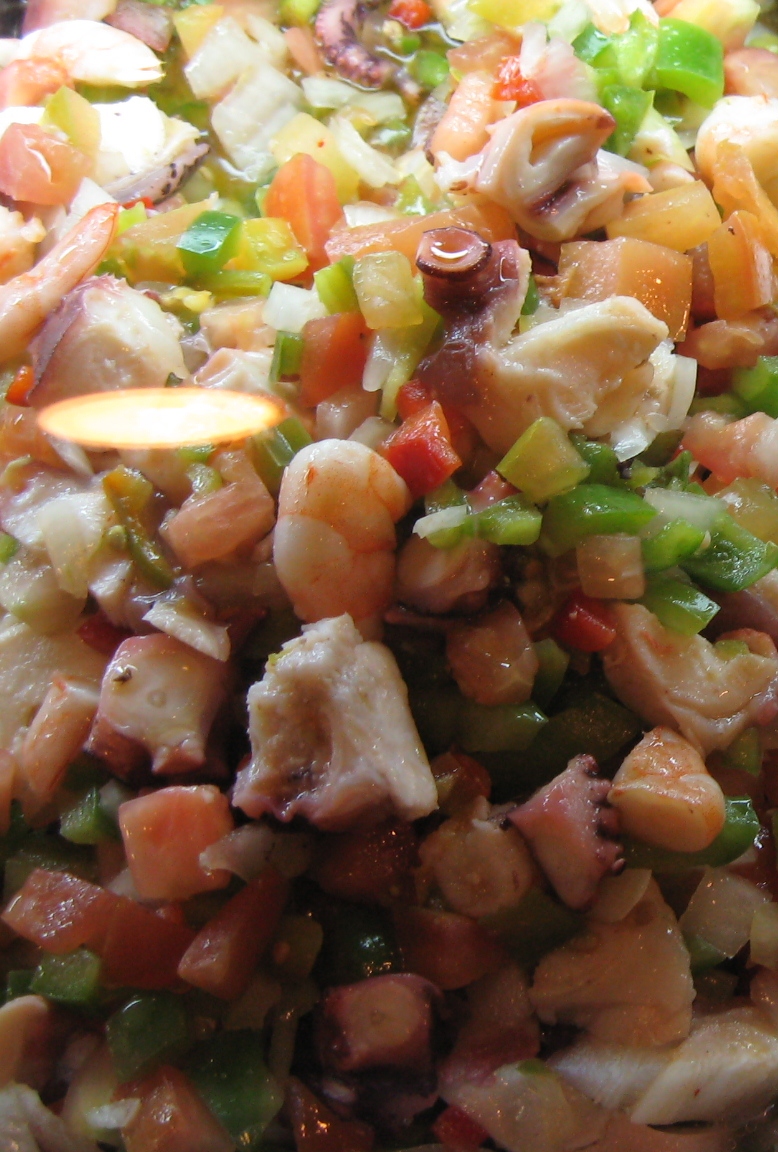
Salpicon de Mariscos – A salad of a mixture of shellfish, prawns, mussels, poached squid or octopus chopped small, finely chopped onions, red and green peppers and tomatoes in an olive oil and white wine vinegar dressing.

Share this:

  • Share on X (Opens in new window) X
  • Share on Facebook (Opens in new window) Facebook
  • Share on WhatsApp (Opens in new window) WhatsApp
  • Email a link to a friend (Opens in new window) Email
Like Loading...

Fried Liver with Tomato Pilav

17 Monday Sep 2012

Posted by Nevenka in Food for One, Main Courses

≈ Leave a comment

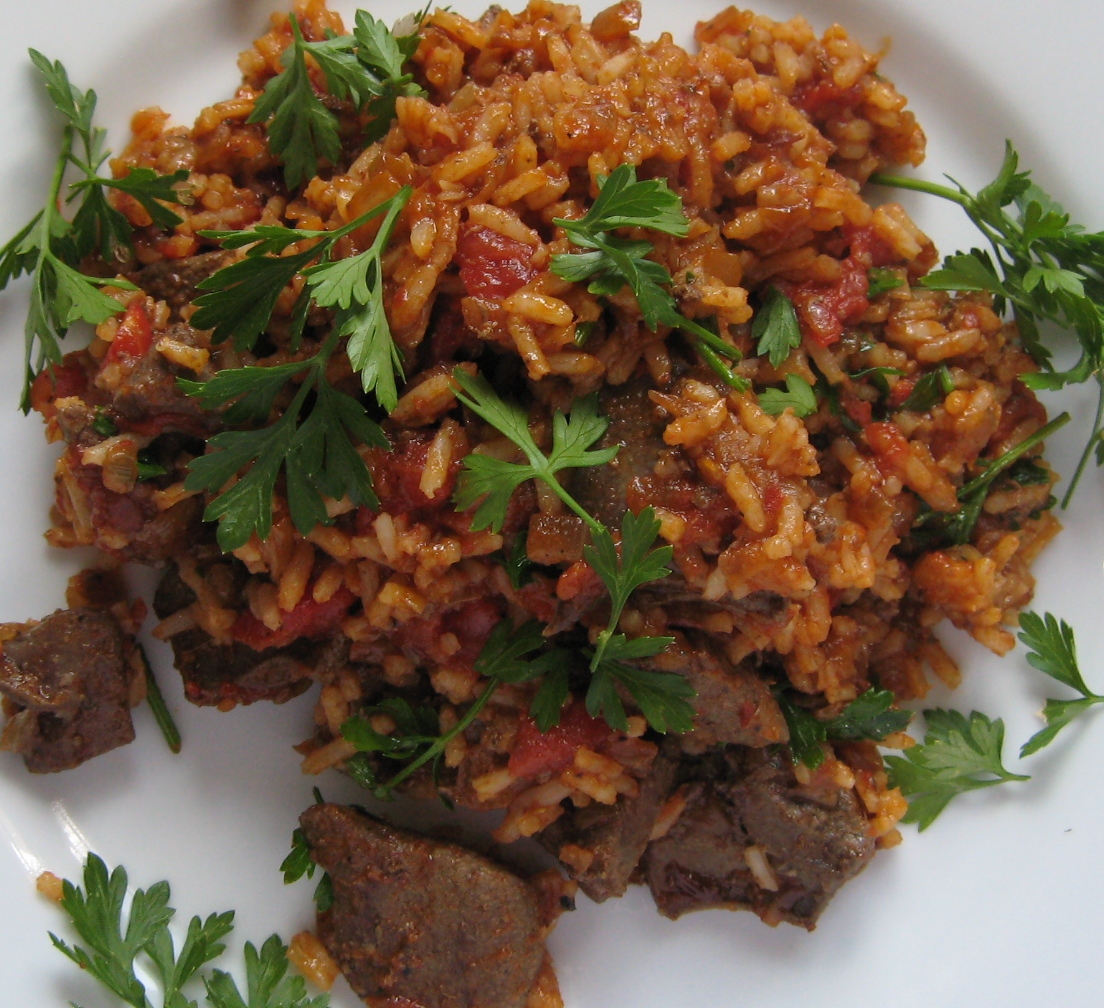
liver_with_tomato_pilav

Throughout my teenage years I cooked this dish for the whole family almost every Saturday lunchtime. It was taught to me by my father who is from Sarajevo the capital of Bosnia of the former Jugoslavia. Jugoslavia was for over five hundred years part of the Ottoman empire, and it was not until my sister and I were holidaying in Turkey on a Gulet with some friends that we realise that it is a Turkish dish. Our cook on the boat – Hali – made it for us all one lunch time and our friends loved it and wondered how it was made, to which my sister and I announced in unison that we could make it with our eyes closed!

Quite a lot of English people think that they don’t like liver. And if their only experience of it is the stewed beef liver that was served to us at school, then I can fully understand them having a prejudice against it. But please give liver another chance. Think more those gorgeous liver pates and less the shoe leather of school dinners. Pork liver for me has the best texture and the sweetest flavour of all the livers, and this is what my family use for this dish although the with Turkey being a muslim country, lambs liver is used there.

For 4 people

1 large or two medium onions – finely chopped

1 red pepper – cut into strips – optional

500 grams liver cut into bite sized pieces

Salt and freshly ground black pepper

Olive oil for frying

200 grams long grain rice

250 grams peeled plum tomatoes – either freshly peeled or tinned

Fresh flat leaved parsley – roughly chopped

Firstly put the rice on to boil. Use your usual method but you want the rice slightly al dente.

Heat the oil in a large frying pan and add the onions and peppers if you are using them. Fry over a moderate heat until the onions are lightly browned.

Season the liver pieces with salt and a generous amount of freshly ground black pepper. Add to the pan with the onions and cook stirring from time to time until the liver is just cooked. This will take about ten minutes. Do not cover. If the pan is covered the liver will steam and go tough.

To see if the liver is cooked enough, take out a piece and cut into it. It should be pink inside. If it is red inside it is not cooked enough and if it is brown you have gone too far.

Remove the liver from the pan leaving behind the onions, pepper if used and the juices. Add the tomatoes to the remains of the pan and stir to mix. Cook over a higher heat until the tomatoes have deepened in colour and cooked.

Drain the rice and add to the tomatoes. Stir well to mix together and cook for a couple of minutes for the flavour of the tomatoes to penetrate the rice.

Add the liver and mix again. Cook a minute or two for the liver to rewarm. Stir in the parsley. Serve with a green salad.

Share this:

  • Share on X (Opens in new window) X
  • Share on Facebook (Opens in new window) Facebook
  • Share on WhatsApp (Opens in new window) WhatsApp
  • Email a link to a friend (Opens in new window) Email
Like Loading...

Golden Risotto

14 Friday Sep 2012

Posted by Nevenka in Food for One, Main Courses, Starters, Vegetable Dishes

≈ Leave a comment

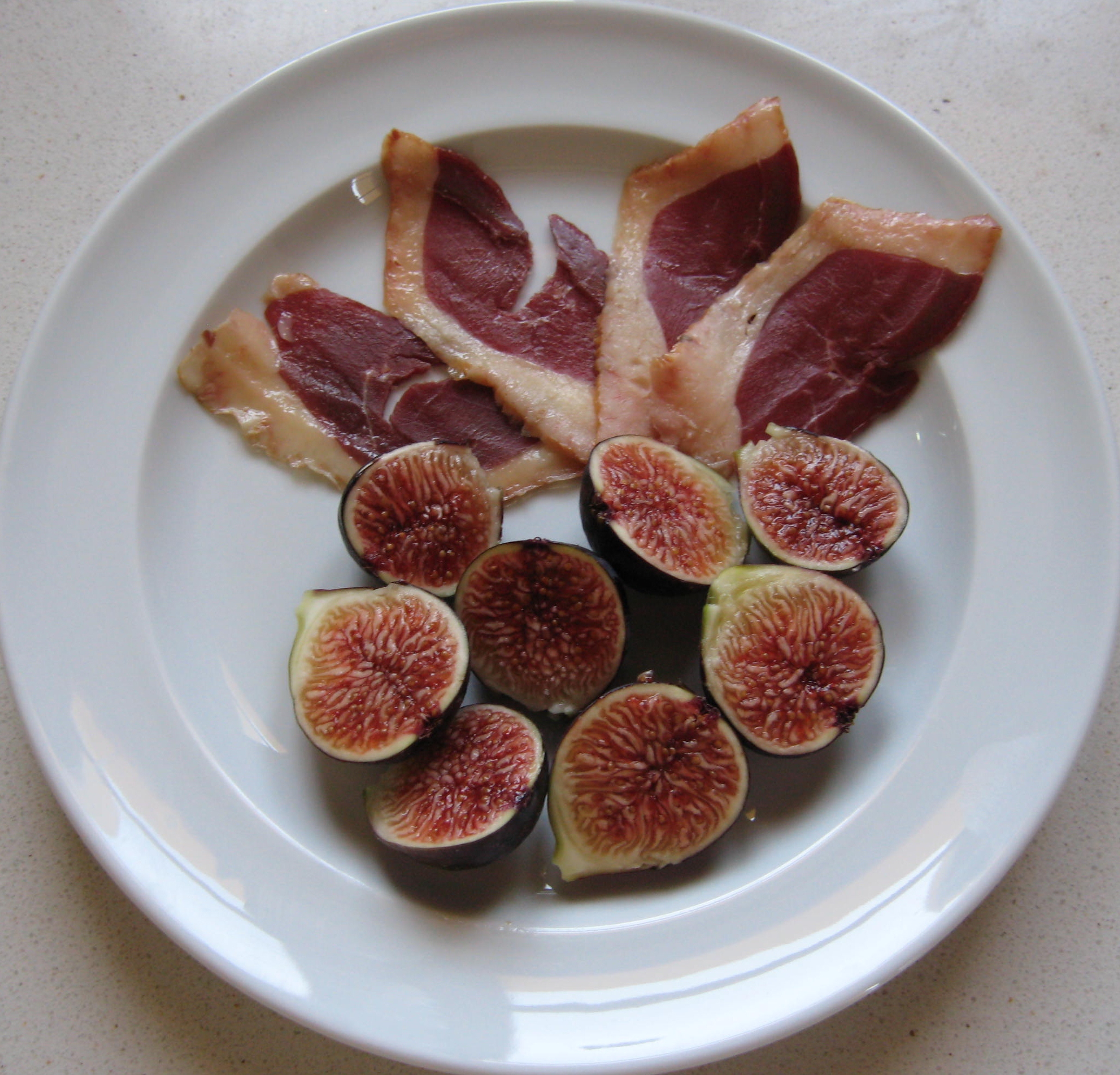
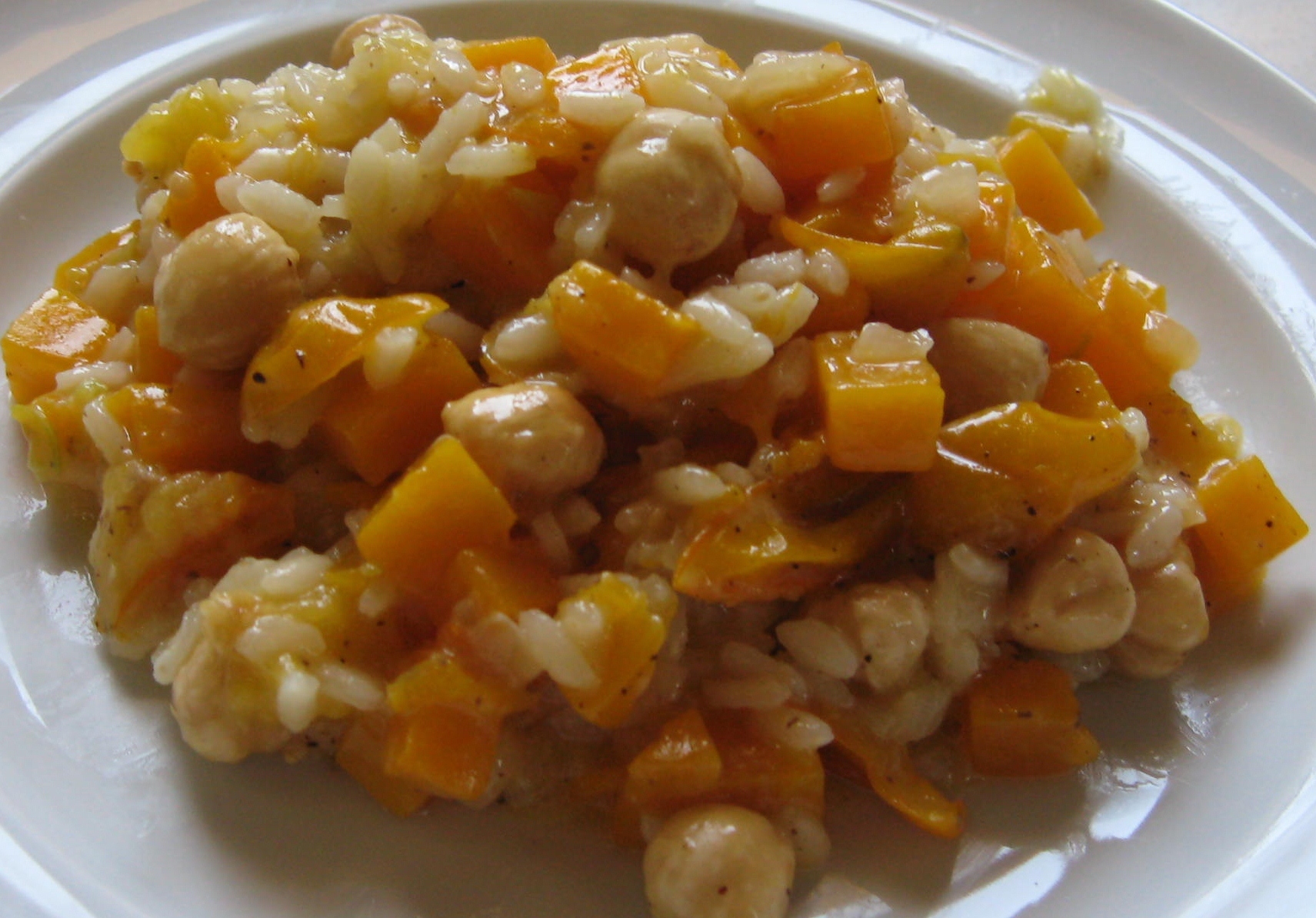
Another busy day, and so another quick lunch, but that does not mean that lunch has to be dull and unexciting. The self sown fig tree is still giving four or five sweet little irresistible black figs every day so I shall have those with some smoked duck breast while a risotto is cooking.

I thought that I was going to make a courgette risotto, but when I went to pick a couple I was diverted by the sight of tiny yellow plum tomatoes and thought that combined with some pumpkin they could make a cheery golden risotto. The hazel nuts added at the end give a crunch that contrasts nicely with the soft risotto.

Per person

1 small onion – finely chopped

120 grams pumpkin – cut into small cubes

120 grams yellow plum tomatoes – halved

40 grams risotto rice

Chicken stock

Oil for frying or half oil and half butter if you prefer the flavour.

Salt and freshly ground black pepper

30 grams grated parmesan cheese

Roasted hazel nuts – 30 grams golden risotto

Heat a tablespoon of olive oil in a shallow pan and add the onions. Fry gently until translucent.

Add the pumpkin cubes and stir to mix in. Fry for five minutes stirring from time to time.

Add the rice and stir to coat in the oil and pumpkin juices. Cook until the rice looks slightly translucent.

Add the tomatoes and some stock and stir. Season with salt and pepper. Cover and continue cooking on a gentle heat, adding more stock as necessary until the rice is cooked.

Stir in most of the cheese reserving a small amount to sprinkle on the risotto when you serve it.

Add the hazel nuts and cook long enough to warm them through.

Serve sprinkled with the remaining cheese.

Share this:

  • Share on X (Opens in new window) X
  • Share on Facebook (Opens in new window) Facebook
  • Share on WhatsApp (Opens in new window) WhatsApp
  • Email a link to a friend (Opens in new window) Email
Like Loading...

Tortilla de Acelgas – Chard Omlette

13 Thursday Sep 2012

Posted by Nevenka in Food for One, Main Courses, Starters

≈ Leave a comment

There is a lot of work to do on the farm at the moment as the season is changing. We have had the early September rain that signals the end of the summer. The Christmas potatoes needed to be already in the ground ready and waiting before the rain comes. They are just starting to show through now.

The greenhouse contains hundreds of little pots of winter vegetable seedlings that have been hiding from the heat and will need to be planted out quite soon. There are Mange Toute Peas, Purple Sprouting Broccoli, Cima Di Rapa, a huge selection of salad greens,chicories and endives, Artichokes,Florence Fennel,Beetroot……..chillies

Then there are the crops that are ready and need picking and/or processing. I have been making Preserved Tomatoes in White Wine and Chilli Jam this week which is one of the most popular products in the farm shop. Fifty Jars of the Chilli Jam and fifteen of the tomatoes, plus ten of Sun Dried Tomato Pesto which is one of my favourite sauces for pasta, or spread on toast and topped with mild cheese for breakfast.

Picking and curing the olives will be next week, closely followed by the quince which are looking swelled and golden yellow since the rain. I don’t have enough olives to send for oil, so they will all be for eating and the quince will be made into jelly and a mustard conserve, which again is popular in the shop. There are only two jars left from last years crop, which looks like perfect planning.

Because of all this activity, quick nutritious lunches are needed that centre on the vegetables from the farm.

The spanish tortilla is a thick savoury cake that is golden brown on the outside and soft and eggy in the centre. Although the best know version is made from just potatoes, any vegetable of solid texture is used in combination with small amounts of meat or fish to make sucessful tortillas. Peas, broad beans with ham, asparagus and prawns, or green garlics and prawns, spinach and bacon, chickpeas, peppers, onions or any combination thereof. There is even one made from dates and ham which I had to try when I saw it on a menu. I have to say that it was not the most successful food combination that I have tasted.

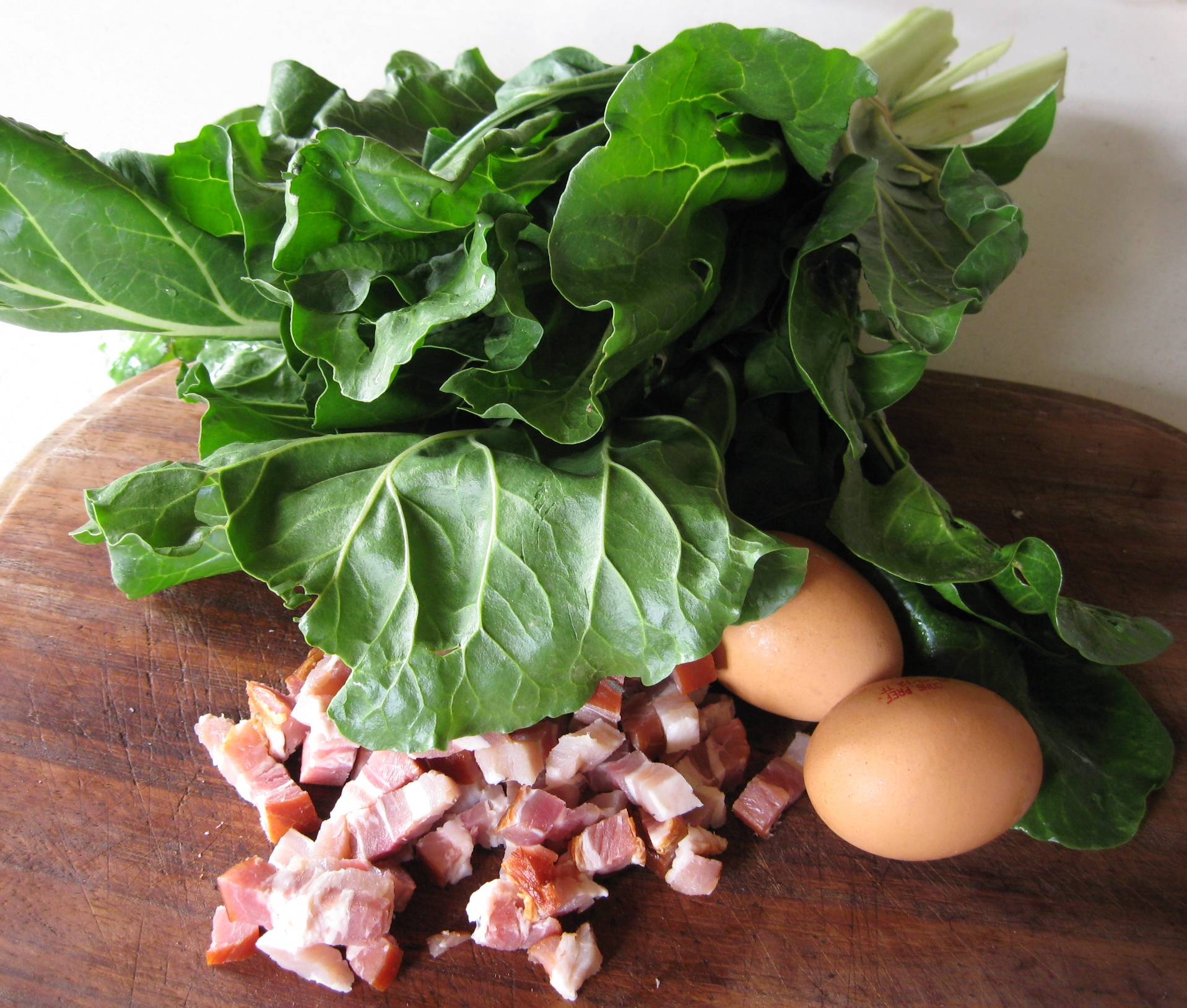
Today I have some lovely dark green chard and some smoked streaky bacon. Spinach or green cabbage can be used for this in place of the chard. The following recipe is for one person.chard_tortilla_ingredients

Warm some olive oil in a large frying pan or wok.

Finely chop a small onion and add to the pan. Cook for a couple of minutes.

Cut the bacon into lardons and add to the pan. Cook for five to ten minutes until lightly browned.

Wash the chard and cut the green leaves only into strips. Add to the bacon and toss. Cover and cook for two to three minutes, then toss again. Keep doing this until the volume of the chard is much reduced and it tastes cooked.

Break two eggs into a bowl and beat enough to mix the yolks with the whites. Add the chard and bacon to the eggs and mix thoroughly. Check if it needs salt. My bacon was quite salty so I didn’t need to add more. Season with freshly ground black pepper.

When you come to cook the tortilla the size of the pan used is very important. It wants to be of a size small enough that when the egg mix is poured in you get quite a thick cake.

Put a good amount of olive oil in the frying pan and heat. When the oil is hot slowly add the egg mix. Cover and let it cook slowly for a few minutes.

With a spatula gently tease the tortilla away from the pan around its perimeter to plump up the edge. Cook a couple more minutes and then check if it is ready to be turned over. The tortilla wants to be just solid enough to hold together as it is turned over onto a plate and then slid back into the pan. If it seems to watery still, cook it a bit longer. I gently tease the spatula under the tortilla all the way round to make sure that it is not stuck in parts. If you shake the pan and the tortilla moves then that is good.

Take a plate that is a good bit larger than the pan and away from the heat place it over the pan and hold it there. Flip the pan over so that the tortilla is on the plate. Put the pan back on the heat and add some more olive oil to it. Give it a couple of minutes to heat up before gently sliding the tortilla sideways into the pan.

With the spatula tease the sides of the tortilla in as before. This side of the tortilla will not need as much cooking as the first side. Lift up a side of it with the spatula to see if it is golden underneath.

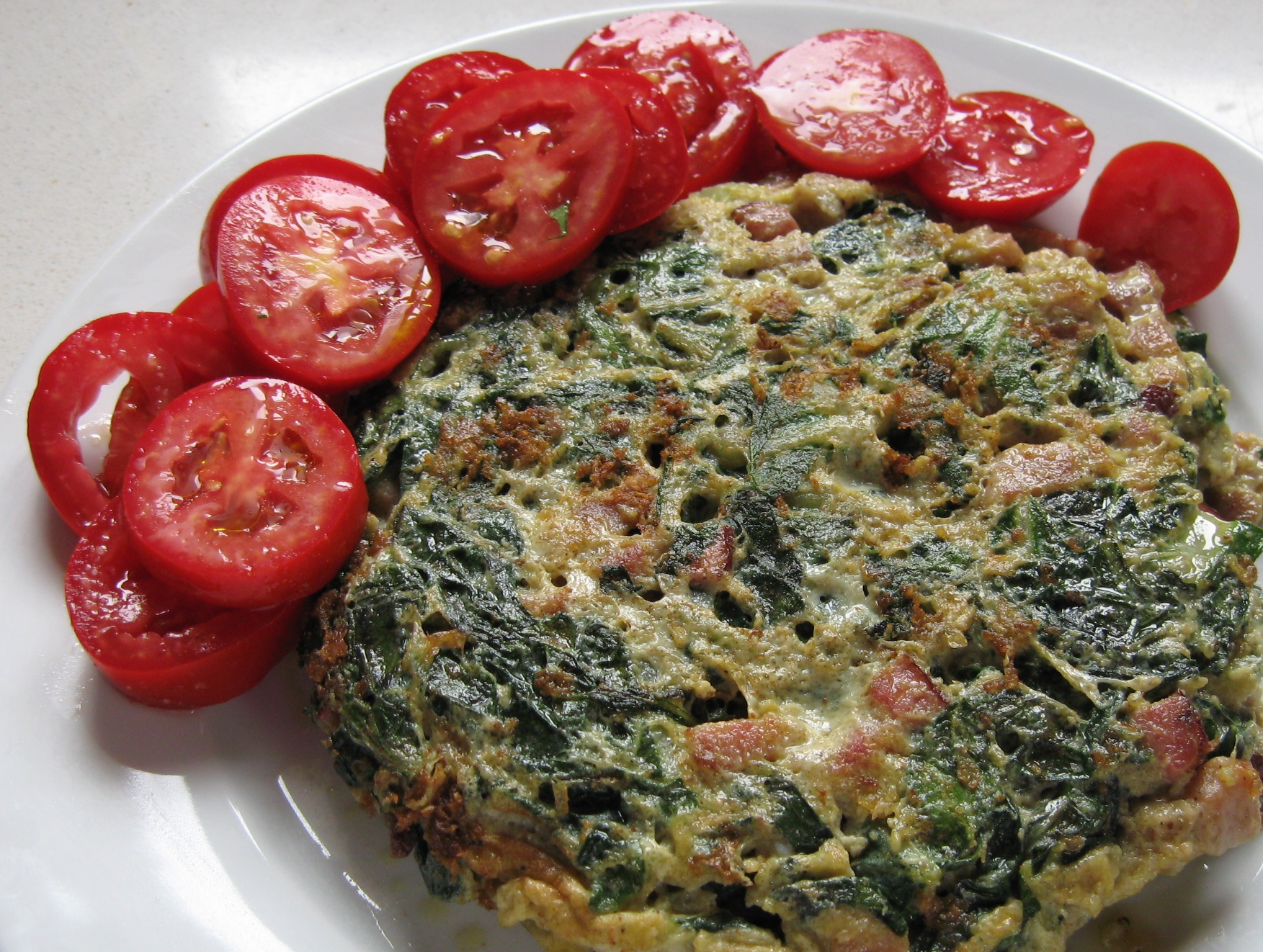
Invert onto a plate as before and enjoy. I had mine with a simple salad of tomatoes annointed with good olive oil and salt.chard_omlette-tortilla_de_acelgas

Share this:

  • Share on X (Opens in new window) X
  • Share on Facebook (Opens in new window) Facebook
  • Share on WhatsApp (Opens in new window) WhatsApp
  • Email a link to a friend (Opens in new window) Email
Like Loading...

Sardines – How to descale and bone them

01 Saturday Sep 2012

Posted by Nevenka in Techniques

≈ Leave a comment

For those of you who have looked at the recipe for Sardines with a Pine Nut and Raisin Stuffing and thought – I haven’t the first idea of how to bone a sardine! – this is for you.

The scales on sardines are not at all sharp or well attached, they are more like thin plastic discs. To remove them, hold the fish by its head and with an ordinary eating knife that has not got a serrated blade, run the blade from the tail towards the head and this will detach the scales. Do this all over the fishes body until the scales are all loose. Wipe them off with kitchen roll, then rinse the fish to remove any remaining scales and wipe them dry. Wash your chopping board and the work area to remove any scales. They are a bit sticky and peskily adhere to your tools.

Now for the boning.

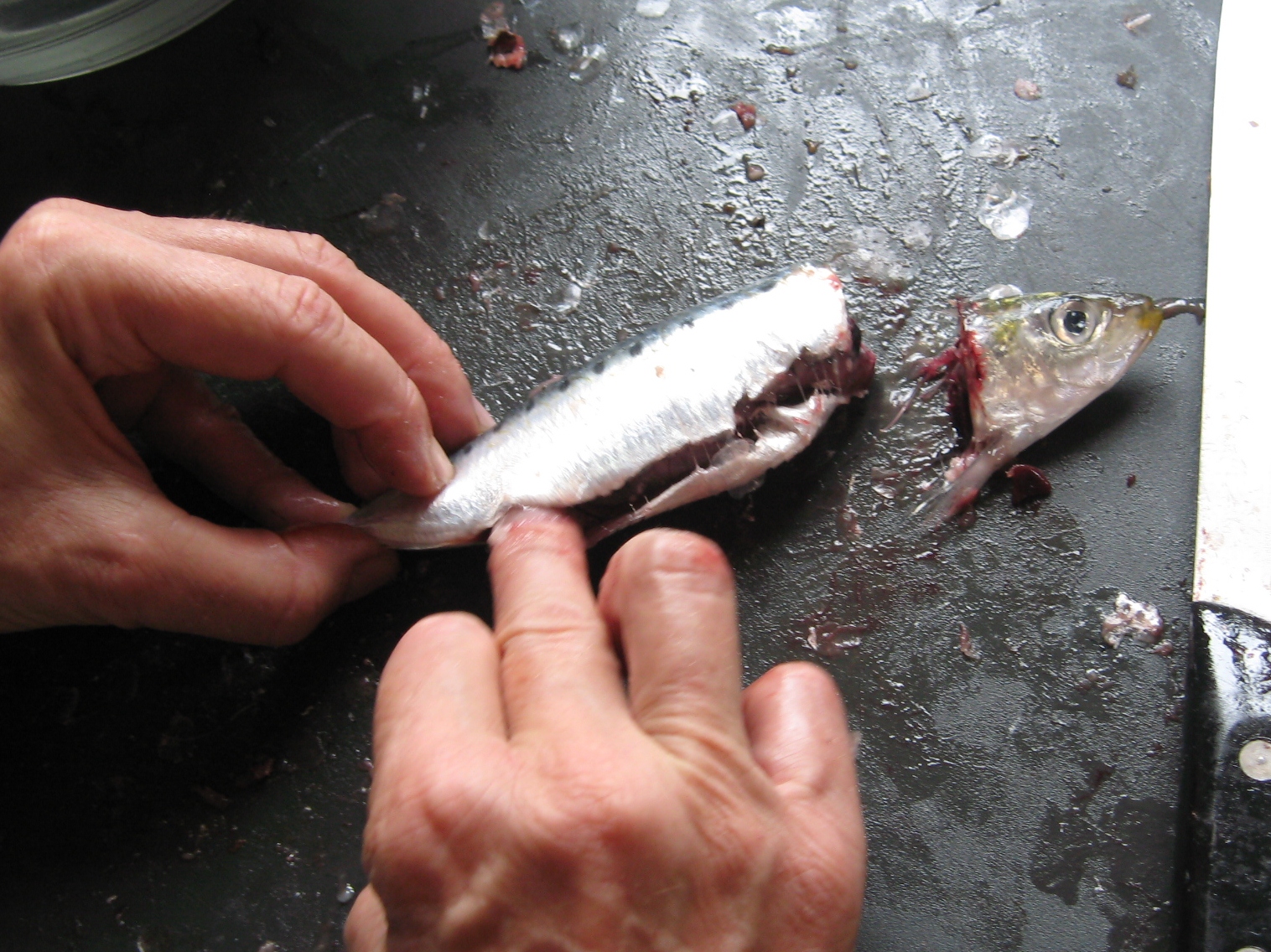
Cut the head off the fish and discard.

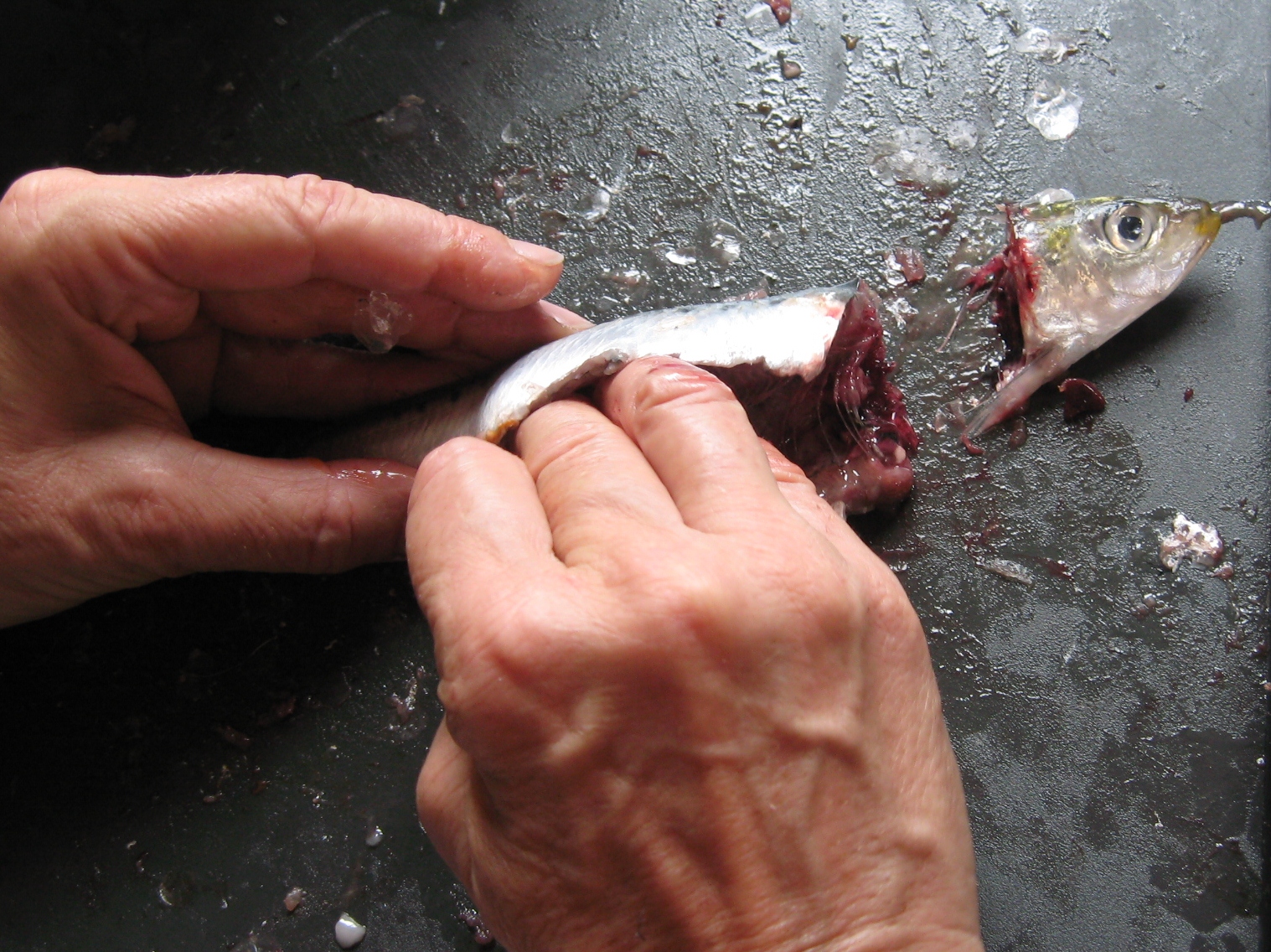
Tuck your fingers into the belly cavity and open the body along the underneath of the belly.

With you fingers prise the backbone away from the flesh along one side of the fish until you can open the fish out flat.

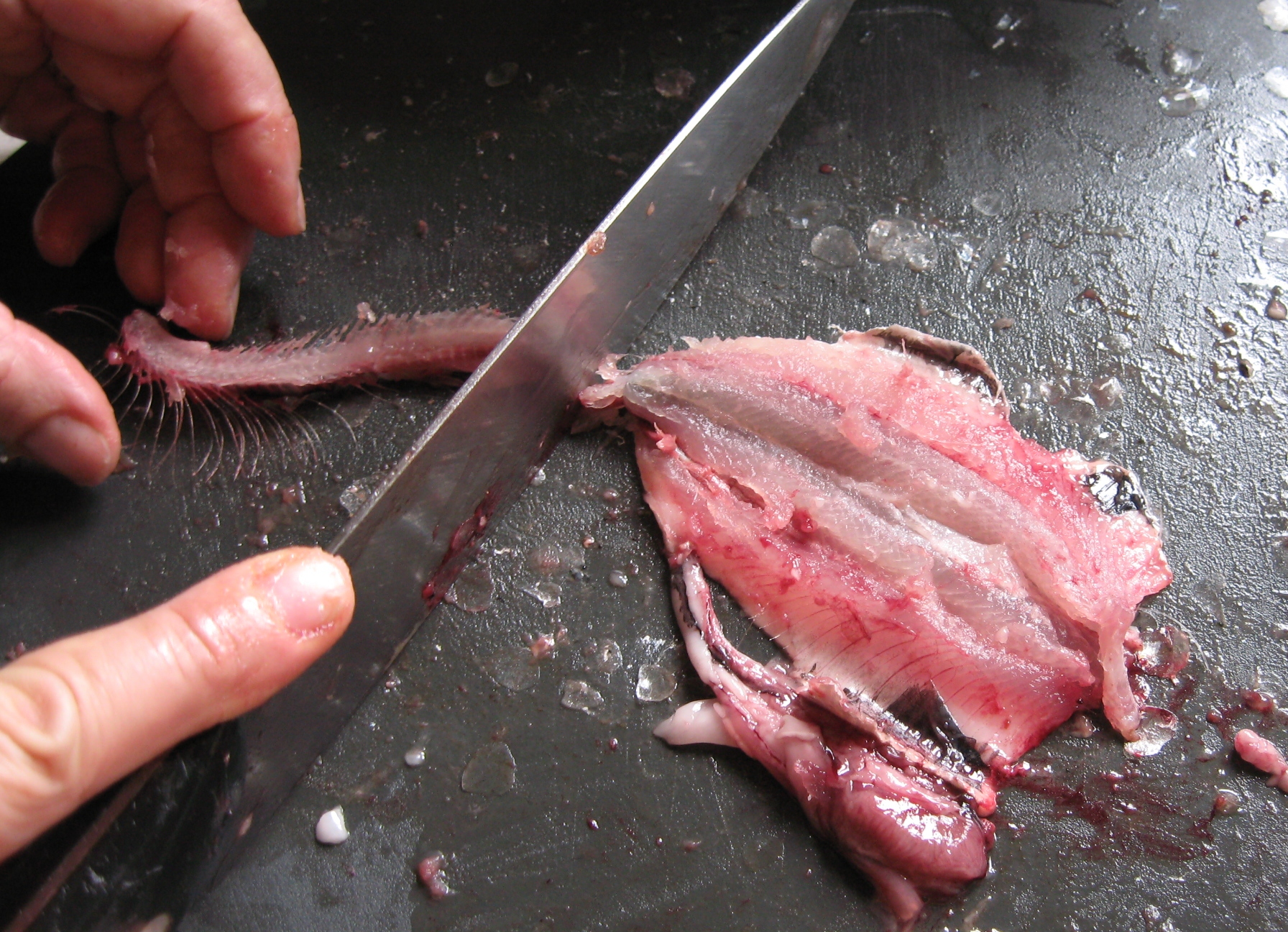
Then prise the backbone away from the flesh of the other side of the fish until it is only attached at the tail.

Cut the backbone off with a knife or scissors.

There will be a fin on one side of the fish that was below the stomach, cut this off and scrape away any guts.

If the fish are large then check whether there are any remaining bones and remove them.

Wipe the fish with kitchen roll. You are now ready to do your recipe.

Share this:

  • Share on X (Opens in new window) X
  • Share on Facebook (Opens in new window) Facebook
  • Share on WhatsApp (Opens in new window) WhatsApp
  • Email a link to a friend (Opens in new window) Email
Like Loading...

Sardines with Pine Nut and Raisin Stuffing

01 Saturday Sep 2012

Posted by Nevenka in Fish, Food for One, Main Courses, Starters

≈ Leave a comment

sardines-stuffed-and-bakedI don’t remember now where I came across this recipe for boned sardines that are wrapped around a stuffing of toasted pine nuts, raisins and onions and then moistened with orange and lemon juice before being baked in the oven, but it has been a favourite way of preparing these fish in my kitchen for many years. The combination of the oily fish, with the acid of the citrus and the sweetness of the onions and raisins is very successful – and so summery.

This recipe is for when the sardines are medium to large in size and need to be  gutted and deboned. I use two or three per person as a starter and four or five if it is to be a light main course.

12 medium sardines

1 medium onion – very finely chopped

Olive oil for frying the onions

25 gms pine nuts – dry roasted in a thick based shallow pan

25 gms raisins or currants

chopped fresh flat leaved parsley

fresh bay leaves

100 ml freshly squeezed orange juice

100 ml freshly squeezed lemon juice

Salt and black pepper

Start by descaling the sardines and then cut off their heads, gut them and remove the backbones. Open them out flat.

Prepare the stuffing.

Fry the onions until lightly browned. Add the pine nuts, raisins and parsley and mix well.

Take a small amount of the stuffing and place it at the wide end of the opened out sardine. Roll the fish around the stuffing, starting at the wide end and rolling towards the tail.

Put the fish into a shallow oven proof dish side by side with the tails sticking up. It can be pretty to use individual dishes per person if you have them. I use ramekins that will take two to three fish each if I am making this as a starter, or shallow bowls with four or five fish in each as a main course.

Once you have arranged all the fish, put a bay leaf in between each fish.

For cooking liquid, mix the lemon and orange juice. Pour over the fish to cover half a centimetre up from the base of the dish.

Bake at 180 degrees centigrade for 20 minutes.

Serve with a side salad and fresh bread.

An alternative stuffing is chopped capers, olives and chillies, with a white wine and lemon juice mix for the cooking liquid.

Share this:

  • Share on X (Opens in new window) X
  • Share on Facebook (Opens in new window) Facebook
  • Share on WhatsApp (Opens in new window) WhatsApp
  • Email a link to a friend (Opens in new window) Email
Like Loading...
← Older posts
Newer posts →

Blog at WordPress.com.

Privacy & Cookies: This site uses cookies. By continuing to use this website, you agree to their use.
To find out more, including how to control cookies, see here: Cookie Policy
  • Subscribe Subscribed
    • fincafood
    • Join 103 other subscribers
    • Already have a WordPress.com account? Log in now.
    • fincafood
    • Subscribe Subscribed
    • Sign up
    • Log in
    • Report this content
    • View site in Reader
    • Manage subscriptions
    • Collapse this bar
 

Loading Comments...
 

    %d