• About
  • La Micaela Farm Shop

fincafood

~ culinary and horticultural life on a Spanish farm

Author Archives: Nevenka

Praising Braising

16 Wednesday Jan 2013

Posted by Nevenka in Vegetable Dishes

≈ 1 Comment

As a grower of organic vegetables, i like to maximise the fabulous flavour that they have, and for me this means cooking them with little or no water. Griddling and grilling are both good ways of doing this. The vegetables can be just brushed with good olive oil and sprinkled with seasoning, or marinated with garlic and herbs before the cooking.

IMG_3592Another method of keeping all the flavour in the vegetables is to braise them either in their own moisture, or with the addition of a little water, wine, stock or vinegar that is then reduced down to nothing in the cooking. Other flavours can be added to bring out the best in the vegetable.

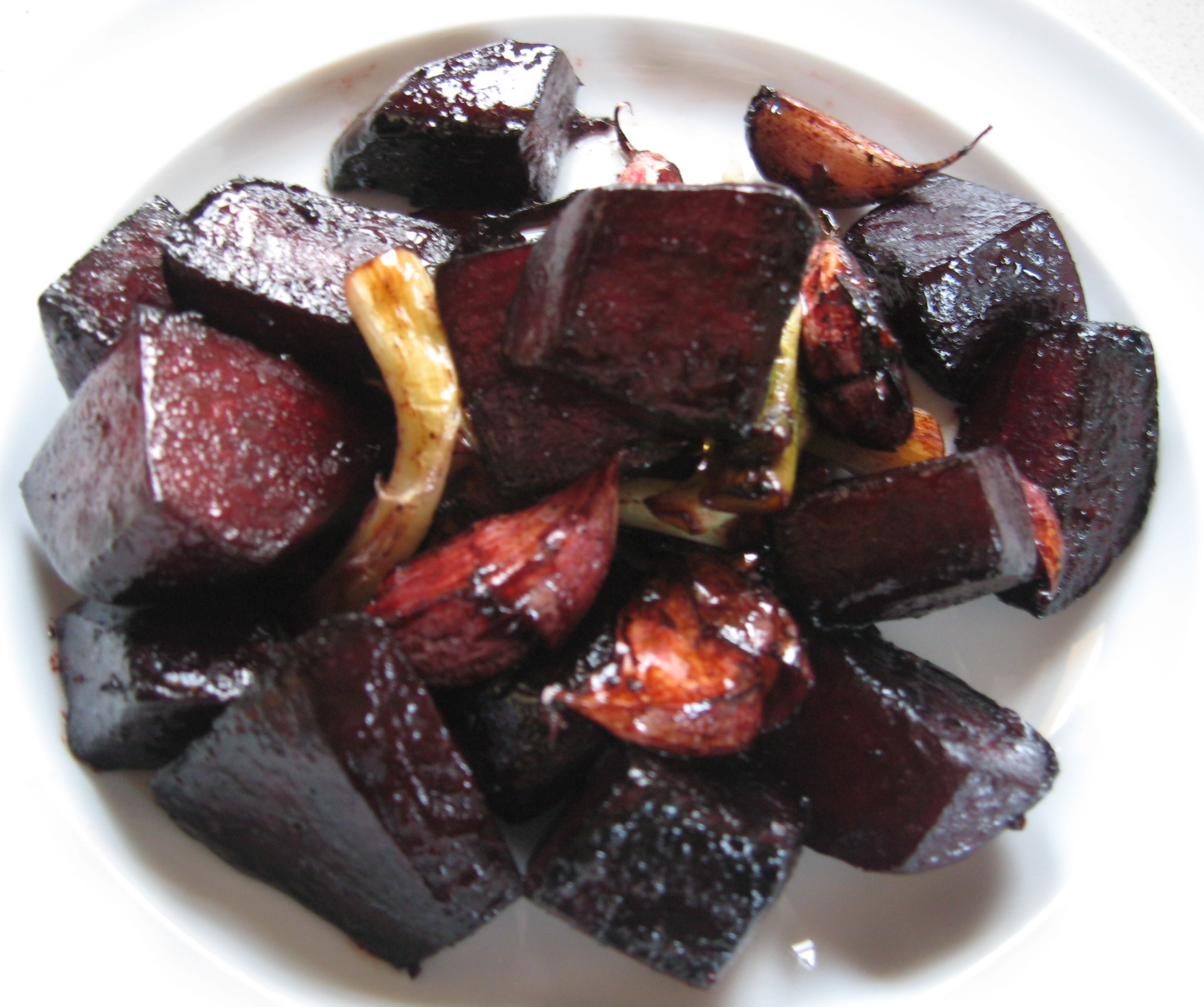
The beetroot pictured above was cooked with balsamic vinegar.

For four people, take half a kilo of beetroots, peel the and cut them into bite sized pieces.

Put them in a saucepan that has a lid, into which the cubes of beetroot fit in one layer. Add two tablespoons of good olive oil. cover with the lid and put on the heat.

Cook for a few minutes shaking from time to time to cover the beetroot pieces in oil.

Take a whole bulb of garlic and break it into cloves Leaving the skin on the cloves.With a sharp knife cut half way across each clove. Add these to the pan with two tablespoons of balsamic vinegar and some fnely chopped oregano. Season with sea salt and lots of coarsely ground black pepper.

Cover and cooking over a low heat until beetroot is cooked to your preferred softness.i like mine still with some bite, and that takes about twenty minutes or so. By then the balsamic vinegar will have reduced down to a tasty sticky glaze.

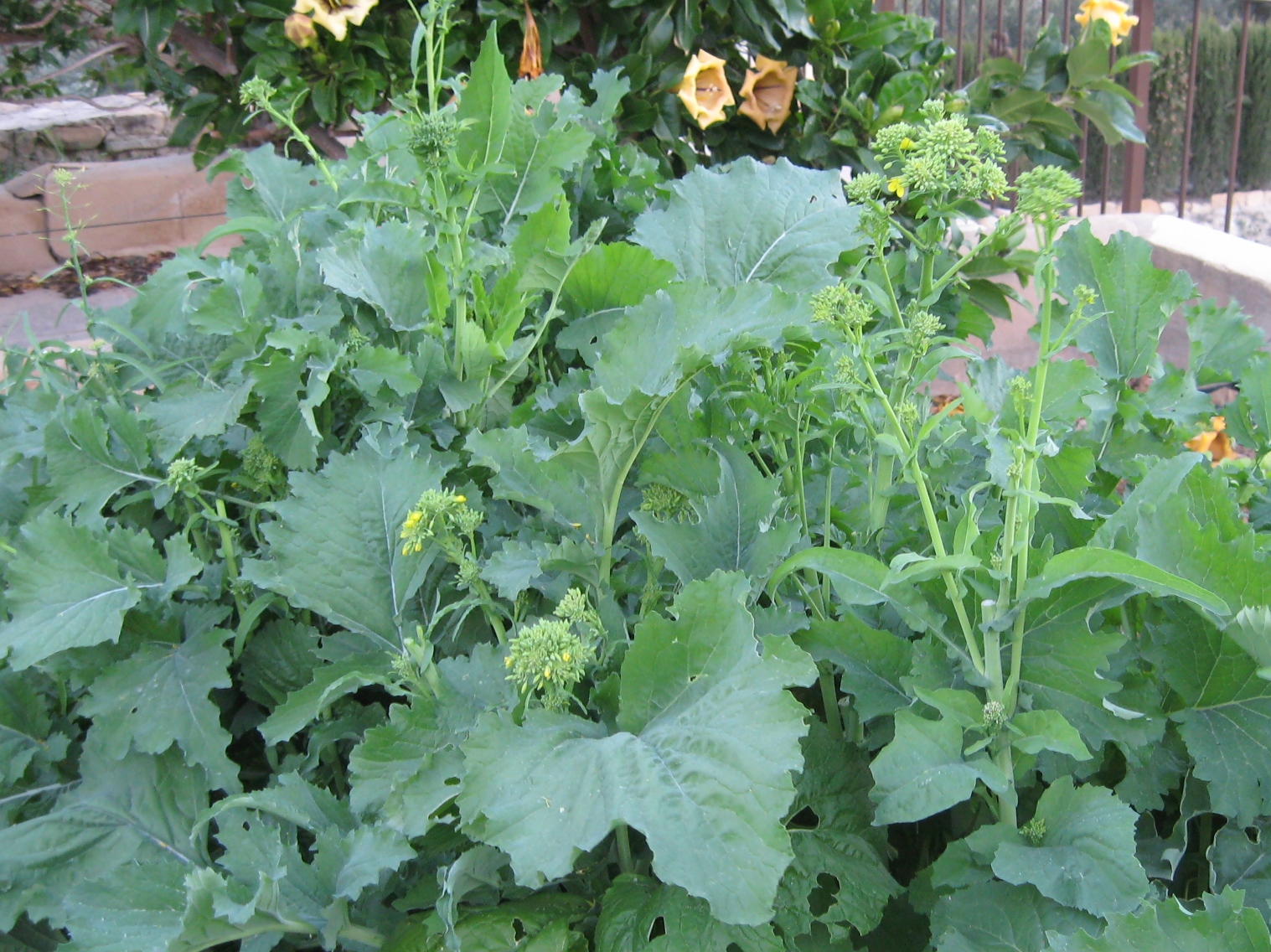
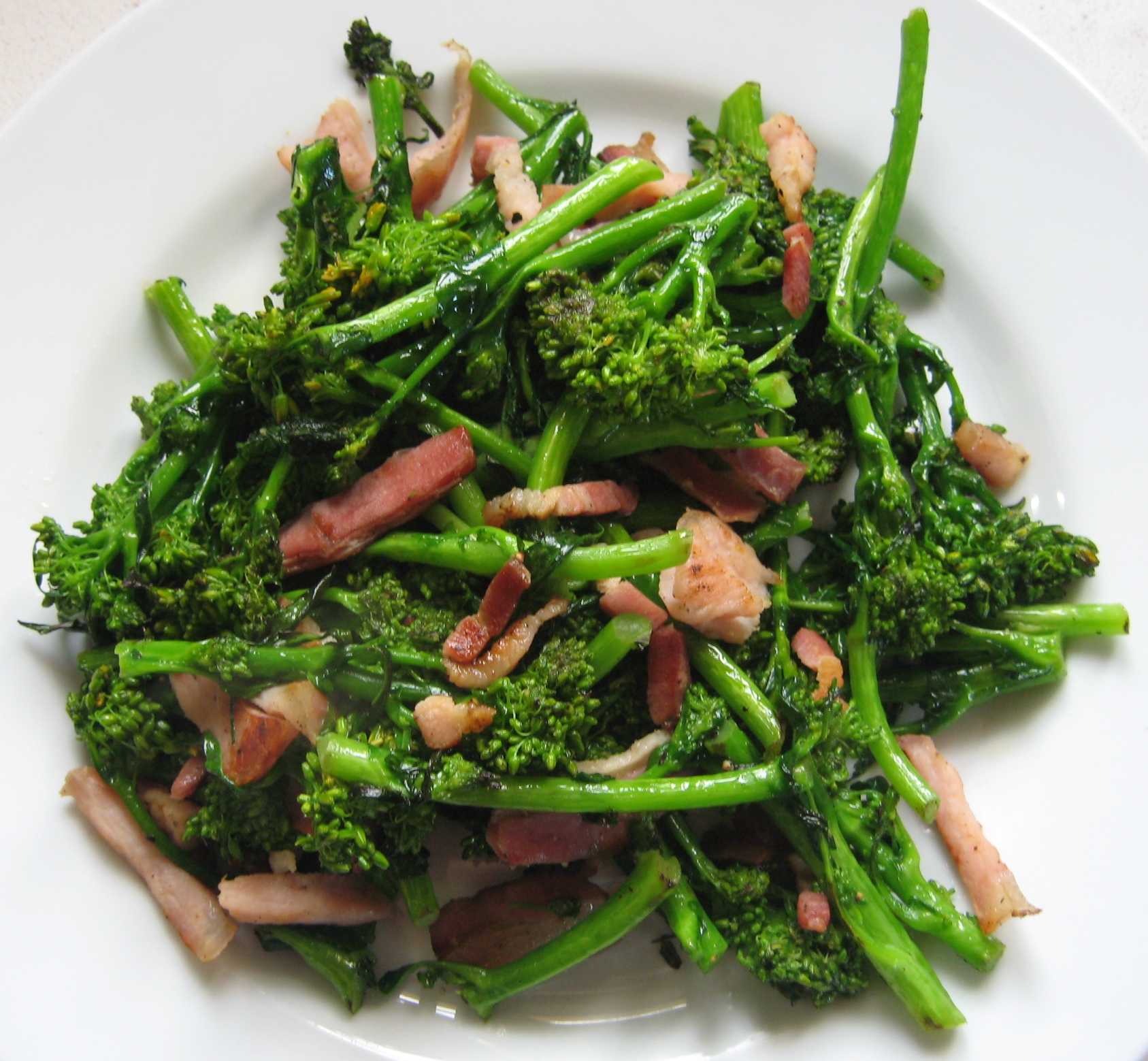
The Cima Di Rapa, pictured below in the vegetable garden is one of the highlights of the autumn and winter season at La Micaela. The flower heads are eaten like the purple sprouting Brocolli so beloved in England, but it is ready earlier in the season. From November to February roughly in the climate here in southern Spain, depending on the temperature. The flavour is a little sharper than brocolli and is complemented by either salty anchovies or in this instance bacon. Broccoli of course can be prepared in exactly the same way.

IMG_3584Cut some streaky bacon into thin lardons and fry these in olive oil.

Add florets of Cima or broccoli. Toss with thee bacon and olive oil.

Season with salt, not too much if the bacon is salty, and freshly ground black pepper.

Cover and cook on a low heat until the florets are cooked.

if the Cima or broccoli florets are tough, then add half a centimetre of water to the pan at the beginning of cooking and cook until it evaporates.

Try cooking shredded cabbage like this. Sprouts work too, although they need a  little water adding, enough to go about half way up the sprouts. Cook covered on a more brisk heat until the water has reduced down to almost nothing and they should be cooked through but still retain some bite.

IMG_3570To cook pumpkin, or butternut squash, simply cut into bite sized pieces and cook covered, in butter with seasonings. If you are going on to make pumpkin ravioli, this is an ideal way to cook the pumpkin.

Carrots, Swedes and courgettes are very tasty cooked slice this.

IMG_3590

Share this:

  • Share on X (Opens in new window) X
  • Share on Facebook (Opens in new window) Facebook
  • Share on WhatsApp (Opens in new window) WhatsApp
  • Email a link to a friend (Opens in new window) Email
Like Loading...

New Years Eve Dinner

09 Wednesday Jan 2013

Posted by Nevenka in Main Courses, Starters, Sweet Things

≈ 2 Comments

Tags

Cima Di Rapa, Menu Planning, Semi-Freddo, Turkey


THE MENU

Salad of mangetoute peas, chima di rapa and yellow plum tomatoes with poached egg and smoked fish dressing.

———————————————

Ragu of Turkey and Wild Mushrooms

Steamed New Potatoes with Chives

Braised Beetroot with Garlic

——————————————

Orange Semi-Freddo

——————————–

Cheeseboard


When planning a celebratory dinner like that for New Years Eve I generally start jotting down menus several days before the dinner so that I have time to really think through how the meal will be put together on the day. I look through the cupboards, vegetable garden and the freezer to see what I have already that could do with being included. Then I think about how rich or light I want the whole affair to be. After the excesses of Christmas I felt a meal on the lighter side was called for on this occasion.

My first draft menu was a starter of Foie Gras with a salad as above but without the tomatoes and with some of the gorgeous figs that I dried this summer, and a ginger dressing. Ginger with Foie Gras is a favourite flavour combination of mine. This I was thinking maybe of following with a fish dish, either salmon or swordfish steaks.

I wrote in a previous post of an eleven kilo  free range turkey that had come my way which was cut into portions and frozen. I thought I ought to consider turkey for the main course. There were two very good sized legs. Do I bone, stuff and roast them, or will they be too tough prepared like that? A casserole would suit the meat, but is it smart enough for a celebration dinner? I am assured by one of my guests that a Ragu would be perfectly smart enough and welcome change from the richness of the previous days. I have some dried wild mushrooms brought back from a trip to Italy, a perfect accompaniment to the gamey flavour of the turkey.

But then brown ragu preceded by brown foie gras would not do. I want to stick with a salad for several reasons, it is a healthy, light and colourful way to start a meal and I have in the garden some tip top ingredients for one, and most of the preparation can be done in advance which means I don’t have to abandon my guests for too long while I serve it up.

I have some fresh free range eggs that have come from my neighbour Marias happy chickens, a salad topped with a poached egg would be both colourful and the soft yoke mixed with a tangy dressing would make the salad interesting to the palate. For the dressing I used a tin of smoked fish roe in oil that I pureed and thinned with lemon juice and more olive oil.

Having had another look in the garden there are enough baby yellow plum tomatoes to make salads for seven, they are sweet and acidic at the same time and the colour will set off the yellow yolk of the egg.

So I recap in my mind the plan. Crispy mixed salad leaves, the baby yellow tomatoes cut into halves, lightly steamed mangetoute peas and cima di rapa which will still be warm when served, topped with a warm poached egg dressed with a thick dressing of smoked fish roe. Some pickled sprigs of capers to garnish. I am happy with that.IMG_3601

The ragu for the main course I will serve with steamed new potatoes tossed with chives and butter, and for a vegetable beetroot braised with garlic.

I have a good cheese board to end the meal which means that the dessert that I thought I wanted to make will not fit. I make mincemeat each year to sell in the farm shop, and there are a couple of jars left. Having a lime farm the mincemeat is lime and quince, which is wonderfully tangy. I had been thinking to make a cheesecake based on the Yorkshire Curd Tart of a previous post, but in place of the currants and raisins use the mincemeat. I still plan to try it at some point but for this meal it is too rich and cheesecake followed by cheese…..no.

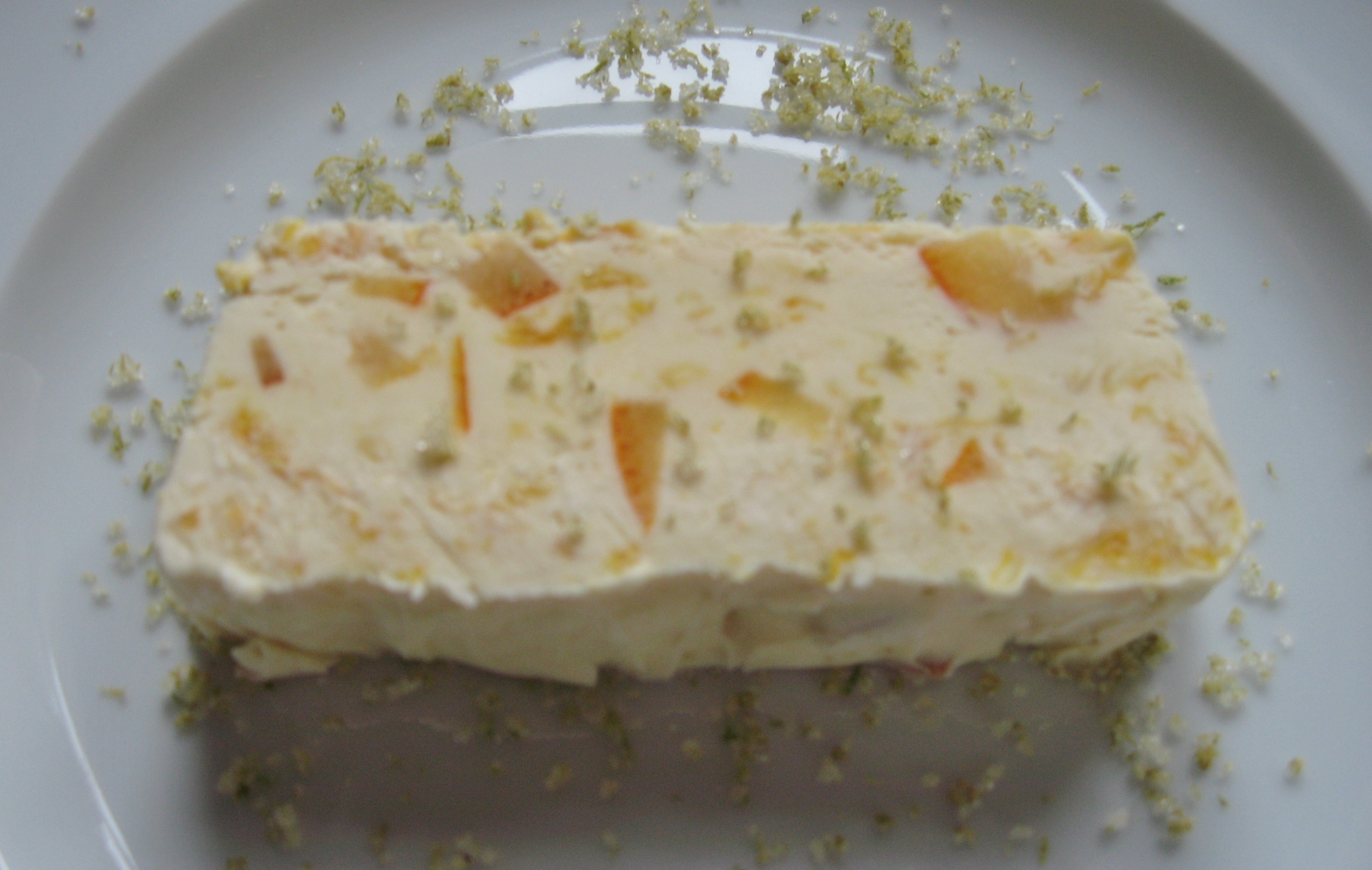
How about a little ice cream?  Small, light, tasty, perfect.  An orange semi-freddo will fit the bill.IMG_3608

I will write a whole post on Semi-freddos in the future, but today I will give you the recipe for the Turkey Ragu which was really good.

TURKEY AND WILD MUSHROOM RAGUIMG_3606

As with all stews it is a good idea to cook it the day before needed to let the flavours mature. As you know there is something about the time and the cooling and reheating that really improves the flavour of any stew.

2.5 Kilos turkey meat from the legs cut into chunks roughly three centimetres square

1 bulb of garlic

2 large onions

400 grams streaky bacon/ pancetta cut  into lardons

Sea salt and freshly ground black pepper

1litre stock made from the turkey bones

75 grams  dried mixed wild mushrooms

Good fat for frying, either beef dripping, bacon fat or duck

2 heaped tablespoons flour

Break the garlic into cloves and peel and chop them finely.

Finely chop the onions.

Melt some of the fat in a large heat proof casserole. When hot add the onions and garlic. Fry for five minutes or so until transparent.

Add the bacon and continue frying stirring from time to time for another ten minutes.

Add the turkey pieces. Continue frying and turning the pieces until they are sealed all over. Season well with the sea salt and freshly ground black pepper.

Add just enough stock to cover the meat. Bring to a slow simmer and cover. Leave to cook for half an hour.

Add the mushrooms and stir in. Continue cooking on a very slow simmer until the turkey is cooked. I thought that the turkey I had, being very large and having run around free would have needed a couple of hours cooking as a minimum, but it only needed about three quarters of an hour more cooking at this point. I would recommend to start checking for doneness after half an hour.

Bear in mind as well that with such a large volume of ragu it will retain heat and the meat will continue to cook for quite some time after the heat is turned off.

To thicken the stew, melt some of the fat in a frying pan and add to it the two tablespoons of flour. If it is dry in the pan add more fat. Fry slowly stirring all the time until the flour starts to caramelise and turn a fudge brown.  Add a ladleful of the stock from the stew and stir into the flour. It will fizz and thicken. Continue adding the stock a ladleful at a time until the sauce is thinner and moveable.

Return this to the pan with the meat and stir gently to mix in.

Reheat the ragu and serve.
Share this:

  • Share on X (Opens in new window) X
  • Share on Facebook (Opens in new window) Facebook
  • Share on WhatsApp (Opens in new window) WhatsApp
  • Email a link to a friend (Opens in new window) Email
Like Loading...

2012 in review

02 Wednesday Jan 2013

Posted by Nevenka in Starters

≈ Leave a comment

I have been pleasantly surprised by how many of you have visited my blog in this the first year. Thankyou for your support and encouraging comments, and I look forward to taking you with me on more culinary adventures in 2013.

The WordPress.com stats helper monkeys prepared a 2012 annual report for this blog.

Here’s an excerpt:

600 people reached the top of Mt. Everest in 2012. This blog got about 2,100 views in 2012. If every person who reached the top of Mt. Everest viewed this blog, it would have taken 4 years to get that many views.

Click here to see the complete report.


Share this:

  • Share on X (Opens in new window) X
  • Share on Facebook (Opens in new window) Facebook
  • Share on WhatsApp (Opens in new window) WhatsApp
  • Email a link to a friend (Opens in new window) Email
Like Loading...

Eggs, Ham & French Beans

11 Tuesday Dec 2012

Posted by Nevenka in Food for One, Main Courses

≈ Leave a comment

This light, fresh tasting lunch or supper dish is simplicity itself and prefect for when you are cooking for yourself alone. This morning I left the Spanish sun to visit the thickly snow covered French Alps, and brought with me the left over vegetables that I had picked for the farm shop yesterday. I am a bit weary after the long journey so want to eat something that is quick to prepare, but fresh and nourishing. I stopped off in the valley before coming up the mountain to get some basics in, butter, eggs, ham and bread. 2012-12-09 19.25.47

The beans from the veg garden are young and tender, so I fry them in olive oil for a few minutes, then I add some ham cut into small pieces. Continue frying for a few more minutes until the beans are cooked but still have some crunch. Turn the heat low and then add a couple of free range eggs that you have beaten a little to mix the whites and yolks, and seasoned. Stir the eggs around the pan and only let cook to a very soft set. Turn onto a warm plate and enjoy your Revuelto de Judias Verdes with crunchy fresh bread.2012-12-09 19.28.29

Revuelto translates as  –  turned over – referring of course to the turning over of the eggs in the pan. The soft scrambled eggs are regularly found on menus in Spain with combinations of vegetables and either ham or prawns. Asparagus and Prawns, Broad Beans or Sweet Peas and Ham, Spring Garlic and Ham, Mushrooms, or Morcilla the Spanish black pudding. In the Basque Country it is made with slow stewed Red Peppers and called Piperrada. Or try your own combinations………

Share this:

  • Share on X (Opens in new window) X
  • Share on Facebook (Opens in new window) Facebook
  • Share on WhatsApp (Opens in new window) WhatsApp
  • Email a link to a friend (Opens in new window) Email
Like Loading...

Spicy Pork Kebabs – Malaga Style

30 Friday Nov 2012

Posted by Nevenka in Main Courses, Starters

≈ 2 Comments

Tags

Pork, Spices, Tapas

In Andalucía there are many culinary legacies of the times when Moorish princes lived in the palaces of Granada and Seville. Just the names of some ingredients show their Arabic origins – berenjena, zanahoria, albahaca, and azafran for example, which translate as aubergine, carrot, basil, and saffron.

These kebabs are part of this legacy with their seasoning of spices and the drizzle of the bitter sweet sugar cane syrup at the end. When I was first served these as a tapa, the cubes of meat were alternated with dates for an even sweeter taste. The spices are dominated by the flavour of the allspice and cloves which complement so well the pork. I know you are wondering what pork is doing in a dish with arab origins, but that is Andalucía for you. I had a student on my recent tapas cookery class who didn’t eat pork, so I used some nicely gamey free range turkey, which was very good too.

P

PINCHO MORUNO ESTILIO MALAGUENA

For 4 as a main course, for tapas halve all the amounts

700 gms lean pork cut into cubes

10 ml allspice berries or Pimienta de Jamaica

5 ml whole cloves

5 ml Cumin seeds

5 ml coriander seeds

5 ml ground cinnamon

2.5 ml chilli powder or the equivalent in fresh red chilli

2.5 ml pimenton or paprika

2.5 ml Salt

2-4 cloves of garlic

15 ml olive oil

Sugar cane syrup to serve

In a heavy based frying pan put the allspice berries, cloves, cumin seeds and coriander seeds and heat over a low heat. Shake the pan from time to time until the spices are warm and exuding their fragrances.

Put in a mortar together with the salt and grind down to a powder.

Peel and roughly chop the garlic and add to the spices together with the chilli and pimento. Grind to a paste adding the olive oil.

In a bowl mix the marinade with the pork cubes to coat the cubes on all sides. Cover and leave in the fridge for the spices to penetrate for at least an hour.

Thread the pork cubes onto skewers and cook either on a griddle, or grill on the cooker or barbeque.

To serve drizzle with sugar cane syrup.

I have also used this same marinade very successfully to season a joint of pork prior to roasting it.

Share this:

  • Share on X (Opens in new window) X
  • Share on Facebook (Opens in new window) Facebook
  • Share on WhatsApp (Opens in new window) WhatsApp
  • Email a link to a friend (Opens in new window) Email
Like Loading...

Yorkshire Curd Tart

28 Wednesday Nov 2012

Posted by Nevenka in Sweet Things

≈ Leave a comment

Tags

Cheesecake, Curd, Tart

This tart is something that I grew up with. It was an occasional Saturday treat. One of us would be sent after lunch to get in the queue of the bakery that made the best ones in the area. Once the bag of the warm tarts had been bought, then it was a ten minute, or less if you could, run home before they cooled too much. yorkshire_curd_tart

They are a baked cheesecake very much in the eastern European style and have been made in Yorkshire for a very long time, the first published recipe dating from 1741. I have not come across another cheesecake type tart that is native to the UK and why this one crops up in Yorkshire is a mystery. If any of you know of any other then do please let me know. It could even date back to when the Romans were in Yorkshire, some of the older recipes include washing the butter in rosewater, which was a favourite flavouring of the romans, and it is very similar to the sweet ricotta and lemon tarts still made in Italy today.

There quite a few variations of this tart and I sampled some while back in Yorkshire recently. Many use short crust pastry, sometimes enriched with ground almonds, and many have a cheese filling that is less rich and drier than in my favourite version. The tart that I remember from childhood was made with flaky pastry and was very buttery – maybe more calories that other versions – but if you are worried about that make small ones but good ones and ration yourself – if you can.

For the cheese the ideal is fresh curd cheese made from cows milk, it has a good acidity to it that offsets the sweetness of the sugar, but you can use a fresh ricotta or any fresh sheep or goat cheese. Avoid using cottage cheese, it is too sweet and watery. For my readers in Spain, I find that the Queso Fresco that is packed in plastic containers in the supermarket tastes of the plastic, so I prefer to buy the cheese from the deli counters at the market or from the butchers. I have been using the fresh goat cheese that my neighbour Maria makes and is available from the farm shop, and that works perfectly.

Any size of tart works, the tart tins just need to be shallow whether you are making a large one for a dessert or baby ones to have with your coffee.

YORKSHIRE CURD TART

250 gram pack ready made flaky pastry or make your own

250 grams curd cheese

75 grams butter

75 grams sugar

2 large eggs

grated zest of 1 lemon

50 grams currants or raisins

Start by creaming the butter and sugar together in the food processor until light and creamy.

Add the cheese cut up into cubes and pulse to mix. You don’t want the cheese to become a total puree and lose its texture.

Add the lemon zest and the eggs and pulse to combine.

Finally add the fruit and again pulse to combine.

Roll out the pastry and line the tart tin or tins. Prick the base with a fork. Fill with the cheese mix.

Bake at 180 Centigrade for about 40 minutes until golden brown.

Share this:

  • Share on X (Opens in new window) X
  • Share on Facebook (Opens in new window) Facebook
  • Share on WhatsApp (Opens in new window) WhatsApp
  • Email a link to a friend (Opens in new window) Email
Like Loading...

Thanksgiving

24 Saturday Nov 2012

Posted by Nevenka in Main Courses

≈ Leave a comment

Tags

Thanksgiving, Turkey

ThanksgivingRecently an eleven kilo turkey entered my life. I haven’t got to the bottom of why two large turkeys urgently needed to be dispatched and given freezer room to, but I am certainly not complaining at receiving this unexpected gift, especially as they were happy, free range birds. Eternal thanks to Terry for doing the dispatching and plucking, and to Jane for sending the second turkey in my direction.

Eleven kilos is a lot of turkey, so butchering it prior to freezing was my first task. I took the breasts off and sliced them into the thinnest escalopes that I could. These were frozen each in their own bag for easy defrosting. The legs, each of which will make a joint big enough to feed four, were bagged up and frozen. I will probably bone these when I come to use them, and then stuff them before roasting them. The carcase was trimmed of all its usable meat which was cut into bite sized pieces and then bagged up in small portions to be frozen. I have plans for turkey and wild mushroom ragu to go with fresh pasta at some point in the future amongst other dishes. The carcase itself was cut up ( I have a very useful large cleaver) and boiled up with carrots, onions, garlic and herbs for a good supply of stock. Once the stock had been strained off and frozen in portions, the bones went into a very appreciative dog and four cats. Absolutely nothing wasted.

The above then is a very roundabout explanation of why I volunteered to cook the main course for Thanksgiving this year. My friend Doris, who is from Pittsburgh, is the usual hostess for this feast, and I did detect a slight trepidation on her part to entrust the preparation of this meal to someone who was not only not an American, but was wanting to do something off the norm with the turkey. I reassured her that cranberry sauce and candied sweet potatoes would be present, but for the rest she would have to put her trust in me. I think that she was pleased with the result.Turkey_rolls_cranberry_sauce

The idea for these rolls came from my recent trip to Sicily where we were served beef fillet rolls moistened by olive oil soaked breadcrumbs. Do not be tempted to cut down on the amount of oil in the stuffing as this is what gives the dish its moist tenderness.

TURKEY ROLLS     For six

large turkey escalopes – 6

fresh bread crumbs – from six slices of white bread

clove of garlic – 1

dried cranberries – 3 tablespoons

fresh parsley, chopped – 2 tablespoons

olive oil – 50 ml

salt and freshly ground black pepper

dried breadcrumbs for coating the kebabs

bacon or duck fat for cooking the rolls

Make the breadcrumb stuffing. Put the garlic and cranberries in the food processor and whizz to cut up. Add the breadcrumbs, parsley and olive oil. Pulse to mix. Season and then pulse again.

Lay one of the escalopes out on a board and flatten out with a meat tenderising mallet or a rolling pin. turkey_rolls

Spread a layer of stuffing over the turkey slice.turkey_rolls

Roll up as tightly as you can.

Cut into lengths of about two and a half centimetres and thread onto wooden skewers allowing one skewer per person. Do the same with all the escalopes.  When all the skewers are threaded with their rolls, put them into a plastic box and store them in the fridge until needed. The preparation up to this point can be done several hours in advance.

In the meantime, prepare a cranberry sauce.

CRANBERRY SAUCE

turkey stock – 500 ml

dried cranberries – 3 tablespoons

any leftover breadcrumb stuffing

salt and freshly ground black pepper

Boil the turkey stock to reduce it by half to concentrate the flavour. Add the cranberries and simmer for about ten minutes until the fruit are soft.

Thicken the sauce with leftover breadcrumb stuffing. Add these bit by bit until the sauce is slightly thicken but still pourable. Check the seasoning and add salt and pepper as needed.

Again you can prepare this sauce in advance and reheat it when ready to serve the turkey.turkey_rolls

To cook the rolls, dust with the dried breadcrumbs and cook in either duck or bacon fat on a griddle or in a frying pan. Cook for four or five minutes on each of the four sides, turn off the heat and leave the rolls to rest covered for another five minutes.

Serve with a little of the warmed sauce poured over, sweet potatoes roast with maple syrup and a green vegetable.

PS – if you think that I had my paintbrushes out to do the picture at the top of the post, let me tell you that it is a photograph. It is my Thanksgiving table decoration.


Share this:

  • Share on X (Opens in new window) X
  • Share on Facebook (Opens in new window) Facebook
  • Share on WhatsApp (Opens in new window) WhatsApp
  • Email a link to a friend (Opens in new window) Email
Like Loading...

Oranges Are Not Only Fruit……….

15 Thursday Nov 2012

Posted by Nevenka in Starters, Vegetable Dishes

≈ 1 Comment

orangesAll the citrus fruits are ripening early this year. Normally the limes are just starting to crop now, but have been ready for almost two months now. The one little grapefruit tree is so laden with large fruit that I will have to make some props for the branches to stop them breaking. As the fruit is already changing from green to yellow I thought I would check to see if they were sweet enough to eat so that I could thin out the biggest groups of fruit. On one side of the tree the fruit look pinker than the other, but the fruit are still tart, while the other side of the tree has yellower fruit that are edibly sweet.

There are several varieties of oranges on the farm, the earliest of which normally start being ready to eat at Christmas, but this year they are nearly there already. While still a little tart for eating alone, they are perfect for salads.

The use of fruit in savoury dishes is a vestige of the arab occupation of various countries around the mediterranean. While in Sicily recently I was treated to a one day course on Sicilian cooking and our profesora, Silvia, prepared for a starter a salad of Florence Fennel with Oranges. (There will be more of the cookery course in a later post.)salad_fennel_orange

Slivers of fresh plump Florence Fennel steeped in lashings of fresh olive oil from their farm, seasoned with salt and freshly ground black pepper, topped with sliced oranges and garnished with black olives.

The sweet and sour flavour of nearly ripe oranges and the fruity acidity of the new freshly pressed olive oil go together so well. One of the simplest orange salads that I have been served was in Merida while on honeymoon. Oranges lightly salted and soaked in olive oil for an hour or two, then garnished with tiny black currants. It was served as an amuse bouche.

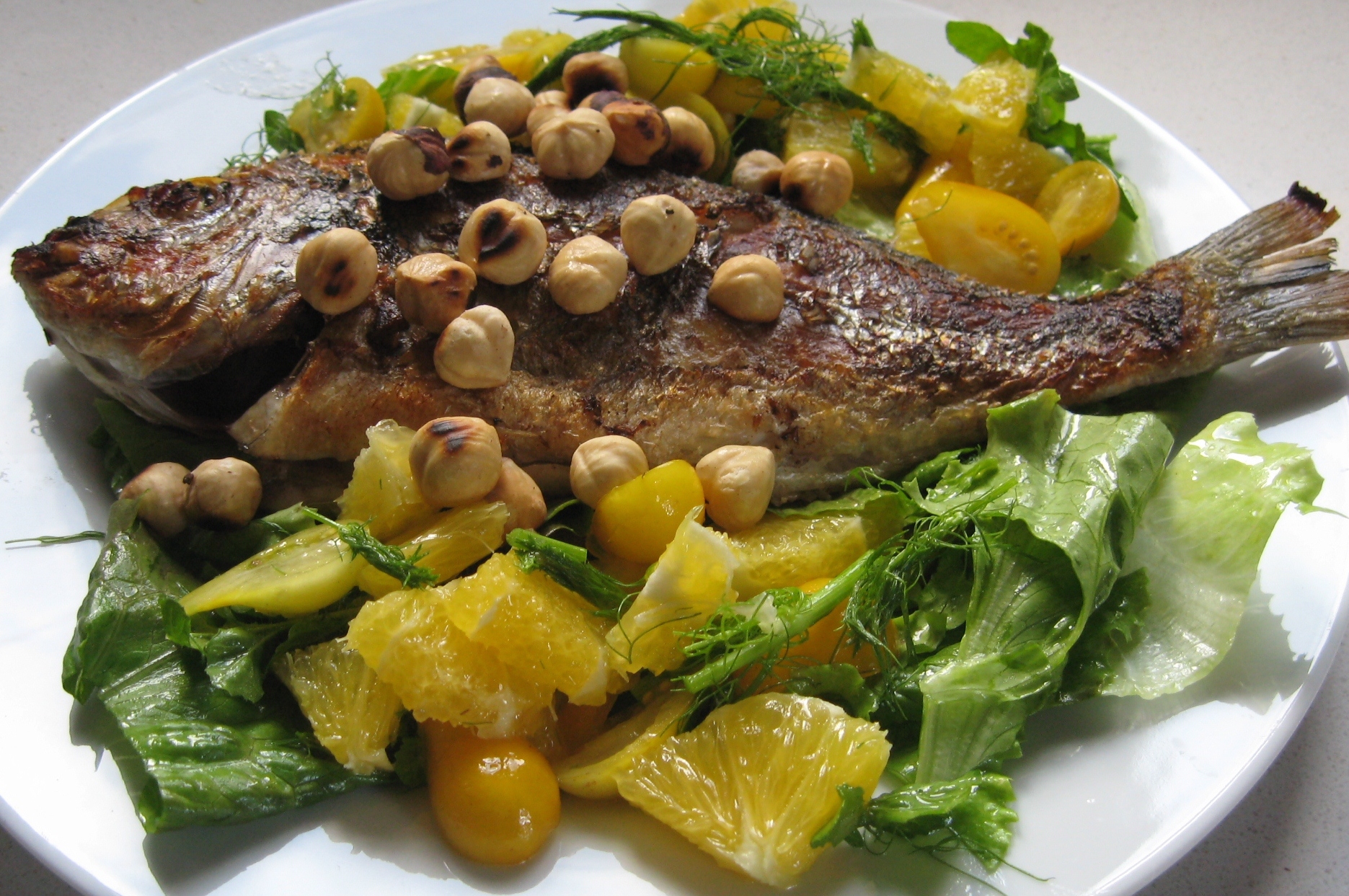
Whenever I have been away on a trip, particulary if to somewhere landlocked, the food I yearn for on my return is the wonderfully fresh fish that we have here. Dorada or Sea Bream is farmed in large round enclosures just off the coast here. They are brought to market when the fish are a perfect one person size and are always brightly fresh. Some purists insist that line caught wild fish taste better, but I defy anyone to tell the difference in a blind tasting. Also freshness is such a factor with the taste of fish that I would rather have super fresh farmed than day old wild.Sea_bream_orange_salad

With my Dorada this week I made a salad of oranges, yellow plum tomatoes, fennel fronds, crunchy lettuce leaves and toasted hazel nuts, all dressed with some of the Sicilian olive oil.orange_carrot_salad

Now for the truly Arab version of an orange salad. Finely grated carrot dressed with lemon juice, honey and orange flowerwater, spread over a layer of thinly sliced oranges and garnished with a few toasted cumin seeds. Leave in the fridge to let the flavours mix for an hour before serving with a spicy lamb tagine.

Share this:

  • Share on X (Opens in new window) X
  • Share on Facebook (Opens in new window) Facebook
  • Share on WhatsApp (Opens in new window) WhatsApp
  • Email a link to a friend (Opens in new window) Email
Like Loading...

Roast Rabbit & Summer Vegetables

13 Tuesday Nov 2012

Posted by Nevenka in Food for One, Main Courses

≈ Leave a comment

I have just returned from a stay in the UK to be greeted by the same cool and wet weather that I thought I had left behind there. With all the rain the vegetable garden is bursting with produce – and plenty of weeds – but is too wet to get into right now,  and of course it is Sunday, so no shopping possiblities. Thankfully there are some squashes, onions and potatoes in the cold store, rabbit in the freezer and a couple of now slightly wrinkly red peppers in the fridge from before I went away. I decide to prepare a favourite roast for lunch, Rabbit with Summer Vegetables, this dish having the extra benefit of needing the wood burning oven, which will nicely warm the kitchen.

Normally for this dish I buy a whole rabbit and chop it into small portions leaving the bones in, but on this occasion I only have a boned saddle available, so that will have to do. Chicken can be substituted for the rabbit if you prefer. The cooking times will be the same, but use tarragon or sage in place of the thyme.rabbit_roast_summer_veg

For the vegetables I always use potatoes and garlic, but then the rest vary depending on what is available in the garden or larder. Red peppers are great for colour and flavour, so those if I can, then any three or four others from the list below.

ROAST RABBIT WITH SUMMER VEGETABLES – For 4

1 Rabbit

400 grams potatoes

2 heads of garlic

several sprigs of fresh thyme

olive oil

salt and freshly ground black pepper

selection of vegetables –

2 large red peppers cut into quarters or sixths

2 medium courgettes cut into big chunks

2 medium aubergines cut into chunks

4-6 sweet onions peeled and halved

4 large carrots peeled and cut into chunks

butternut squash and or pumpkin peeled and cut into chunks

Put the oven on to warm up to 190 C.

Once the oven is up to temperature, put in a large roasting tray containing a couple of tablespoons of olive oil.

After five minutes or so when this is hot add to it the potatoes which are in evenly sized chunks. Sprinkle with salt and roast for ten minutes.

Season the rabbit with salt, freshly ground black pepper and fresh thyme. Break the garlic into cloves but don’t peel them. Cut the cloves accross their fattest bit only cutting half way through the clove. Leaving the skin on protects the garlic from burning while it is roasting, while the cut accross the middle enables the garlic to swell without bursting out of its skin.

Add the rabbit and garlic to the potatoes and cook for another ten minutes.

After this time add the rest of the vegetables to the pan. They need to be in one layer to cook properly, so if they don’t fit in one tray use two, dividing the meat, garlic and potatoes between the two. If the vegetables are too crowded they tend to steam rather than roast and end up soggy. Drizzle over more olive oil and seasoning.

Roast for another half an hour or until the vegetables are tender and browned at the edges.

If you are wondering why I have included the photo at the top of this post, look carefully at the wire and you will see a flock of starlings neatly and evenly sitting all the way along it. It is almost as though they have measured the distance between each other.

Share this:

  • Share on X (Opens in new window) X
  • Share on Facebook (Opens in new window) Facebook
  • Share on WhatsApp (Opens in new window) WhatsApp
  • Email a link to a friend (Opens in new window) Email
Like Loading...

One Ham – Two Meals

23 Tuesday Oct 2012

Posted by Nevenka in Main Courses, Starters

≈ Leave a comment

We are having typical autumn weather for this corner of spain, quite cold evenings when you want the wood oven in the kitchen lit for some cosy and warming kitchen suppers, while during the day the sun warms so well that lunch on the terrace is the thing and you want to eat something light that reminds you of summer. With one ham I recently managed to create a meal of each type. Warm thick slices of the ham served with a mustard sauce and lentils for a snug supper, and then a couple of days later the same ham cold and cut into thin slices for a carpaccio with mustard viniagrette. Both dishes went down very well with my guests.

It isn’t possible to buy an uncooked joint of ham in this part of Spain, so we have to cure our own. I have some salts that were a gift from some lovely butchers in Ireland which I mix with brown sugar and black peppercorns to get a spicy joint of ham.

So the ham has been curing for five days and friends are coming for dinner this evening. This will be the first hearty type meal of the season and is very easy as it is all cooked in the one pot except for finishing the sauce at the end.

Ham with Mustard Sauce and Lentils –  For 4

Joint of raw ham

200 grams lentils – either puy or pardina

4 carrots

1 large or 2 small onions

Olive oil for frying

500 ml light stock

2 tablespoons whole grain mustard

2 tablespoons cream

Peel and slice the onions. Peel the carrots and cut them into cubes.

Heat some oil in a frying pan and fry the carrots and onions for ten minutes.

Put the ham joint into a pan into which it fits quite snugly. Add the fried vegetables. Put some of the stock in the frying pan to take up the brownings in the pan and add this to the ham. Put more stock in the pan to just cover the meat.

Bring slowly to the boil. Add the lentils and cook very slowly for one and a half hours.

Once cooked remove the joint of ham to a carving board and keep warm. Strain the stock from the lentils and vegetables, but not until they are very dry, they still want some moisture in them. Put the vegetables in a warm serving dish and keep warm while you make the sauce and carve the meat.

To make the sauce, put some of the stock that the ham and vegetables have cooked in into a saucepan. When I made this last it was about half the stock or about 200ml. Add a tablespoon of whole grain mustard and a tablespoon of double cream. Mix in well. Slowly bring to a simmer. The mustard and cream should be enough to thicken the sauce to a creamy but pouring consistency. if it is a bit thin, then add more of the mustard and cream.

Serve the sliced ham with the sauce poured over.

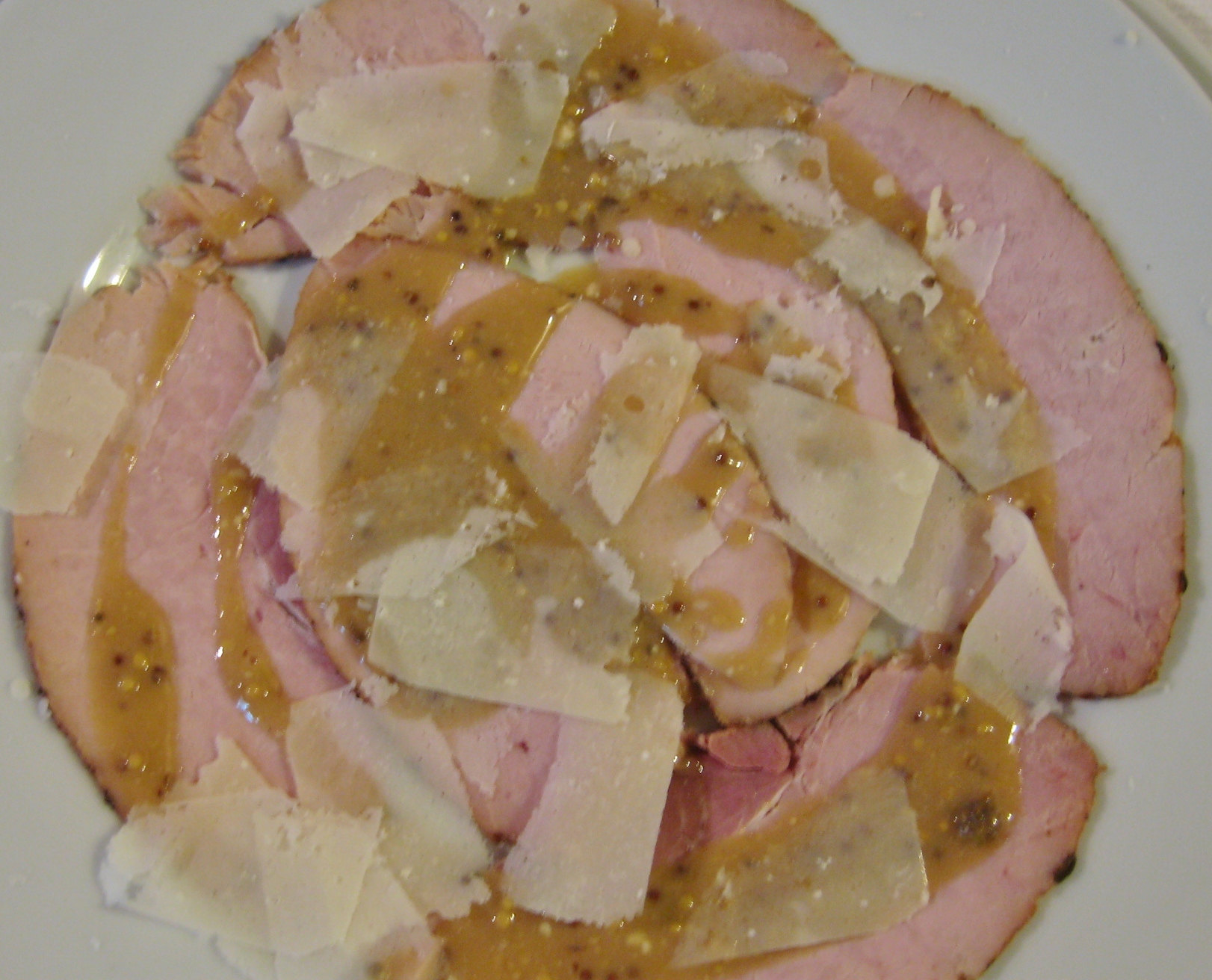
Ham Carpacccio with Mustard Dressingcooked_ham_carpaccio

Left over cold ham cut into thin as you can slices. Arrange these on dinner plates covering the whole plate as one does for carpaccio.

Left over mustard sauce to which you add 2 tablespoons of good extra virgin olive oil and a tablespoon of freshly squeezed lemon juice. Mix all together well and then spoon/drizzle over the ham.

Parmesan cheese which you shave over the plates of ham.

Share this:

  • Share on X (Opens in new window) X
  • Share on Facebook (Opens in new window) Facebook
  • Share on WhatsApp (Opens in new window) WhatsApp
  • Email a link to a friend (Opens in new window) Email
Like Loading...
← Older posts
Newer posts →

Create a free website or blog at WordPress.com.

Privacy & Cookies: This site uses cookies. By continuing to use this website, you agree to their use.
To find out more, including how to control cookies, see here: Cookie Policy
  • Subscribe Subscribed
    • fincafood
    • Join 103 other subscribers
    • Already have a WordPress.com account? Log in now.
    • fincafood
    • Subscribe Subscribed
    • Sign up
    • Log in
    • Report this content
    • View site in Reader
    • Manage subscriptions
    • Collapse this bar
 

Loading Comments...
 

    %d