• About
  • La Micaela Farm Shop

fincafood

~ culinary and horticultural life on a Spanish farm

Category Archives: Main Courses

Keeping it simple

11 Wednesday Apr 2012

Posted by Nevenka in Food for One, Main Courses

≈ Leave a comment

Tags

Buda Chicory, Ice Plant, Puntarelle, Samphire, Veal with rosemary

I am busy in the office doing the accounts today, which I have to admit is not my favourite job. I need a simple but exciting lunch to look forward to. Luckily for me I have some wonderful ingredients at my disposal.

As well as the Samphire and Ice Plant featured in the previous post, I have in the herb garden some lovely salads. Peppery Rocket. Puntarelle, which is a version of endive of which you eat the slightly bitter asparagus like shoots. Buda Chicory which has crisp curly leaves that are paler and crisper in the centre. Fragrant Coriander.

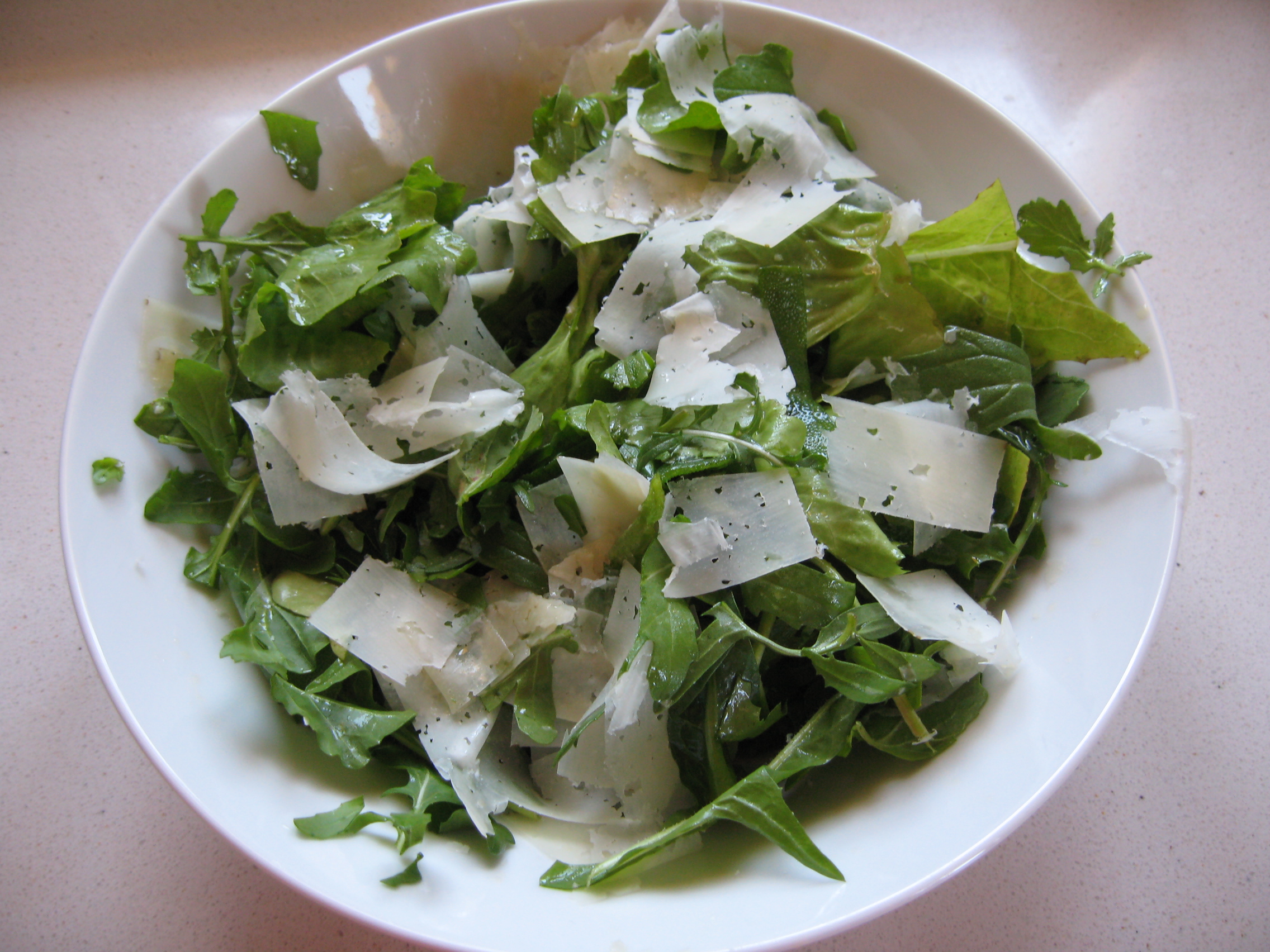
A salad of these leaves only needs the addition of some fresh and fruity olive oil, a good quality red wine vinegar and some shavings of mature firm sheeps cheese.

For the protein, a tender veal steak. To cook this to perfection you need a good pan with a thick base so that you can get it hot and when you put in the steak there is enough heat stored in the metal of the pan to sear well the steak.

The steak is to be seasoned simply with sea salt, freshly ground black pepper, fresh rosemary and lemon.

Pick the rosemary from the tender ends of the branches. Wash it and cut it up fairly finely. Pick a lemon, wash it and cut it in half ready to use.

Heat the pan. When it is hot pour in a little olive oil. Sprinkle coarse sea salt, pepper and rosemary on one side of the steak. Put the steak in them pan with the seasoned side down. Let cook about four or five minutes. While it is cooking season the other side. Turn over and cook on the other side, again for four or five minutes.

Remember that veal steaks need a bit more cooking than a mature steak. I like my beefsteak cooked very rare, but veal is more succulent cooked to medium rare.

Deglaze the pan with a splash of lemon, then get your steak on the plate while it is hot.

Share this:

  • Share on X (Opens in new window) X
  • Share on Facebook (Opens in new window) Facebook
  • Share on WhatsApp (Opens in new window) WhatsApp
  • Email a link to a friend (Opens in new window) Email
Like Loading...

Spring Greens with a Difference

09 Monday Apr 2012

Posted by Nevenka in Food for One, Main Courses, Snacks and Tapas, Starters

≈ Leave a comment

Tags

Ice Plant, Samphire

After the rain that we have had and now that the temperatures are warming up, it is not only the greens in the veg patch that are sprouting. The hillsides are not only covered in beautiful spring flowers, little pink wild orchids, tiny bee orchids and miniature wild irises only a few centimeters tall, but there is also wild garlic with delicate pink flowers and wild asparagus which is worth the fight with the thorns from last years plant that protects it.

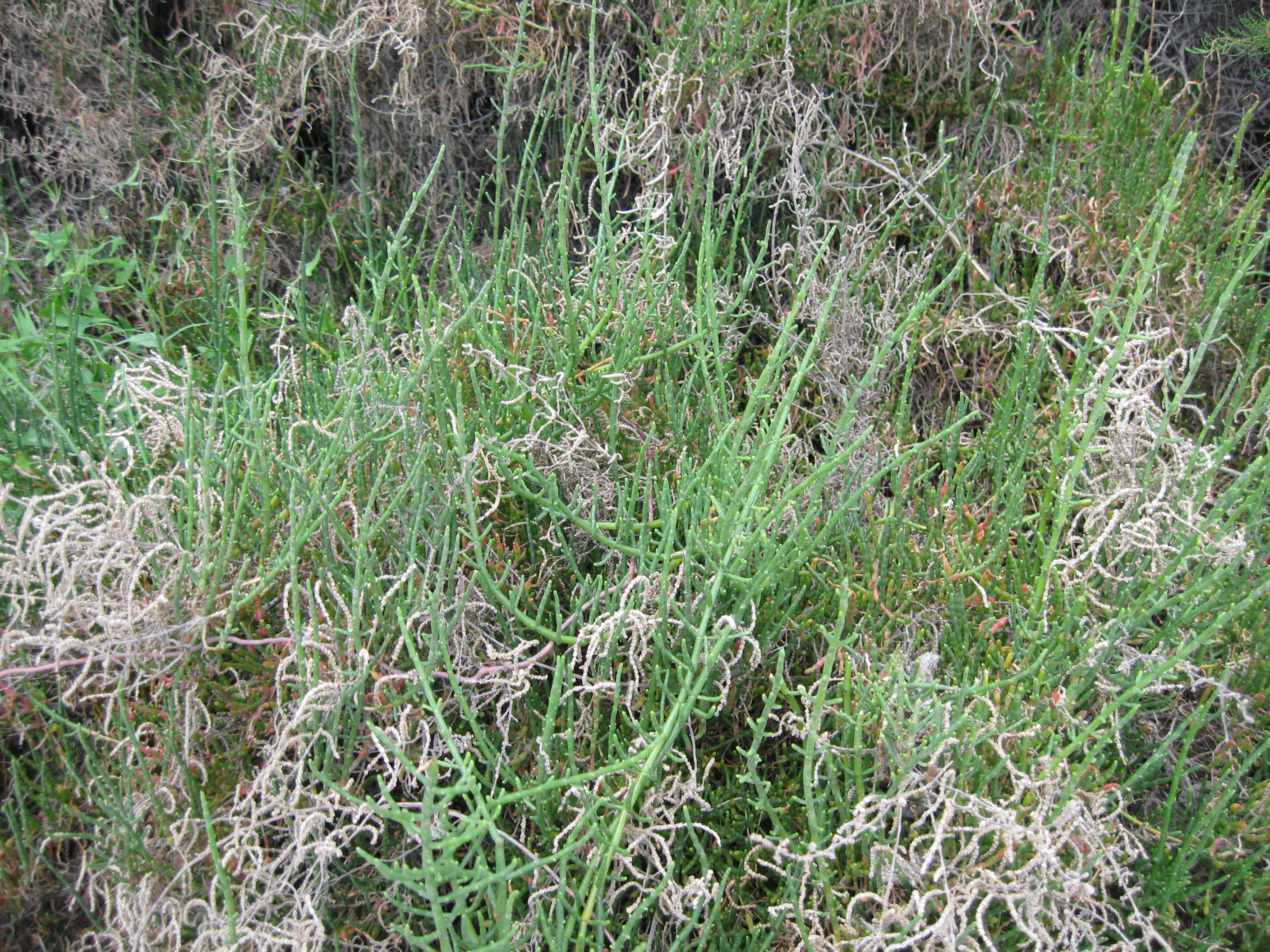
Along the seashore there are delicacies to harvest as well. Crispy bright green Samphire and the succulent leaves of the Ice Plant which are only tender enough  for a short time in the spring to be harvested. Even at this time of the year the Samphire that is in full sun all day has a tendency to be tough, so it is worth searching out bright green sprouts in shady spots. You need to take a pair of scissors and just trim off the tender ends into your bag. You can see from the photo just how you have to seek out this years tender shoots from last years dried out remains.Samphire

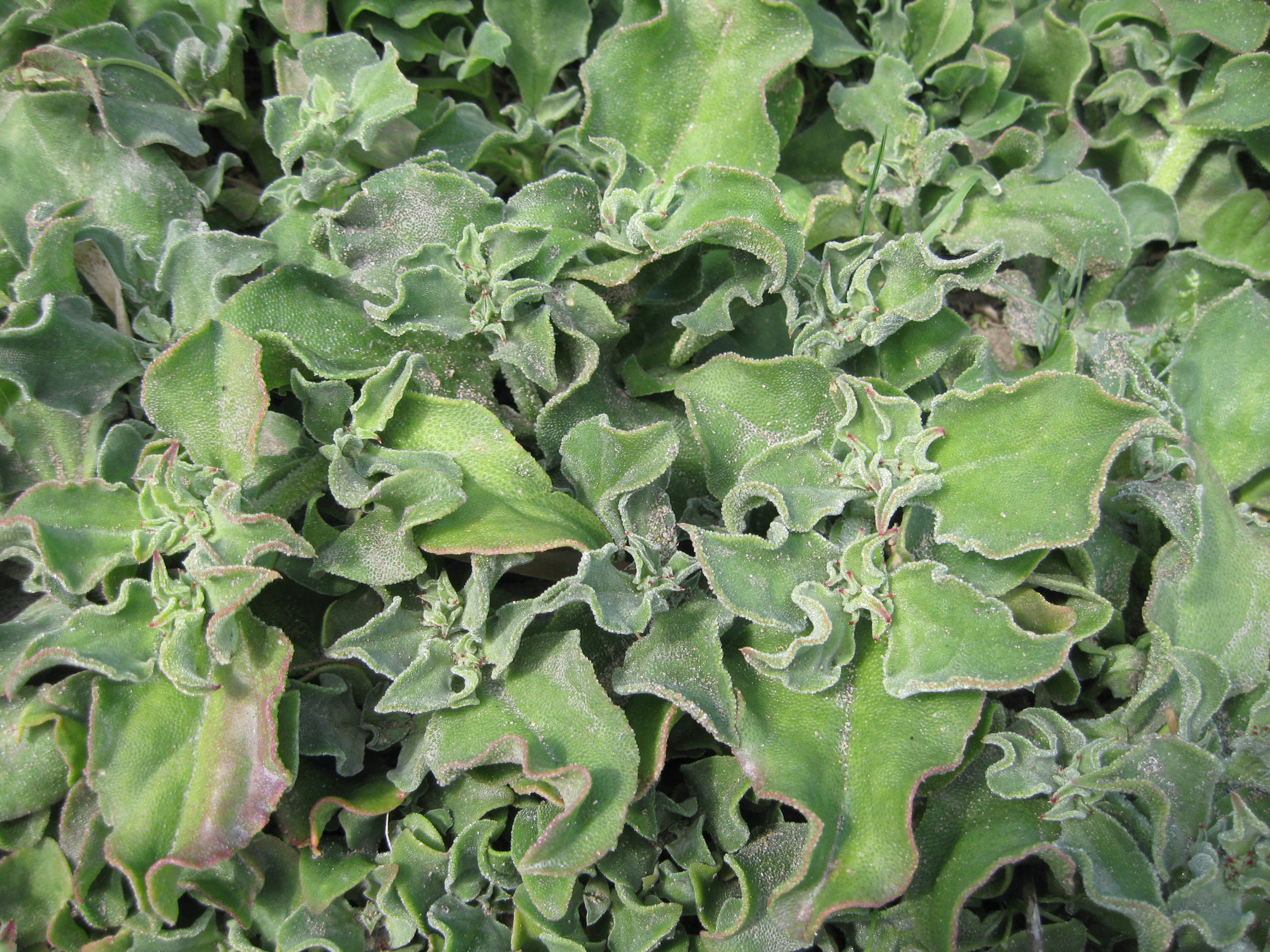
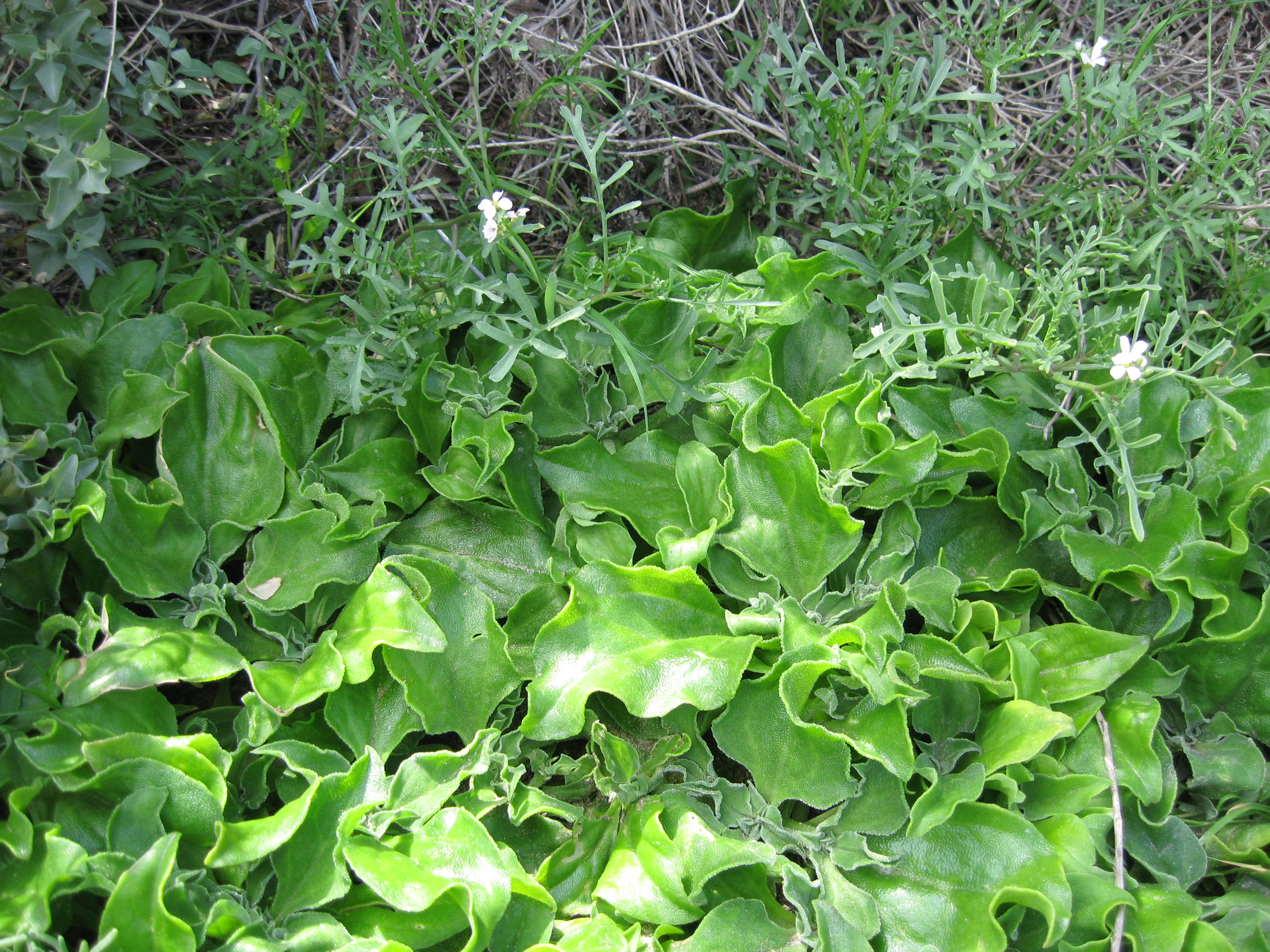
The Ice Plant – Mesembryanthemum Cristallinum – is so call because of the crystal-like cells that it has on its surface, particularly the underside of the leaves. To harvest the most tender of the Ice Plant leaves the same applies as the Samphire, look for brighter green leaves in the shade.

For both plants the uses are the same. You can give them a good wash and put them in your salads, steam them and add butter and a touch of lemon and have them to accompany fish, add them to stir frys and Thai curries. The Andalucian way is to make a Revuelto. This would include the wild garlic greens and asparagus, and if you are a bit flush some prawns. Fry the prawns and all your greens in some good olive oil until the prawns are half cooked and the greens a brighter colour. Add some beaten and seasoned eggs and over a very low heat stir until the eggs thicken into a creamy mass. Turn out onto warmed plates and eat immediately with crunchy fresh bread.

Share this:

  • Share on X (Opens in new window) X
  • Share on Facebook (Opens in new window) Facebook
  • Share on WhatsApp (Opens in new window) WhatsApp
  • Email a link to a friend (Opens in new window) Email
Like Loading...

Meatballs & Chestnuts in Tomato Sauce

07 Saturday Apr 2012

Posted by Nevenka in Main Courses, Starters

≈ Leave a comment

Tags

Passata, Pork

These are to go with the Potaoto Gnocchi of the previous post.

For four people

2 cloves of garlic

125 gms lean pork

olive oil

salt and pepper

small jar of passata

150 gms cooked and peeled whole chestnuts

Parmesan cheese grated

Sage leaves – fresh whole ones

In the food processor, finely chop the garlic. Cut the pork into cubes and add to the food processor with seasonings. Process to a fine mince.

Turn the mince out onto a floured board and with floured hands form into small meatballs. You will note that there is no egg to bind these meatballs, if you have lean meat then as it cooks the protein binds together, so you don’t need any extra binding. Likewise when you are making beefburgers, use good lean meat and seasoning, and you don’t need anything else.

Heat some oil in a shallow pan and fry the meatballs on a gentle heat until lightly browned on all sides. Cook a few at a time if the pan is not very large.

Once they are all browned, add the passata to almost cover the meatballs. Cook gently for another 15 minutes.

Passata is a wonderful sauce to have in your storecupboard. I make enough jars in the summer when the plum tomatoes are at their most flavoursome to last me for the whole year. It is not only a great way to preserve a bumper crop of tomatoes, but as you are making it yourself you can vary the flavours that you add to it. I do a batch with chilli added, one with coriander and lemon grass, one with strong basil flavour, another with oregano as the predominant flavour. Check out the blog in July for the passata recipe.

So back to the meatballs. Once they are cooked add the chestnuts to heat them through.

Now for the finishing touches.Heat some oil in a small sauce pan, and when hot add the sage leaves and fry until they are crisp. Drain on kitchen roll. Save the oil for flavouring future dishes.

Grate the parmesan.

Add the hot cooked gnocchi to the meatballs and gently stir to coat with the sauce. Dish up onto warm plates. Sprinkle over the grated parmesan and the fried sage leaves. Enjoy.

Share this:

  • Share on X (Opens in new window) X
  • Share on Facebook (Opens in new window) Facebook
  • Share on WhatsApp (Opens in new window) WhatsApp
  • Email a link to a friend (Opens in new window) Email
Like Loading...

Potato Gnocchi

05 Thursday Apr 2012

Posted by Nevenka in Main Courses, Starters

≈ 1 Comment

We are having rain showers at the moment which has cooled the air and heightened the fragrance of all the blossom that is in bloom. I have 400 lime trees and the nieghbouring finca several thousand orange trees that are all in bloom. The scent is heady. I wish I could bottle it and send it to you.

There is still plenty of fruit on the trees, the limes fruit and flower pretty much all the year round, so I am still busy making marmalades, pickles and conserves to sell in the farm shop. I will be sharing with you some of my tried and tested recipes for these in due course, but today lets think about lunch.

I have some boiled potatoes left over from a previous meal, so I thought potato gnocchi would be nice. If your only experience of gnocchi are those terrible heavy bullets that you get in the supermarket, think again and try these. Gnocchi can be made with semolina or with potatoes, and I by far prefer the potato version which is a light and fluffy dumpling. They are superb with a blue cheese sauce as a starter, or in this case make a great lunch mixed with meatballs and chestnuts in a tomato sauce.

POTATO GNOCCHI

500 gms floury potatoes – peeled weight

1  organic egg

75 gms plain flour

50 gms semolina – fine ground

salt and pepper

Cut the potatoes into cubes and boil in salted water until cooked but not too mushy. You don’t want them to be too wet. Drain and leave to cool completely.

In a bowl mash the potatoes. Add the beaten egg and mash to amalgamate with the potato. Check for seasoning and add freshly ground pepper and sea salt to taste.

Add the sifted flour and and the semolina, mash this in. By this time you should be able to form the dough into a ball. If it is too soft and wet, add a little more flour and semolina.  Handle the dough lightly so as to keep it soft.

Dust the work surface with plenty of flour and turn your dough out onto it. Taking a small ball of dough at a time roll it out with your hands into a cylinder, and then cut it into even sized pieces. Roll these again, very lightly between your hands to make small cylinders. Don’t worry if they are not all exactly the same, this is rustic food that we are making and light handling is more important than having your gnocchi identical.

Bring a large pan of water to the boil, add a little salt. When boiling start to add your gnocchi a few at a time. They want to be only one layer in the pan. After few minutes they will float to the surface. You can at this point scoop them out and either reheat them later or let them cool completely and dry a bit and then freeze them for another occasion. If you are generally cooking for one, then this is a good option as this recipe makes easily enough gnocchi for four meals.

If you are eating the gnocchi straight away, then let them cook for another three minutes after they have started to float. Drain them and then mix with whichever sauce you fancy.

I am afraid that you will have to tune into tomorrows blog for the Meatballs and Chestnuts in Tomato Sauce……….

Share this:

  • Share on X (Opens in new window) X
  • Share on Facebook (Opens in new window) Facebook
  • Share on WhatsApp (Opens in new window) WhatsApp
  • Email a link to a friend (Opens in new window) Email
Like Loading...

Planning ahead

04 Wednesday Apr 2012

Posted by Nevenka in Main Courses

≈ Leave a comment

Tags

Beef, Dried Ceps

I had friends from England coming to stay for the weekend and wanted to invite more chums for dinner on the Friday night, but didn’t want to spend too much precious time away from my guests preparing the meal. I needed a menu where I could prepare much of the meal well in advance.  The obvious choice for the main course is a stew, which will only improve by having a day or two in the fridge to enable its flavours to deepen. My style of cooking is to keep it as simple as possible without compromising on flavour, so a well flavoured beef stew which only needs the accompaniment of a plain boiled potatoes or noodles, fits the bill.
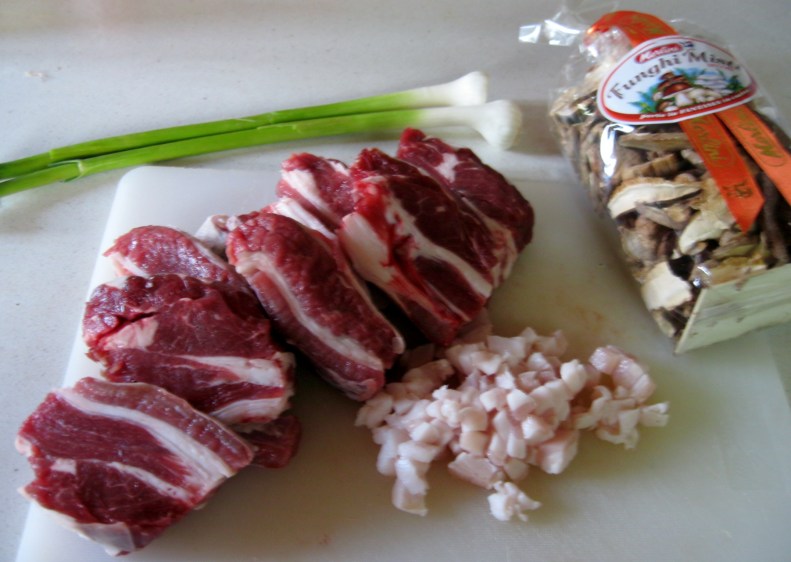
In the storecupboard are some lovely dried ceps and chanterelles that my friends Ali and Peter brought back from one of their trips for me, so they will add richness and depth to my stew.

While checking through my storecupboard, I came across some mini pastry tartlets left over from Christmas, so I thought they could make the basis of the starter. Prawns bound together with egg custard and flavoured with chives fresh from the garden. There are plenty of fresh green leaves in the garden, rocket, coriander and various endives, with which to surround the tartlets.

And why not continue the storecupboard theme in the pudding? As fruit on the farm comes into season, we generally eat as much as possible fresh, but there are nearly always surpluses which if there is a lot would get preserved in syrup in jars, and if a small amount would be cooked and then frozen. Of the frozen there is a choice between red plums or caramelised pears. I fancy the tart plums with a crumble topping made in the usual way but with the addition of oats and crushed hazelnuts to add some extra texture and flavour. I did the crumbles in little individual ramekins so that once cooked all I needed to do was add a scoop of plain ice cream to them.BEEF AND CEP STEW
Pork fat, cut into tiny cubes

Stewing beef, preferably with some streaks of fat in it

Flour seasoned with plenty of salt and pepper

Dried ceps

Good stock

Stew vegetables – onion, carrot, garlic, celery, leek.

I have been deliberately vague about the amounts that you need in this recipe, as it depends on how many people you are feeding, and what size of appetites they have. Plus stew making is not an exact science, so you can add and substract depending on ingredients available and personal taste.

For this stew I wanted the flavour of plenty of vegetables in it, but without being able to see them. So to begin with  cut up all the stewing vegetables and added them to the stock in a large saucepan. Heat and then leave to simmer for at least half an hour or until the vegetables are very tender. Put the stock and vegetables through the coarse disk of a mouli so that you have a thin vegetable puree.

Put your mushrooms in a bowl and pour over enough boiling water to just cover them. Leave them to soak and reconstitute.

Next render the pork fat in a large shallow pan on a very low heat until all the fat has melted out of the pork.  Pork fat is great  for giving extra flavour, so when you are trimming pork of its excess fat, cut it into little cubes as you go along and keep it in small amounts in the freezer.

Cut the beef into pieces roughly 5 cm by 3 cm. Dust liberally with the seasoned flour and then brown and seal the pieces in the fat, turning to make sure that they are sealed on all sides. If you are cooking a large amount of beef, then brown the pieces a few at a time.

Once all the beef pieces are browned return them all to the pan and put in the stock enriched with vegetables to almost cover the beef. Drain the mushrooms reserving the juice and add them to the beef. Stir in. Add enough of the mushroom juice to just cover the beef, saving the rest in case it will be needed later to moisten the stew. Note that quite often there is a bit of grit in dried mushrooms, so when using the juice let any sediment settle to the bottom of it, and then pour the good carefully from the top leaving the last bit in the container.

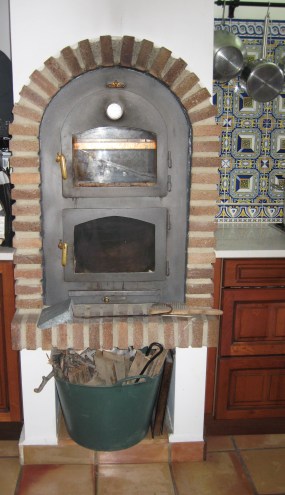
Bring the stew to a simmer and cook very slowly for at least four hours. I have to admit that here is where I have a secret weapon, the wood burning oven featured above. I get this up to 180 degrees centigrade, put my stew in and let it bubble for a while and then I don’t add any more fuel at all. I let the stew cook all night in the slowly cooling oven. The result is a richness to the stew and a tenderness to the meat that is just superb. So do do try to replicate this method, and don’t be afraid of cooking your stew over a long period of time. Modern ovens are well insulated, so bring your stew to a simmer on the hob, put it in the oven at the above temperature for 40 minutes, then turn off the heat and go to bed. Try not to eat the stew for breakfast.

The next day once the stew is cool enough, put it in the fridge until needed. It will be fine for 2-3 days.

I like to serve stews with a Gremolata. Which is simply finely chopped parsley, garlic and finely grated lemon rind. Put a bowl of it on the table for your guests to season their stew with.
Share this:

  • Share on X (Opens in new window) X
  • Share on Facebook (Opens in new window) Facebook
  • Share on WhatsApp (Opens in new window) WhatsApp
  • Email a link to a friend (Opens in new window) Email
Like Loading...
Newer posts →

Blog at WordPress.com.

Privacy & Cookies: This site uses cookies. By continuing to use this website, you agree to their use.
To find out more, including how to control cookies, see here: Cookie Policy
  • Subscribe Subscribed
    • fincafood
    • Join 103 other subscribers
    • Already have a WordPress.com account? Log in now.
    • fincafood
    • Subscribe Subscribed
    • Sign up
    • Log in
    • Report this content
    • View site in Reader
    • Manage subscriptions
    • Collapse this bar
 

Loading Comments...
 

    %d